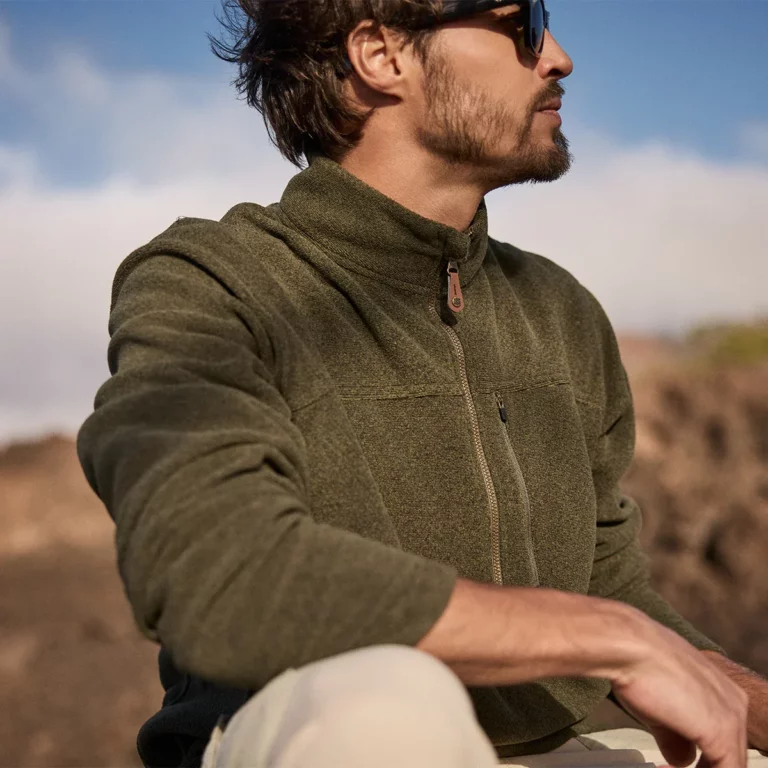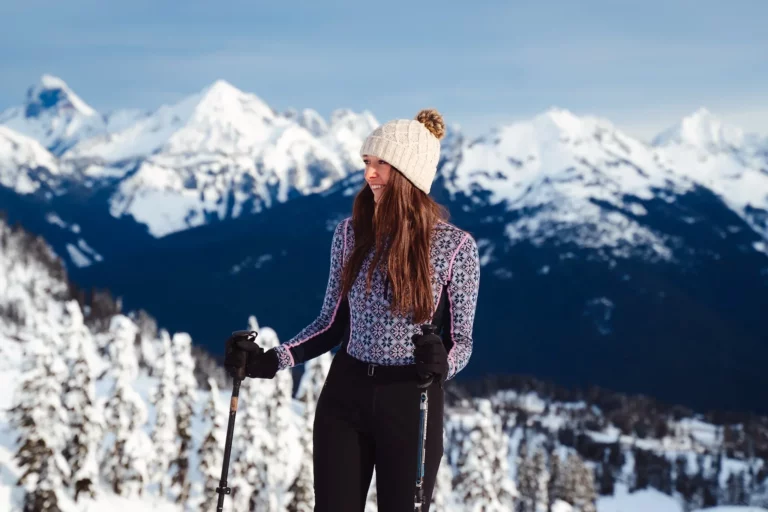

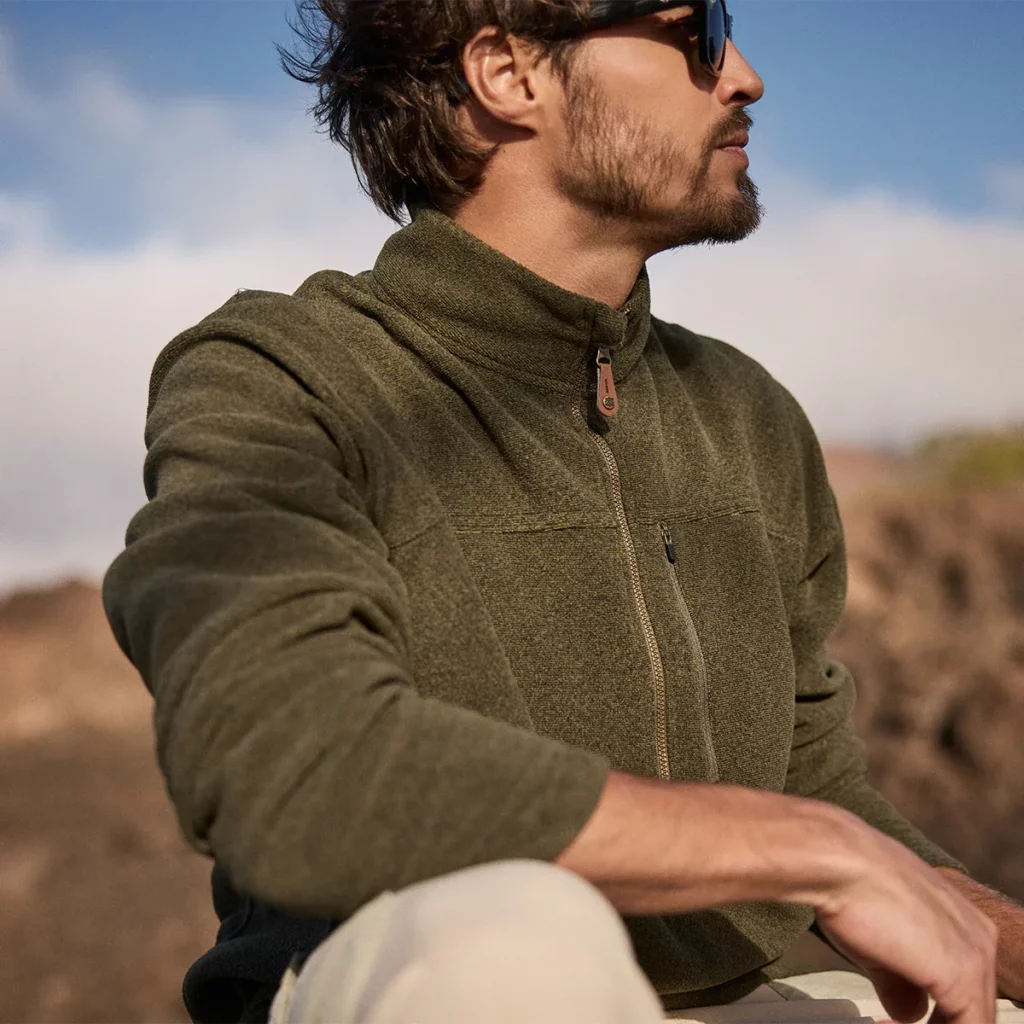
Brands are on the lookout to find an appropriate custom men’s fleece jacket to be included in their autumn and winter collections. Fleece is considered a highly affordable and functional fabric to be included in autumn and winter collections as a mid-layer or outer layer for 2026.The information provided in this guide includes information on fabric technology, types of fleece, performance, and customizing, which is considered to be helpful in creating different types of garments.
Men’s Fleece Jacket Introduction
Fleece jackets form a lasting part of the modern men’s wardrobe. They offer comfort, warmth, and a light design. People wear them for high-intensity hiking, skiing, or city commuting. The jackets serve as a good mid-layer or as standalone outerwear. They trap air to provide insulation and manage moisture well. This keeps thermal performance steady even in wet conditions.
Lightweight Warmth
The knitted structure of fleece holds still air. This creates an insulating layer. It gives strong thermal performance but weighs much less than traditional sweaters.
Moisture Management
Polyester fibers stay hydrophobic. They do not soak up moisture. Instead, they move sweat vapor away from the body quickly. Even in rain, snow, or during heavy sweating from exercise, fleece keeps some of its insulating power. It avoids the wet-and-cold problem that cotton garments often have.
High Breathability
Fleece causes less stuffiness than down or cotton jackets during active movement. This makes it a good choice for high-intensity outdoor activities.
Easy Care
The material resists wrinkles, dries quickly, and goes in the machine wash. Daily care costs stay very low.
Applicable Scenarios
| Scenario | Wearing Method | Features |
| Outdoor Sports (Hiking, Skiing, Climbing) | As a mid-layer, paired with a windproof hard shell | Provides core warmth while ensuring moisture-wicking and breathability |
| Urban Commuting | Worn alone or layered with a shirt/T-shirt | Balances casual and polished looks, adapts to spring/autumn or indoor-outdoor temperature differences in winter |
| Home Leisure | Worn directly as outerwear | Soft and comfortable, allows free movement |
Definition and Technical Principles of Fleece Jackets
Fleece started as Polar Fleece, which is double-sided fleece. It uses polyester fibers, now mostly 100% recycled polyester. A special napping process creates a pile surface. This pile makes many still air layers for insulation. Even when the fabric gets damp, fleece holds most of its insulating ability. It also dries fast. In 2026, common fleece uses recycled polyester, Merino wool blends, or grid and high-pile structures. These improve breathability, reduce pilling, and add sustainable features. Harvest SPF has added more insulating natural materials such as Merino wool. This makes the fabrics warmer while keeping their original properties.
I. Definition and Origin
Fleece comes from Polar Fleece, also known as double-sided fleece. It is a knitted pile fabric with polyester fiber as the main raw material. The mechanical napping process forms a dense pile layer on the fabric surface. This copies the insulating way of wool but avoids wool’s problems like extra weight, shrinkage, and slow drying. Modern fleece has grown into a key functional fabric. It appears widely in outdoor apparel, sports equipment, and everyday casual wear.
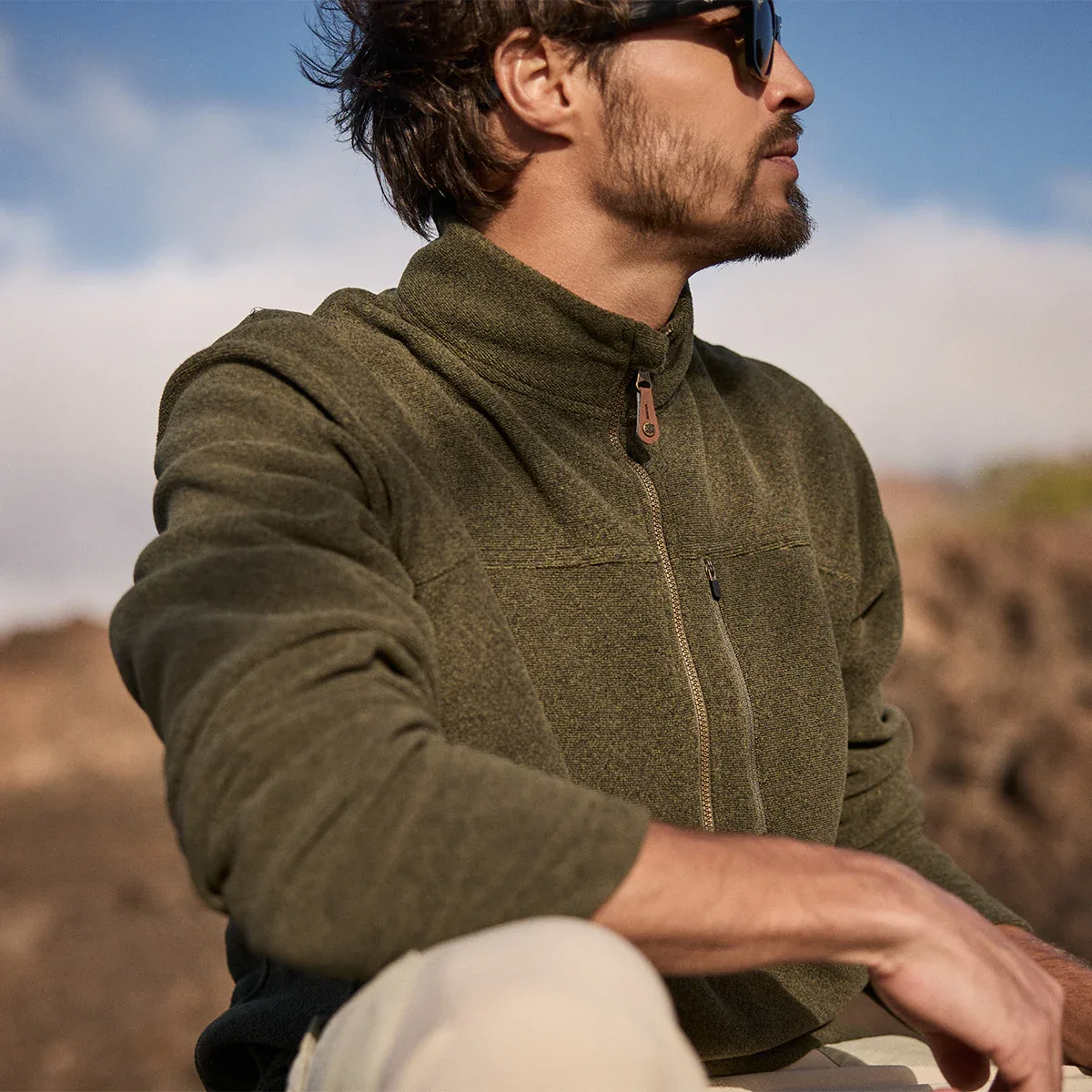
II. Core Technical Principles: Air Trapping and Moisture Management
The thermal performance of fleece comes from its physical structure, not from the fibers themselves heating up.
Still Air Layer
The napping process makes many tiny air pockets between fibers. These pockets trap body heat inside the air layer. Low thermal conductivity helps with insulation. The insulation efficiency per unit thickness of fleece sits a bit lower than high-quality down. Yet the advantage shows clearly in wet conditions. Down loses over 80% of its loft and insulating ability when wet. Polyester fibers do not absorb water. So even when fleece holds 20% moisture of its own weight, it can still keep 70–80% of its original insulating capacity.
Moisture Management Mechanism
The moisture regain rate of polyester fiber reaches only 0.4%. Cotton sits at 8%, and wool at 15%. This means polyester hardly takes in liquid water. Sweat vapor passes through the gaps between fibers as water vapor instead of getting held by the fibers. This creates a wicking effect. The inner layer stays dry, and evaporation happens fast on the outer layer. The feature gives fleece more steady wearing comfort than cotton or wool during high-intensity aerobic exercise.
Fleece Jacket Trends in Outdoor and Casual Apparel
In 2026, fleece grows because of the sustainable wave. Recycled polyester now makes up over 70% of use. Athleisure has become normal, and people want health-focused clothing. Market penetration keeps rising. Consumers prefer items that mix functionality such as moisture-wicking and antibacterial properties with environmental credentials like GRS certification and bluesign®. Merino wool blend fleece has turned into a popular choice in high-end customization. It offers natural odor resistance and helps control temperature and humidity.
In recent years, Harvest SPF has answered customer and market needs. Sales of its fleece products have grown quickly. In 2026, the fabrics include Merino wool blends and windproof or waterproof finishes on top of original materials. International brands have shown high interest and favor for these products.
High-End Application Cases
Mizuno × Woolmark Olympic-Level Application: Mizuno made equipment for the Swedish Alpine Ski Team for the Milan Winter Olympics. They used Breath Thermo technology with Merino wool blend. This achieved a mix of moisture-absorbing heat generation and natural temperature control. The series passed Woolmark certification and reached the consumer market in November 2025.
VEILANCE FW26 Urban Outdoor Series: At the 2026 Autumn/Winter Paris Fashion Week, Arc’teryx’s high-end sub-brand VEILANCE released a new series. The theme was “Between Nature and the City.” It used responsibly sourced Merino wool blend fabrics with water-repellent coatings and hidden insulating layers. This allowed smooth switching between urban commuting and outdoor functionality.
Product Forms and Advantages
| Blend Type | Common Ratio | Core Advantages |
| Merino × Recycled Polyester | 60-70% / 30-40% | Natural odor resistance + quick-drying + anti-pilling |
| Merino × Tencel™ Lyocell | Variable | Enhanced breathability + cool touch + suitable for four-season wear |
| Merino × Nylon | Variable | Enhanced dimensional stability + improved durability |
2026 Autumn/Winter Trend Outlook
“Breathable” Commuting Wear Explosion
Ultra-fine denier cool-feel polyester combined with natural fiber blends has become a technical hotspot for shirts and mid-layer garments. It solves the main pain point of no stuffiness during commuting. The RED“Breathable Commuting Wear” topic has seen a monthly increase of 176% in notes.
Temperature Control Technology Scaling
PCM (phase change material) microcapsule temperature-control coatings now appear on fleece mid-layers. Measured body sensation temperature difference stays within ±2.3°C. This improves adaptability across seasons.
Fluorine-Free DWR Full Replacement
Environmentally friendly water-repellent finishes (PFC-free) have become mainstream. Static contact angles reach ≥120°. They balance splash resistance and breathability.
Modularization and Mono-Material Design
For easier recycling at the end of life, more products use 100% polyester full-component designs. Fabric, lining, sewing thread, and zipper tape come from the same material. This removes recycling barriers.
Why Brands Should Invest in Custom Men’s Fleece Jackets?
Ultimate Cold Weather Protection
Fleece captures body heat through its pile surface. It provides stable insulation. Performance drops only a little in wet conditions. This makes it suitable for rain, snow, or high-sweat situations. Lightweight versions work as mid-layers. Thicker versions offer standalone wind and cold resistance.
Ultimate Cold Weather Protection: Functional Necessity Driving Repeat Purchases
Fleece offers stability in “dynamic cold” situations such as rainy or snowy weather and high-intensity sweating. It becomes a must-have category for frequent use in outdoor sports, winter commuting, and travel.
Sustainable Wave: Recycled Materials Have Become Standard
Market data shows the proportion of global recycled polyester in total polyester production has reached 12.5%-15%. Leading brands use over 90% recycled polyester in suitable product lines.
Consumer Awareness: Products with GRS, bluesign® and other environmental certifications show click-through conversion rates 41% higher than the average.
Policy Drivers: Policies such as the EU’s Sustainable Products Ecodesign Regulation (ESPR) tighten restrictions on virgin polyester.
Investment Opportunity: Custom fleece can use 100% recycled polyester as the base material with GRS certification. This meets the environmental demands of B-end procurement such as corporate customization and outdoor clubs, plus C-end consumers.
Merino Wool Blends: Fastest-Growing High-End Segment
Natural Advantages: Wool brings inherent antibacterial and temperature-humidity regulation properties. When combined with polyester’s quick-drying performance, the result achieves more than the sum of parts.
Market Validation: High-end cases such as Mizuno×Woolmark Olympic-level applications and VEILANCE urban outdoor series have already confirmed market acceptance.
Premium Pricing Space: Merino blend products command 40-60% higher average prices than regular fleece.
Investment Opportunity: Brands can launch Merino blend high-end series. They capture the “functionality + sustainability” dual premium segment. This strengthens brand technical image and raises average order value.
Multi-Scenario Versatility
Lightweight and breathable designs suit hiking, camping, cycling, and commuting. Practical details such as zippered pockets, thumb loops, and adjustable hems can improve functionality.
Scenario-Recommended Configurations
| Scenario | Recommended GSM | Core Configurations | Wearing Method |
| High-Intensity Hiking | 100-180 gsm | Grid structure, thumb loops, zippered chest pockets | As a mid-layer, paired with a windproof hard shell |
| Camping/Campsite | 180-280 gsm | Anti-pilling, antibacterial, adjustable hem | Worn alone or as a campsite warming layer |
| Winter Cycling | 100-180 gsm | Extended back hem, reflective details, thumb loops | Highly breathable mid-layer, paired with a windproof jacket |
| Urban Commuting | 180-280 gsm | Slim fit, hidden pockets, PFC-free DWR | Worn alone, paired with a shirt or T-shirt |
| Business Travel | 180-220 gsm | Lightweight, packable, wrinkle-resistant | Worn alone on planes/trains, used as a mid-layer for destination activities |
Comfort and Lightweight Appeal Favored by Athletes and Everyday Users
The fabric feels soft against the skin and offers good elasticity. Spandex can be added for free movement. Fleece stays more breathable than down and avoids stuffiness. Harvest SPF has supplied custom fleece functional detail cases for clients. These include thumb loops, windproof side panels, and Merino blend odor-control applications, along with client feedback.
Zippered Pockets
| Type | Location | Functional Value |
| Chest Pocket | Left or right chest | Store phone, cards, and frequently accessed items; prevents items from slipping when bending |
| Side Slash Pockets | Both sides of waist | Warm hands, store daily items; hidden zippers recommended to maintain clean appearance |
| Sleeve Pocket | Left arm | Store ski passes, transit cards; high convenience for outdoor activities |
| Inner Pocket | Inside chest | Secure storage for valuables (passport, wallet); headphone port design is preferred |
Thumb Loops
| Adjustment Method | Applicable Scenarios | Advantages |
| Drawcord Style | Hiking, skiing, camping | Prevents cold wind ingress, single-hand operation |
| Elastic Binding | Commuting, leisure | Clean and aesthetic, high comfort |
| Dual-Point Adjustment | Mountaineering, extreme cold | Front-to-back differential adjustment, compatible with backpack waist belts |
Windproof Side Panels
Design Form: High-density knit or stretch windproof fabric spliced from underarm to both sides of waist.
Functional Value:
- Maintains fleece breathability in the core torso area
- Enhances wind resistance on lateral wind-facing surfaces
- Increases lateral elasticity for greater freedom of movement
Applicable Scenarios: Winter cycling, skiing, high-altitude hiking
Extended Back Hem
Design Form: Back hem extended 3-5cm longer than front hem.
Functional Value:
- Prevents lower back exposure and chilling during cycling or bending
- Reduces friction when wearing a backpack
Applicable Scenarios: Cycling styles, skiing styles, mountaineering styles
Main Types of Fleece Jackets (2026 Mainstream Classifications)
1. Microfleece / Lightweight Fleece (<200 gsm)
Extremely lightweight and thin, highly breathable, suitable for mild-weather mid-layers or high-intensity activities.
2. Midweight Fleece (200–300 gsm)
Balances warmth and breathability; the most popular autumn/winter mainstay, usable as mid-layer or outerwear.
3. Heavyweight Fleece (>300 gsm)
Maximum insulation, suitable for severe cold as standalone wear, slightly bulkier.
4. Grid Fleece (such as Polartec Power Grid types)
Surface grid structure for extreme breathability and quick drying, ideal for aerobic exercise.
5. High-Pile Fleece (High Loft)
Lofty high-pile surface, extremely warm and soft, suitable for static warmth or leisure.
6. Hybrid / Technical Fleece
Fleece combined with softshell/windproof coatings, or Merino blends, to enhance wind resistance or odor control.
7. Windproof Fleece
Added windproof membranes or tight knits, suitable for windy environments.
Harvest SPF can customize from lightweight to heavyweight fleece according to client needs. Different fabric structures such as Grid Fleece, Windproof Fleece, 3-Layer composite fleece, Sherpa Fleece, etc. stay available. The fabrics remain skin-friendly and soft. They provide anti-pilling, deodorizing, moisture-wicking and quick-drying functions.
Main Types of Fleece Jackets (2026 Mainstream Classifications)
- Microfleece / Lightweight Fleece
GSM: <200 gsm (common: 120–180 gsm)
Structure: Double-sided knit fine pile, smooth surface, high compressibility
Performance Data:
- Warmth Value (Clo): 0.3–0.5
- Moisture Vapor Transmission Rate (MVTR): > 8,000 g/m²/24h (JIS L1099 A1)
- Drying Time (air dry): < 45 minutes (23°C, 60% RH)
Customization Suggestions: Suitable for functional base layers or lightweight mid-layers; anti-static treatment can be added.
- Midweight Fleece
GSM: 200–300 gsm (mainstay: 240–280 gsm)
Structure: Double-sided napped or polar fleece, moderate loft
Performance Data:
- Clo: 0.7–1.0 · MVTR: 5,000–7,000 g/m²/24h
- Drying Time: 50–70 minutes
Customization Suggestions: Most versatile autumn/winter mainstay; can be made as double-sided composites or spliced with stretch fabrics.
- Heavyweight Fleece
GSM: >300 gsm (common: 320–380 gsm)
Structure: Long-pile polar fleece or double-sided high pile, strong volume feel Performance Data:
- Clo: 1.2–1.6 · MVTR: 4,000–5,500 g/m²/24h
- Drying Time: 80–110 minutes
Customization Suggestions: Suitable for extreme cold environments; post-treatment anti-pilling (≥4 grade, ISO 12945-2) can be applied.
- Grid Fleece
GSM: 150–220 gsm (Polartec Power Grid® types)
Structure: Square or hexagonal grid on back, smooth or fine-pile face
Performance Data:
- Clo: 0.5–0.8 (15–25% higher thermal efficiency than regular fleece at same GSM)
- MVTR: > 10,000 g/m²/24h
- Drying Time: < 30 minutes
Customization Suggestions: Grid shape, depth, and single/double-sided structures can be customized; ideal for high-aerobic sports product lines.
- High-Pile Fleece
GSM: 280–450 gsm
Structure: Highly lofty long pile, imitating natural fur texture
Performance Data:
- Clo: 1.4–2.0 · MVTR: 3,500–5,000 g/m²/24h
- Drying Time: 90–130 minutes
Customization Suggestions: High-pile coverage can be controlled at 80–100% (pile surface coverage); bottom layer recommended to be composited with high-density base mesh for improved structural stability.
- Hybrid / Technical Fleece
GSM: 200–350 gsm (composite structures)
Structure: · Fleece + softshell (four-way stretch fit)
- Or Merino blends (Merino content 15–40%, remainder polyester/spandex) Performance Data:
- Clo: 0.8–1.3 (depending on GSM) · MVTR: 5,000–8,000 g/m²/24h
- Odor Resistance Grade (ISO 17299-3): Merino blends can reach 2.5–3.5 grades (without additional antibacterial agents)
Customization Suggestions: Merino ratio recommendations:
- 18–22%: Balance between odor resistance and quick drying
- 30–40%: Emphasis on odor resistance and skin-friendliness, but drying time extended by approximately 15–20%
Windproof Fleece
GSM: 180–320 gsm
Structure:
- Three-layer: Tight-knit surface + intermediate windproof membrane (PU or microporous) + inner fleece layer
- Or high-density knit (CFM < 10 ft³/min)
Performance Data:
- Wind Resistance (ASTM D737): < 5 CFM (with membrane) or < 20 CFM (high-density)
- Clo: 0.9–1.4 · MVTR: 3,000–6,000 g/m²/24h (slightly reduced for membrane versions)
Customization Suggestions: Clearly differentiate “membrane windproof” versus “high-density windproof” in terms of breathability and wash durability; provide wind resistance decay data after 10 washes.
Fleece Fabric Type Comparison
| Type | Customizable GSM Range | Structural Parameters | Blend / Composite Ratio | Key Test Indicators |
| Microfleece | 100-190 gsm | Double-sided fine pile / single-sided fine pile | Anti-static conductive yarn can be added | Clo, MVTR, drying time |
| Grid Fleece | 140-240 gsm | Grid height 0.8-2.0mm, adjustable grid density | Double-sided grid or single-sided pile possible | Thermal efficiency (Clo/g), MVTR, compression resilience |
| High-Pile Fleece | 280-450 gsm | High-pile ratio 70-100%, pile length 5-15mm | Can be composited with stretch fabric or windproof layer | Anti-pilling, compression loft ratio, Clo |
| Merino Blend Fleece | 180-320 gsm | Blended yarn interwoven with polyester or double-sided structure | Merino: 15-40% | Odor resistance grade, drying time, wash shrinkage (≤3%) |
| Windproof Fleece | 180-350 gsm | Membrane windproof / high-density knit / coating windproof | Specify MVTR grades (e.g., 5,000, 8,000) | CFM, wind resistance retention after washing, MVTR |
Fleece vs Down: Which Is Warmer?
Fleece Jacket Insulates by trapping air through the pile surface. It offers moderate warmth. It retains most performance when wet, dries quickly, stays breathable, and suits active scenarios. Price stays affordable.
Down Jacket Gives extreme warmth-to-weight ratio with high fill power 800+. It performs warmest in dry conditions and stays lightweight and compressible. Yet it suffers severe heat loss when wet and dries slowly.
Conclusion Choose down for extreme cold and dry conditions. Choose fleece for active, damp, or high-sweat scenarios. The best combination uses fleece as mid-layer plus down as outer layer. In 2026 trends, recycled polyester fleece plus Merino blends give a warmth-to-weight ratio close to down. They also solve wet-condition issues.
Key Factors to Consider When Purchasing or Customizing Men’s Fleece Jackets
Usage Scenario and Activity Intensity
High intensity (running/hiking) → Prioritize grid/lightweight + high MVTR. Low intensity/static → high-pile/heavyweight + Merino odor control.
Fabric Quality and GSM
Lightweight (<200 gsm) suits activity. Mid-to-heavy (250+ gsm) feels warmer. Recycled polyester/Merino blends improve durability and environmental performance.
Durability and Quality Craftsmanship (Harvest SPF Supplement)
Anti-Pilling Performance The anti-pilling grade of fleece fabrics directly affects post-wear appearance and lifespan.
| Fleece Type | Martindale Pilling Test (ISO 12945-2) | Grade Standard | Description |
| Microfleece | ≥20,000 cycles | 4–5 grade | High-density knit + premium rPET fibers |
| Grid Fleece | ≥15,000 cycles | 4 grade | Grid structure itself reduces surface friction pilling |
| Midweight Polar Fleece | ≥12,000 cycles | 3.5–4 grade | Double-sided napping requires balance between loft and anti-pilling |
| High-Pile Fleece | ≥8,000 cycles | 3–3.5 grade | Inherent challenge of long-pile structure; can be improved through post-finishing |
| Merino Blend | ≥10,000 cycles | 3.5–4 grade | Higher wool proportion requires increased yarn twist for anti-pilling |
Harvest SPF Standard: Main products achieve anti-pilling ≥ 3.5 grade (ISO). High-end series can reach 4 grade or above. This meets mainstream requirements of European and American markets.
Wash Durability Performance Retention Fleece products must keep key performance after multiple washes. Internal standards include the following (test methods: AATCC/ISO equivalent, after 5 washes):
- Anti-pilling grade: Decline ≤ 0.5 grade
- Shrinkage: Warp/weft ≤ ±3%
- MVTR: Retention ≥ 85%
- Wind Resistance (CFM): Retention ≥ 90% (windproof fleece only)
- Color Fastness (staining/color change): ≥ 4 grade
Commonly Used Zippers and Accessory Brands Harvest SPF uses or offers the following high-quality accessories as standard or optional. This ensures product durability and brand quality feel.
- Zippers (main zipper/pockets): YKK (standard), SBS, Talon (optional)
- Zipper Pullers: Metal/resin/silicone cord (custom LOGO available)
- Snaps/Magnetic Buttons: YKK, Fidlock® (high-end)
- Elastic/Drawcords: High-elastic waistbands, PFC-free drawcords
- Reflective Accessories: 3M™ Scotchlite™ reflective materials
- Sewing Thread: High-strength polyester thread (Coats / Amann)
IV. HARVEST’s Adhered Quality Control Standards
- Inspection StandardsAQL Sampling: Based on ANSI/ASQ Z1.4 (MIL-STD-105E). Critical Defects: AQL 0. Major Defects: AQL 1.0–1.5. Minor Defects: AQL 2.5–4.0. Each bulk production batch undergoes fabric intrinsic performance spot checks (anti-pilling, shrinkage, color fastness).
- Production Process Control
- Fabric Incoming: Width, GSM, color difference, pre-shrinkage inspection
- Cutting: Pattern matching, layout loss control
- Sewing: Stitch density (12–14 stitches per 3 cm), stop lines, symmetry
- Finishing: Thread trimming, label placement, ironing flatness
- Final Inspection: 100% garment appearance inspection + AQL sampling
- Test Report SupportInternal test reports can be provided (anti-pilling, shrinkage, color fastness, MVTR, wind resistance, etc.). Formal reports from third-party laboratories (SGS, BV, ITS) can also be issued upon client request.
Frequently Asked Questions (FAQ)
Q: Should fleece jackets be worn fitted or loose?
A: For mid-layers, fitted works best to trap heat. For outerwear, slightly loose helps with layering. For high activity intensity, stretch versions come first.
Q: Can fleece be tumble dried?
A: Air drying or low-temperature tumble drying works best. This avoids damage to the pile and elasticity at high temperatures.
Q: How to select a quality fleece jacket?
A: Focus on GSM, usage scenario, MVTR/quick-drying data, anti-pilling grade, environmental certifications, and actual try-on feedback.
Q: Can fleece jackets be custom-made for brands?
A: Yes. Harvest SPF provides ODM/OEM services. It supports full customization of fabric composition, GSM, structure, color, LOGO, and functions such as antibacterial or moisture-wicking. Minimum order quantities stay flexible. Harvest SPF has more custom FAQ answers such as MOQ, sampling lead time, and environmental certification support details.
I. Basic Selection and Usage
Q: Should fleece jackets be worn fitted or loose?
A: For mid-layers, fitted works best to trap heat. For outerwear, slightly loose helps with layering. For high activity intensity, stretch versions come first.
Q: Can fleece be tumble dried?
A: Air drying or low-temperature tumble drying works best. This avoids damage to the pile and elasticity at high temperatures. Wool-containing or windproof membrane versions stay better when laid flat for air drying.
Q: How to select a quality fleece jacket?
A: Focus on GSM, usage scenario, MVTR/quick-drying data, anti-pilling grade (recommended ≥3-4 grade), environmental certifications (GRS, bluesign®), and actual try-on feedback.
II. Brand Customization Services (Harvest SPF ODM/OEM)
Q: Can fleece jackets be custom-made for brands?
A: Yes. Harvest SPF provides ODM/OEM services. It supports full-chain customization from fabric to finished garments.
Q: What dimensions can be customized?
A: Fabric: GSM (120–450 gsm), structure (grid/high-pile/double-sided, etc.), composition (rPET ratio, Merino/bamboo fiber blends). Functions: Antibacterial, moisture-wicking, anti-static, PFC-free water repellency, windproof membrane lamination. Pattern and Design: Fit, pocket/zipper configurations, LOGO (embroidery/heat transfer/silicone labels), colors (custom colors can be developed). Certifications: Support GRS, bluesign®, OEKO-TEX® traceability and hangtags.
Q: What is the minimum order quantity (MOQ)?
Fabric customization: MOQ typically 500–1000 meters (depending on process complexity). Garment customization: Standard styles (shared patterns): 300–500 pieces per color. Fully custom styles (exclusive fabric + pattern): 1000–1500 pieces minimum.
Q: How long is the sampling lead time?
| Stage | Time |
| Fabric sample | 7–12 days |
| Pattern sample / size sample | 10–15 days |
| Confirmation sample (including LOGO and functions) | 10–12 days |
| Full process (fabric + garment) | 25–35 days |
Q: Can environmental certification traceability be supported?
A: Yes. Harvest SPF provides GRS TC (Transaction Certificate) for products containing ≥20% recycled materials, bluesign® / OEKO-TEX® fabric certificates, and supply chain traceability documents (from yarn to garment).
Q: How is quality and testing standard assurance provided?
A: Execution can follow client requirements such as European standards (ISO) or American standards (ASTM/AATCC). Routine test items include anti-pilling, shrinkage, color fastness, MVTR, wind resistance (CFM), antibacterial (ISO 17299), etc. Third-party test reports such as SGS or BV, or internal laboratory data can be provided.
Q: How long is the bulk production lead time?
Fabric production: 15–25 days (including dyeing and finishing). Garment production: 25–40 days (depending on order volume and process complexity). Total cycle (fabric + garment): 40–60 days, with partial shipments possible.
Q: Are there stock fabrics or quick-response services?
A: Yes. Common GSMs (240–280 gsm midweight polar fleece, 160–200 gsm grid fleece) have GRS-certified stock fabrics available. This enables 15–25 day quick-response garment production. It suits small and medium brands or test-sale orders.
Q: Can small-batch customization or designer brands be supported?
A: Yes. For independent designers and startup brands, shared patterns plus fabric selection work. Minimum order: 100–200 pieces.
Contact us to obtain 2026 autumn/winter fleece trend fabric samples, technical data sheets, Merino blend/recycled polyester performance reports, or to discuss exclusive brand development solutions. Email: joy@spftex.com WhatsApp: +86 18310458626