
Excessive underarm sweating can affect comfort, appearance, confidence, and clothing longevity. It may occur during hot weather, exercise, commuting, meetings, or stressful situations. For some people, it can happen without warning and may be linked to hyperhidrosis, a condition involving sweat levels beyond normal temperature regulation.
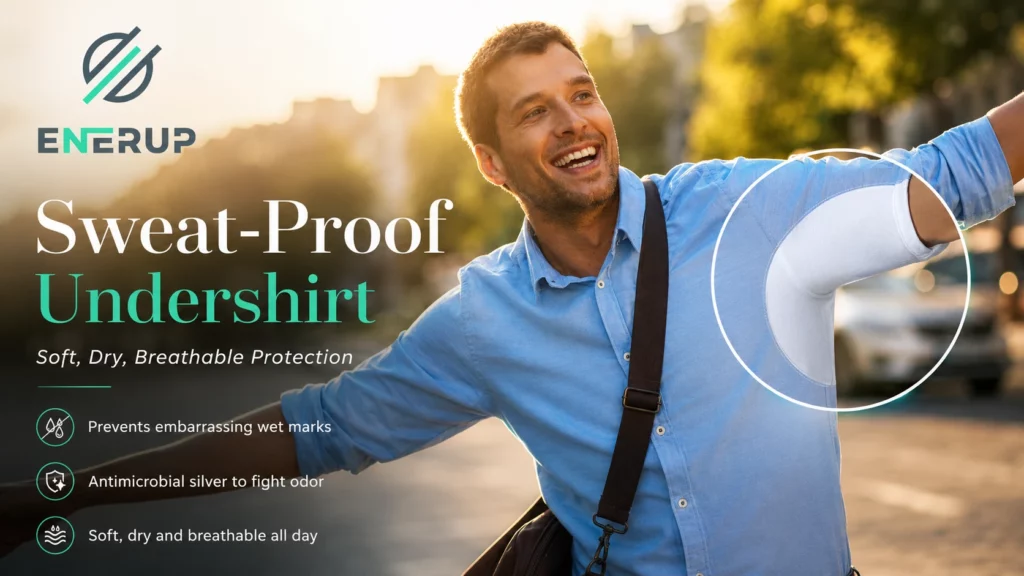
A sweat-proof undershirt does more than a regular undershirt. Also called a sweatproof undershirt, sweat-blocking undershirt, or sweat-control base layer, this garment is designed to help manage underarm sweat before it reaches outer clothing. Instead of only absorbing moisture, it helps reduce visible pit stains, manage odor, protect outer clothing from sweat marks, and stay comfortable for all-day wear.
Not all sweat-proof undershirts perform the same way. Key factors include fabric quality, protective layer design, fit, size grading, neckline, color, and overall production quality. This buyer’s guide explains how to choose sweat-proof undershirts for everyday wear, retail programs, private-label collections, and performance apparel.
For brands and private-label buyers, the challenge is not only choosing a soft undershirt fabric, but also developing a reliable underarm protection system that remains effective after movement, washing, and repeated wear.
A Buyer’s Guide to Choosing Sweat Proof Undershirts
The best sweat-proof undershirt should balance protection, comfort, breathability, fit, durability, and wash performance. It should reduce visible underarm sweat marks without feeling bulky, stiff, or uncomfortable during all-day wear.
Sweat Proof Technology
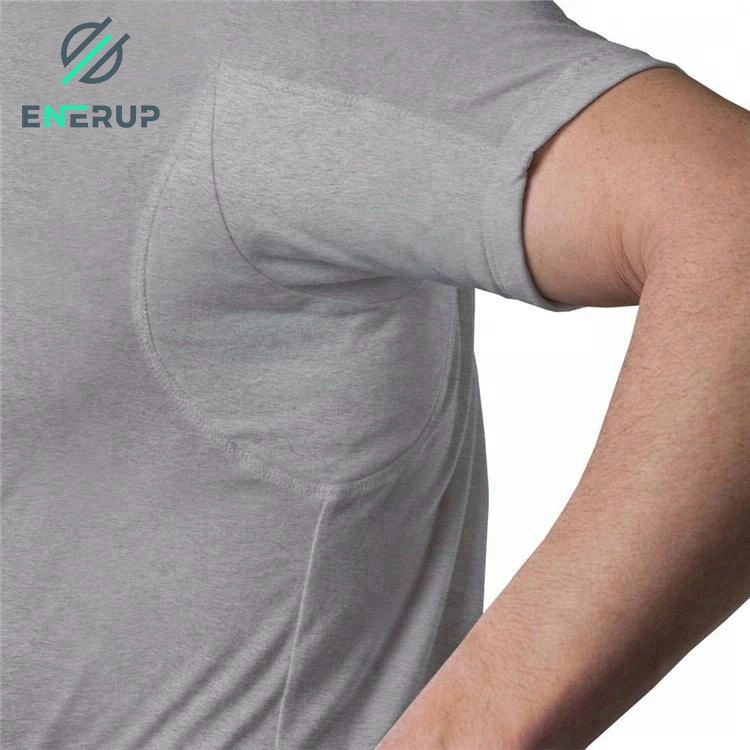
Sweat-proof technology refers to the underarm protection system designed to absorb, manage, or block sweat before it transfers to outer clothing. Most visible sweat marks appear in the armpit area, so the underarm protection zone is the core functional area of the garment.
A strong sweat-control system should answer three questions:
- Is this undershirt effective at absorbing, managing, or blocking underarm sweat?
- Does the protection area stay fixed during movement?
- Can the design reduce moisture and odor without feeling too bulky?
Good designs need to combine elements of absorbing moisture, preventing sweat build-up, breathability and skin comfort. An absorbent pad that is thick and stiff will limit your movements, whereas a thin material that provides skin comfort might not be durable enough for heavy perspiration during the day, when moving around, attending meetings or travelling, etc. The secret to a successful design is layered fabric engineering, moisture management and appropriate positioning of the protective area so that the outer layer looks unaltered.
How Sweat-Proof Undershirts Work
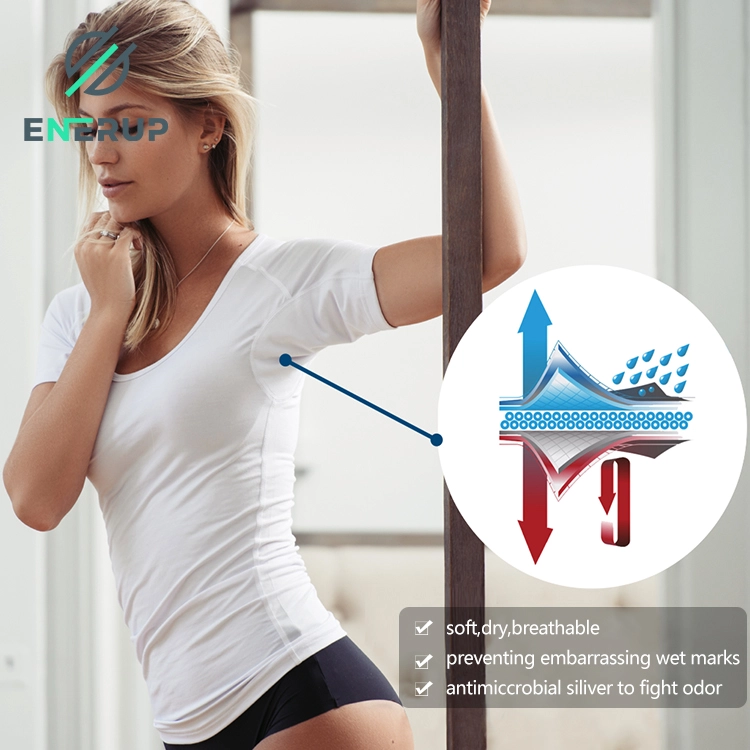
The typical sweat-resistant undershirt will typically rely on the multi-layered structure of the armpit region than on a single piece of material. The first inner layer will be designed to be smooth and to help absorb and manage sweat. The middle layer will help absorb more sweat or add to the sweat-management process.
For this system to perform well, the underarm panel must stay aligned with the sweat zone during arm movement, sitting, walking, commuting, or working. Breathability is also important because excessive bulk or heat buildup can make the garment uncomfortable for all-day wear.
Fabric Quality
The quality of fabric will determine if the sweatproof undershirt will be comfortable for long-term wear. Because of the prolonged contact with the skin, the fabric must be soft, breathable, able to absorb moisture, stretchable, durable, and wash-resistant.
Modal
This type of fabric is extremely soft, smooth, and breathable. It also drapes well and absorbs moisture, which makes it perfect for everyday undershirts.
Tencel
Tencel possesses naturally smooth and cool texture. Tencel gives high breathability, moisture management, and thermal regulation ability to make sure that the garment stays looking soft and refined without wrinkling.
Cotton
Cotton is soft and known fabric. Cotton fiber is moisture absorbent; thus, it gets moistened during sweating. The sweat-resistant undershirts made of cotton fabric will match the fast-dry and moisture-wicking fabrics perfectly well.
Linen
Linen fiber is naturally breathable, dry, and cool; that’s why it is ideal fabric for the warm climate. However, it should be noted that pure linen is likely to crease and not elastic at all.
Cooling Nylon
Cooling nylon is light, strong, abrasion resistant and suitable for tight garments. Specific cooling fibers, mineral substances, and functional treatments are needed to dissipate body heat, create a cool feeling on touch and increase comfort in summer conditions.
Polyester
Polyester is durable, quick-drying, wrinkle resistant, and highly shape-retentive. It is widely used in activewear and functional base layers because it supports effective moisture transport and long-lasting performance.
Functional Blends
Functional blends combine the advantages of different fibers. A particularly popular option this year is linen blended with Tencel, which combines linen’s natural dryness and breathability with Tencel’s cooling touch, softness, moisture management, and wrinkle resistance. Elastane may also be added to improve stretch, movement, and fit, while polyester or nylon can enhance drying speed, durability, and shape retention.
Design and Fit
The proper design and fit is vital for the protective capabilities of an undershirt that prevents sweat. The most advanced material will not give its benefits in case the underarm piece moves off the sweat region.
It is important to have an undershirt that fits well but not tightly. It is also necessary for the underarm part to adapt to the contours of the body. It must be smooth enough not to irritate the skin and also be long enough to remain under all clothes like shirts, work outfits, business-casual clothing, or light jackets.
A tight undershirt will help maintain the protective area in the right position. An oversized undershirt can shift during the day and lose its sweat-protection properties and become bunched under outerwear.
Sizing
Sizing impacts both the comfort factor and sweat protection. A small sizing can be uncomfortable around the chest, shoulders, or underarm area. Large sizing may cause shifts and affect the efficiency of panels. The right sizing will allow for easy movements while keeping the sweat proofing area close to the skin.
Private label programs and retail line development require careful considerations when sizing. Underarm panel scaling must be accurate regardless of the small, medium, large, and extended sizings. The production team needs to conduct tests using different body types before production.
Color and Cut Preferences
Color and cut determine how invisible the undershirt looks beneath outer garments. White is common, but it may show through light dress shirts. Skin-tone shades can reduce visibility. Black can work under dark garments. Gray may suit mixed wardrobes.
Another consideration in the design of the neckline of the undershirt is how it will affect the interaction between the undershirt and the outer wear. Undershirts that have a crew neck are best for button shirts, uniforms, and layers of clothes while the v-neck suits open-collar designs. The scoop neck and the deep neck are best for concealable undershirts.
The sleeves of the undershirt must be long enough to ensure that the underarm protection remains in place and yet not too long such that it protrudes when wearing a short-sleeved shirt.
How to Evaluate Sweat-Proof Performance
A description is not necessarily an indicator of real performance. In order to judge whether a garment is sweat resistant, manufacturers must do wear tests, wash tests, under arm panel stability test, odour control test, shrinkage test, colour fastness test and comfort test.
The following performance parameters must be measured: sweat resistance, under arm panel stability, breathability, wearer comfort throughout the day, smoothness under clothing, seam integrity, shape retention and sizing consistency.
Recommended Tests Before Bulk Production
- Underarm sweat transfer test
- Wear test under daily movement conditions
- Wash durability test
- Shrinkage test
- Colorfastness test
- Odor-control evaluation
- Seam strength test
- Underarm panel placement check
- Fit test across the full size range
- Appearance check under outer shirts
Manufacturing and Customization Factors
A strong sweat-proof undershirt program depends on more than fabric. It requires fabric engineering, underarm panel placement, pattern development, fit testing, trim selection, labeling, packaging, quality control, and production consistency.
Harvest SPF was established in 1993 and focuses on healthy functional textiles, R&D, vertical production, and international trading. The company has more than 30 patents and experience serving markets across North America, South America, Europe, and Australia.
Harvest SPF supports custom development, including cut-and-sew programs, seamless products, socks, fabric selection, prototype sampling, quotation, production planning, quality inspection, packing, and shipping. Available customization paths include lower-MOQ cut-and-trim production, seamless development, and full-package product development based on fabric and design needs.
For sweat-proof undershirts, all functions need to be engineered into the product from the ground up. Fabric, paneling, fit, trims, labeling, packaging, and production control must work together to achieve reliable commercial performance.
Developing a Reliable Sweat-Proof Undershirt Program
Sweat-proof undershirts offer a practical solution for visible underarm sweat, garment stains, odor concerns, and daily discomfort. The best product combines protective technology, breathable fabric, accurate fit, thoughtful sizing, invisible styling, and dependable manufacturing.
Brands launching sweat-proof undershirt lines should focus on the technical system first: fabric, underarm panel structure, fit, sizing, wash durability, and production repeatability. The strongest collections are based on specific wear situations that have been tested and developed into a working fabric system that can be produced consistently.
FAQ
What is a sweat-proof undershirt?
A sweat-proof undershirt is a base layer designed with underarm protection to help absorb, manage, or block sweat before it reaches outer clothing. It usually combines moisture-controlling materials with a protective underarm area.
What fabric is best for sweat-proof undershirts?
Functional blends are usually best because no single fiber provides all required benefits: softness, stretch, breathability, drying speed, odor control, durability, and wash performance.
Are sweat-proof undershirts suitable for office wear?
Yes. A well-designed sweat-proof undershirt can be worn under dress shirts, work uniforms, polos, or casual tops to help reduce visible underarm stains while maintaining a smooth appearance under outer clothing.
What is the difference between moisture-wicking and sweat-proof?
Moisture-wicking fabric moves sweat away from the skin and helps evaporation. Sweat-proof construction is designed to stop or reduce sweat transfer to outer clothing, especially in the underarm area.
Can sweat-proof undershirts be customized for private-label brands?
Yes. Customization can include fabric, underarm panel structure, neckline, sleeve length, color, size range, label, packaging, and MOQ planning.
What should brands test before bulk production?
Brands should test sweat transfer, wash durability, shrinkage, odor control, panel placement, seam strength, appearance under outer shirts, and fit consistency across sizes.
Harvest SPF provides functional textile development as well as production of sweat-proof undershirts for apparel brands, retailers, private-label programs, as well as for product development teams. We provide R&D experience, material selection, sampling, production planning, quality control and packaging. We can help translate any sweat-control concept into finished products.
Harvest SPF supports fabric development, fit refinement, sample production, bulk production, and shipping for custom sweat-proof undershirts, activewear base layers, daily essentials, and functional apparel collections. Contact Harvest SPF to discuss sweat-proof undershirt fabric options, underarm panel construction, fit development, sampling, MOQ, private-label customization, packaging, and ODM/OEM production.