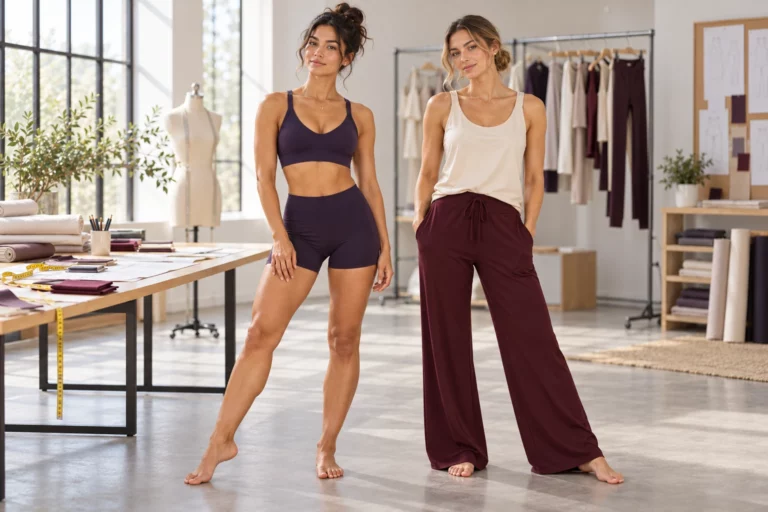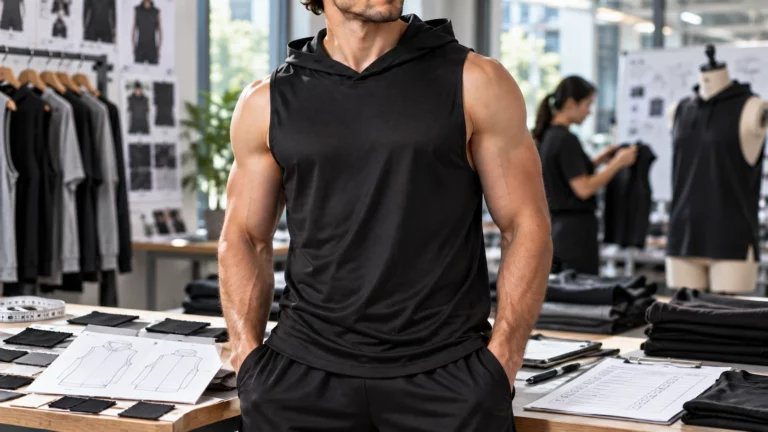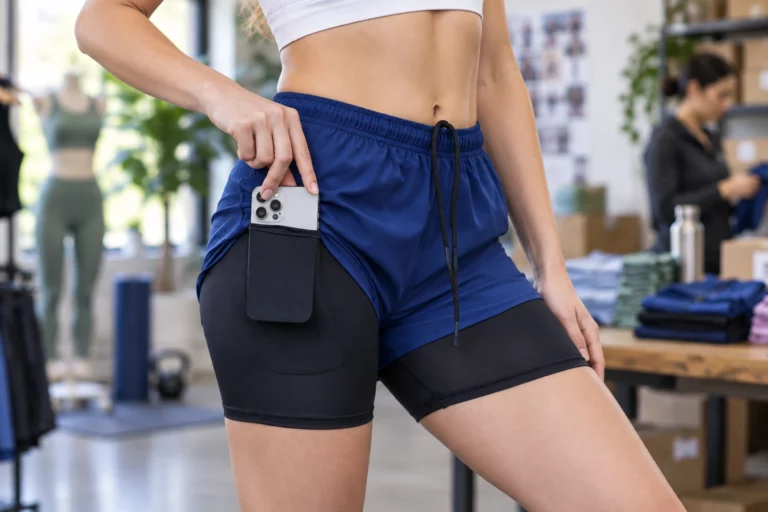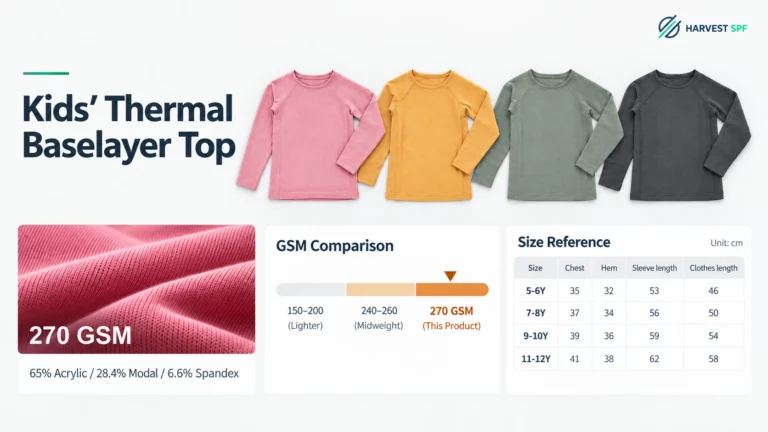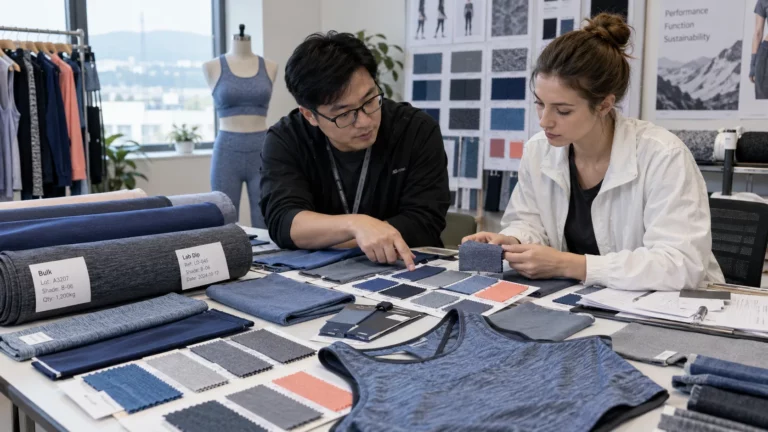


A yoga wear manufacturer should develop separate fit systems for hot yoga and restorative classes because the two practices place very different demands on clothing. Hot yoga requires garments that stay secure during repeated movement, manage perspiration, and prevent excess fabric from shifting. Restorative yoga requires softer pressure, greater ease, and long-duration comfort during supported poses.
The most efficient product strategy is not to create two unrelated collections. Instead, brands can begin with a shared measurement foundation and develop separate performance and comfort blocks. This approach supports consistent grading, efficient sampling, and clearer product positioning for retailers.
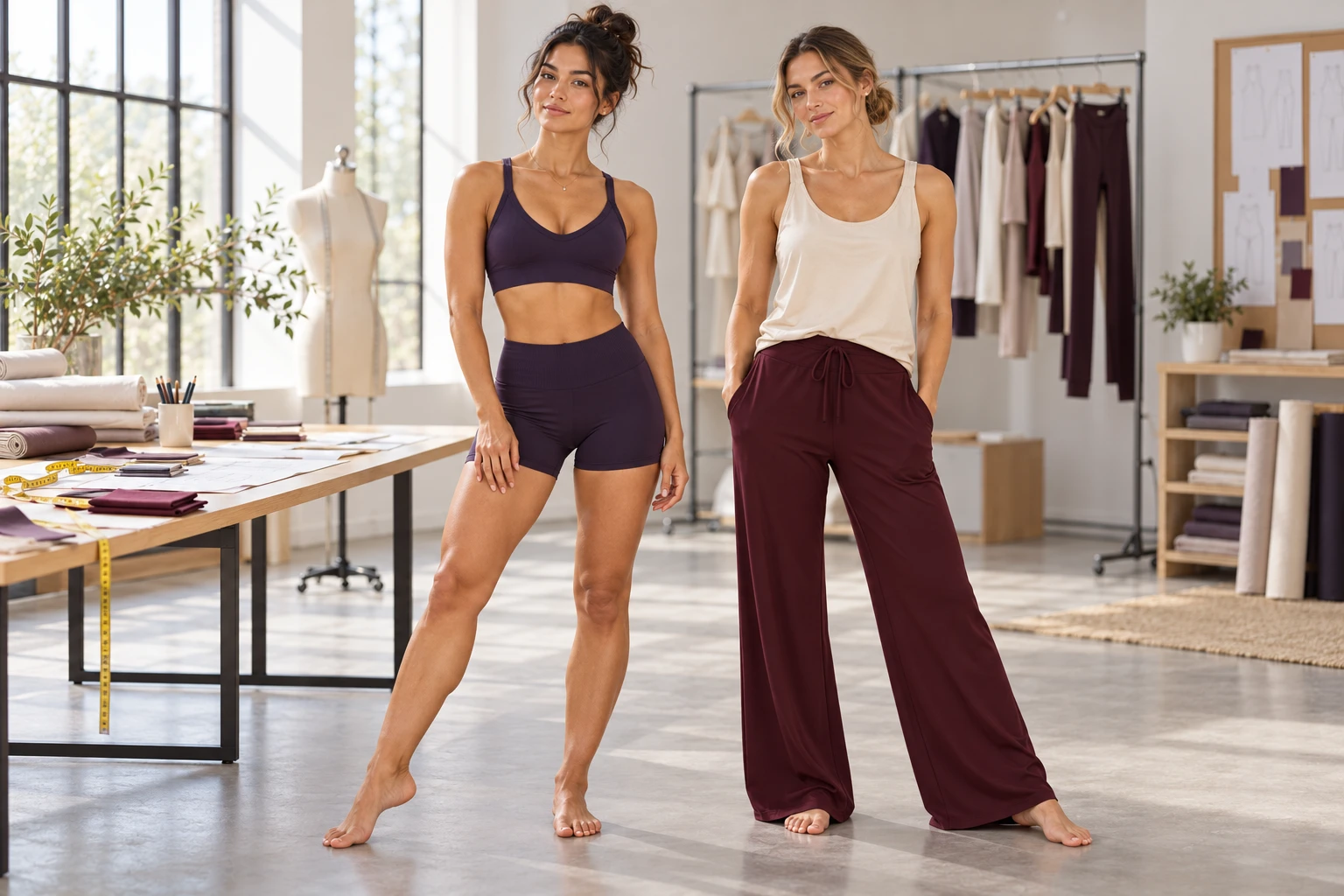
Hot Yoga vs. Restorative Yoga: Two Fit Objectives
| Development variable | Hot yoga | Restorative yoga |
| Fit objective | Movement stability | Long-duration comfort |
| Ease | Controlled negative ease | Reduced negative or functional positive ease |
| Waistband | Secure, stable | Low pressure, soft contact |
| Fabric | Stretch, recovery, moisture management | Softness, drape, comfort |
| Seams | Dynamic durability | Low pressure against body and props |
| Testing | Dynamic movements and moisture-relevant wear | Static poses and extended wear |
| Key risks | Rolling, slipping, transparency | Pressure, bunching, discomfort |
Yoga Wear Fit Development Framework
Define class environment → target wearer → shared body measurement foundation → garment ease → fabric selection → pattern development → prototype → wear testing → size-set grading → PP approval → bulk control. Yoga fit should be engineered around intended activity, fabric behavior and body proportions, not merely labeled tight or loose.
Begin with the class environment
Fit development should start with how the garment will be used, rather than with a generic category such as leggings or yoga tops.
Hot yoga typically involves elevated heat, heavy sweating, frequent transitions, forward folds, twists, and extended stretching. A garment that feels acceptable in a cool studio may become heavy, transparent, or unstable when wet. The pattern therefore needs controlled stretch, secure openings, and enough recovery to maintain its shape.
Restorative yoga has a slower rhythm. Participants may remain in supported positions for several minutes with the assistance of bolsters, blankets, blocks, and straps. The garment needs to accommodate reclining, hip opening, shoulder movement, and long periods of stillness. Seams or waistbands that feel acceptable during a short workout may become uncomfortable during extended holds.
A development brief should document:
- Expected heat and sweat exposure
- Typical movement intensity and pose duration
- Desired body coverage
- Support expectations for the bust and waist
- Use of props and floor-based positions
- Target customers, sizes, and body proportions
- Intended fabric performance and care requirements
This information allows the pattern team to define the correct fit objective before selecting final silhouettes.
Develop a secure hot-yoga performance fit
The hot-yoga fit should stay close to the body without creating excessive compression. The main goal is to reduce shifting, sagging, and fabric interference during movement.
Calculate Negative Ease Before Approving the Pattern
Garment ease = finished garment measurement − body measurement. Example: body hip 100 cm and finished garment hip 88 cm gives −12 cm, or −12% relative ease. This is an illustration, not a universal yoga-legging target. The approved ease depends on fabric extension, extension force, recovery, construction, desired compression and wearer comfort. Two fabrics with the same stretch percentage may feel different because their resistance to extension differs.
Control negative ease
A close fit can help leggings, shorts, bras, and tanks remain stable as the wearer moves. However, negative ease must be reviewed across the full size range. Too much compression may cause waistband rolling, armhole pressure, visible tension lines, or restricted breathing.
Leggings and shorts should be evaluated during standing, squatting, lunging, seated poses, and forward folds. The waistband should remain in position without cutting into the abdomen. Tops and bras should be checked for underbust stability, arm movement, and back comfort during rotation.
Harvest SPF’s women’s athletic yoga shorts provide a relevant development reference. The product is described with a crossover waistband, tight fit, extra-high elasticity, and a professional sports fabric. Its listed composition is 62% recycled nylon and 38% spandex, with sizes from XS to XL. These specifications can inform a performance direction, but each brand should validate the final fit and fabric through its own testing.
Four Critical Fit Zones for Hot-Yoga Leggings
Waistband: stability, pressure and recovery (rolling/slipping). Crotch and gusset: mobility and seam placement (pulling/chafing). Hip and seat: coverage and negative ease (sheerness/tension). Thigh and knee: extension and recovery (bagging/restriction). Record observations by size and pose.
Dry and Moisture-Exposed Fit Validation
Dry-state review: waistband stability, squat opacity, seam comfort and recovery. Moisture-relevant review: fabric cling, opacity/appearance, shifting and perceived weight. A dry fitting alone may not represent hot-yoga use; define moisture exposure and evaluation conditions with the buyer rather than claiming a universal wet-fit standard.
Match fabric behavior to the fit
Hot-yoga products usually require lightweight, flexible fabrics that can manage perspiration and recover after repeated extension. Nylon-spandex and polyester-spandex constructions may be suitable starting points, but fiber content alone does not determine performance.
The finished fabric should be assessed for:
- Stretch and recovery in multiple directions
- Opacity during deep bends and damp wear
- Abrasion resistance at the inner thigh
- Seam strength during repeated movement
- Pilling after laundering
- Colorfastness and surface appearance
- Moisture behavior in the completed garment
A supplier should distinguish between confirmed test results and claims that depend on fabric weight, knit structure, finishing, or garment construction. Brands should also avoid using terms such as “sweatproof” or “cooling” unless the claim is supported by a defined testing method.
For buyers comparing suppliers, the yoga wear manufacturer should be able to explain how fabric, pattern, and construction choices work together.
Restorative Low-Pressure Fit Zones
Evaluate waist/abdomen during reclining and forward folds; lower back against the mat; hip/crotch during cross-legged sitting; shoulder/underarm in supported stretches; and knee/calf during prolonged flexion. Controlled ease and seam placement matter more than simply increasing garment dimensions.
Create a low-pressure restorative fit
Restorative yoga clothing should feel stable but forgiving. The wearer should be able to remain in a supported position without constantly noticing the garment.
Reduce pressure points
Review the waistband, elastic width, seam location, gusset construction, and label placement. A wider waistband may distribute pressure more comfortably than a narrow elastic edge. Flat seams or carefully positioned coverstitching can reduce irritation when the wearer reclines on a mat or bolster.
For tops, the shoulder and armhole should allow overhead movement without pulling across the chest. A slightly more relaxed torso may be preferable to a compressive performance block, particularly when the garment is intended for extended studio wear.
For bottoms, test seated cross-legged positions, supported forward folds, reclining twists, and legs-up-the-wall positions. Watch for fabric pooling behind the knees, waistbands sliding down, or seams pressing into the lower back.
Static Pose Comfort Testing
Example development protocol (not an industry standard): observe 15–30 minutes of supported wear where appropriate. Supine lying: back seam and waistband; cross-legged sitting: hip/crotch ease; supported forward fold: waistband and back coverage; reclining twist: seam contact; legs-up-the-wall: fabric pooling and waistband stability. Record time, pose, size, fabric and wearer feedback.
Add functional ease
A restorative fit may use less negative ease through the torso and upper leg than a hot-yoga fit. The correct amount depends on fabric recovery, garment length, and the desired silhouette. Excessive ease can create folds that catch on props, while insufficient ease can make the garment feel like compression wear.
Relaxed joggers, soft wide-leg pants, longer tops, and layering pieces may work well for restorative collections. However, loose garments still need movement testing to ensure that excess fabric does not interfere with foot placement or transitions.
Shared Body Platform vs. Separate Garment Blocks
Shared: body measurement definitions, size architecture and selected grading references. Performance block: controlled negative ease, secure openings, dynamic testing. Comfort block: softer pressure, functional ease, prolonged-pose testing. Shared body measurements do not mean identical finished patterns or identical grading rules; each block requires independent validation.
Pattern Block Comparison
| Variable | Performance block | Comfort block |
| Waist/hip ease | Secure close fit | Low-pressure functional ease |
| Rise/gusset | Dynamic stability and mobility | Seated comfort and seam relief |
| Leg opening | Stable fit | Comfort and drape |
| Top torso/armhole | Secure coverage and dynamic mobility | Relaxed contact and movement |
Final dimensions must follow approved fabric behavior and fit trials, not generic centimeter allowances.
Use two fit blocks on a shared platform
A brand does not necessarily need two completely separate production systems. A manufacturer can establish a shared base block for core body measurements and then develop two fit blocks:
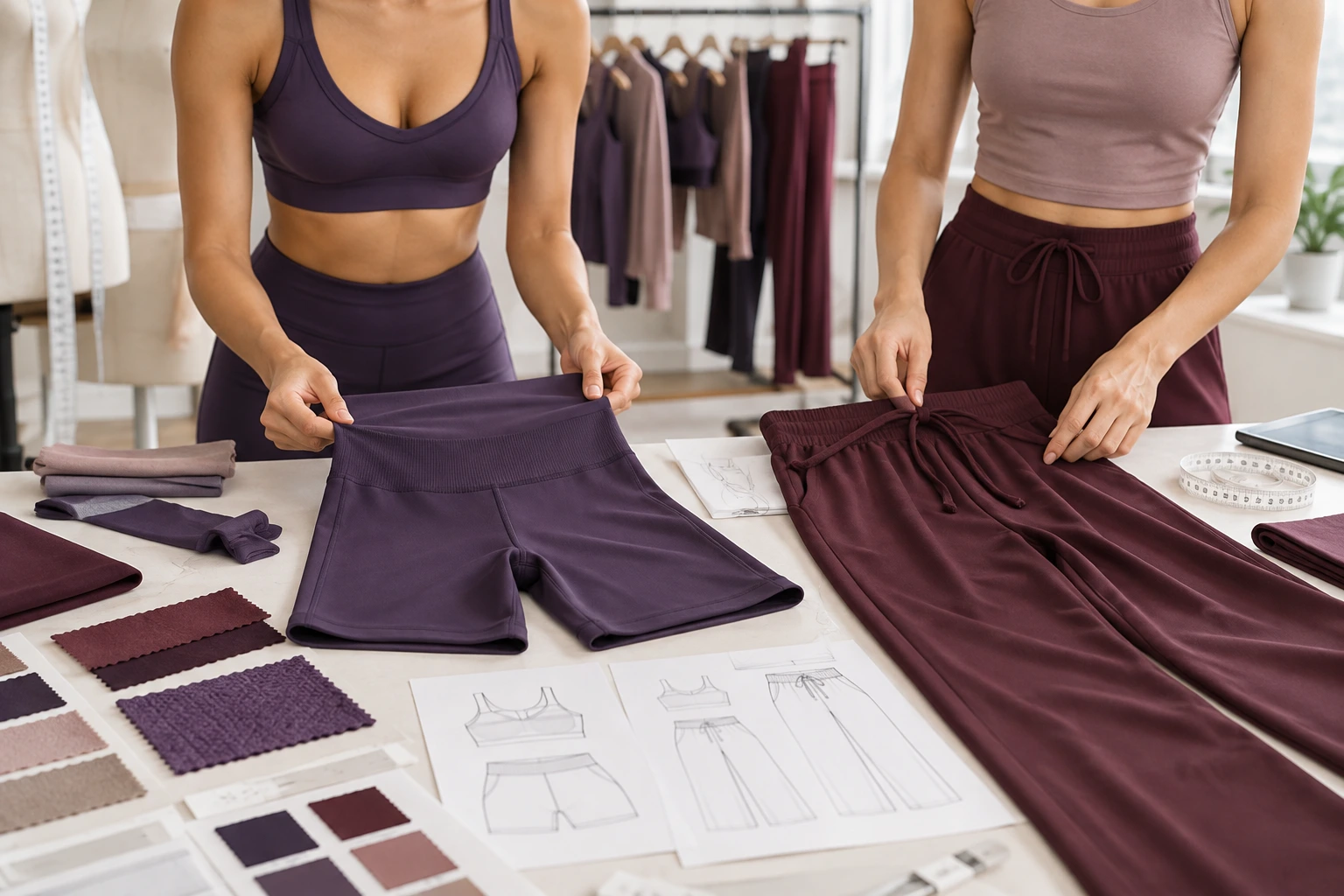
- A performance block with closer ease, stronger recovery, and secure openings
- A comfort block with softer pressure, greater ease, and reduced seam exposure
This structure makes it easier to maintain consistent grading while adapting the products to different class conditions.
A practical development sequence is:
- Define the wearer, class environment, and product purpose.
- Prepare a technical package with measurements and tolerances.
- Select or develop fabrics for each fit objective.
- Produce first prototypes in representative sizes.
- Conduct movement and comfort testing.
- Revise the pattern and construction.
- Approve a size set before bulk production.
Harvest SPF describes an OEM/ODM process that includes design and tech-pack development, material selection or development, prototype sampling, client proofing, mass production, and quality inspection. This type of staged workflow allows a brand to compare hot-yoga and restorative samples before committing to production.
Base Size Approval Is Not Full-Range Approval
A successful medium-size sample cannot establish waistband pressure, rise, bust support, armhole or negative-ease distribution across all sizes. Review representative small, base and large sizes and any grading breakpoints. Record waistband stability, hip coverage, opacity, seam pressure, movement comfort and recovery for each selected size.
Fabric Selection and Pattern Compatibility
Hot yoga typically prioritizes secure recovery, opacity, stretch and moisture-related comfort; restorative yoga emphasizes softness, controlled drape, low-pressure contact and appropriate mobility. Both require durability and suitable coverage. Composition alone does not prove suitability. A change in fabric source, extension force, recovery, thickness or finish may require fit revalidation even if composition and GSM appear similar.
Test grading across real body proportions
A fit system is only useful if it performs across the intended size range. Testing only one sample size can hide problems in grading, waistband proportion, bust support, or rise length.
At minimum, evaluate a base size, a smaller size, a larger size, and any size where the grading rules change significantly. If the collection targets different body proportions, use more than one fit model rather than applying a single linear grade to every customer.
Collect both technical and wearer feedback:
- Does the waistband remain stable?
- Does the garment stay opaque when stretched?
- Does the fabric recover after repeated movement?
- Do the seams remain comfortable after extended wear?
- Does the top support the bust without restricting breathing?
- Does the garment remain comfortable against props?
- Can the wearer move without repeated adjustment?
Restorative products should also be tested for longer periods. A short fitting may not reveal discomfort that appears after fifteen or twenty minutes in a supported pose.
Wear Testing Protocol and Approval Evidence
Use a controlled record: test condition → fit model/body measurements → garment size → fabric lot/specification → pose and duration → observation → correction → sign-off. Hot-yoga checks emphasize standing, squat, lunge, twist, stretch recovery and risk-based moisture evaluation; restorative checks emphasize reclining, cross-legged poses, extended holds and pressure contact. Define acceptance criteria for the actual style.
Yoga Wear OEM Fit Approval Gates
Gate 1 Product brief (class, wearer, category); Gate 2 Fabric (stretch, force/recovery, opacity, hand feel); Gate 3 Base pattern (performance/comfort block); Gate 4 Prototype fit; Gate 5 Revised sample; Gate 6 Representative size set; Gate 7 PP sample with final materials/construction; Gate 8 Written bulk release. Link every approval to a fabric specification, pattern revision and identifiable sample.
Clarify the product architecture
Retail buyers need to understand why two fit systems exist. Organize the collection around use conditions rather than relying only on garment names.
Possible product groups include:
- Hot-yoga performance leggings
- Sweat-focused yoga shorts
- Supportive studio bras
- Low-pressure restorative joggers
- Soft layering tops
- Multi-class core pieces
A coordinated color palette can connect the collection, while product descriptions explain the functional differences. Each page should identify the fit level, fabric composition, size range, care requirements, and intended use.
Brands can review Harvest SPF’s activewear and yoga product range to compare silhouettes such as yoga pants, shorts, sports-bra tanks, bodysuits, and jogger sets. The women’s athletic yoga shorts can also serve as a starting point for discussions about fabric, waistband construction, and performance fit.
Two Collections, Shared Commercial Platform
Share where appropriate: brand color direction, measurement definitions, selected trims/labels, packaging, QC documents and material sourcing routes. Keep separate: garment ease, fit blocks, application-specific fabrics and wear-test criteria. Example SKU count: 2 fit collections × 3 styles × 4 colors × 5 sizes = 120 SKUs. Evaluate fabric/color/style MOQs and size allocations before committing; shared development does not guarantee shared MOQ.
Questions to ask before placing an order
Before selecting a supplier, ask:
- Which measurements define the performance and comfort blocks?
- How are tolerances controlled across sizes?
- What tests are available for stretch, recovery, opacity, and abrasion?
- Can the supplier provide a representative size set?
- How are revisions recorded between sample rounds?
- What are the minimum quantities for cut-and-sew, ODM, or seamless production?
- Can the supplier support labels, packaging, and inspection?
Harvest SPF lists separate customization routes for cut-and-trim, full-package ODM, seamless products, and socks. Minimum quantities should be confirmed for the selected fabric, construction, and order plan.
How Harvest SPF Supports Yoga Wear Fit Development
Subject to project-specific capability confirmation, Harvest SPF can discuss fabric engineering (stretch, recovery, softness, moisture behavior), performance and comfort pattern blocks, prototype/size-set development, dynamic and static wear evaluation coordination, SKU/MOQ planning and bulk specification control. Present any testing or specialist fit services as project-scoped rather than guaranteed capabilities.
Conclusion
Hot yoga and restorative yoga require different relationships between the body, fabric, and pattern. Hot-yoga products should prioritize secure movement, moisture management, recovery, and reduced shifting. Restorative products should emphasize low pressure, soft contact, controlled ease, and comfort during long supported poses.
The strongest development strategy is usually a shared base platform with separate fit blocks, fabrics, and testing criteria. By documenting class conditions, testing multiple sizes, and using structured prototype revisions, a brand can create a clearer yoga collection for retailers and a more comfortable product for end customers.
FAQs
Should hot-yoga clothing always be tight?
No. It should remain secure during movement without restricting breathing or creating pressure points.
Is a restorative fit the same as an oversized fit?
No. Restorative clothing needs more comfort ease, but it should still remain stable and safe during movement.
Which fabric is best for hot yoga?
There is no universal answer. Nylon-spandex and polyester-spandex are common starting points, but stretch recovery, opacity, weight, and moisture behavior require testing.
How many samples should a brand approve?
A brand should normally review a first prototype, a revised sample, and a representative size set. The exact number depends on the complexity of the garment and size range.
What should be included in an RFQ?
Include the class type, target customer, product category, measurements, fabric preference, size range, estimated quantity, branding requirements, packaging, and fit concerns.
How much negative ease should yoga leggings have?
There is no universal percentage; validate against fabric extension force, recovery, body proportions and fit objectives.
Can both collections use one pattern block?
They can share a body-measurement platform but normally need separately validated finished garment blocks.
Does changing fabric require a new fit sample?
Reassess when stretch, force, recovery, thickness or pressure behavior changes.
How should manufacturers validate fit across sizes?
Use representative size-set fitting with recorded movement, pressure, opacity and comfort findings.
What distinguishes hot-yoga from restorative leggings?
Their priorities for security, ease, fabric behavior and dynamic versus sustained-pose testing.
Get a Yoga Wear Fit & Fabric Development Review
Share the class type (hot/restorative/both), product category, target wearer, sizes, desired fit, fabric/GSM and stretch requirements, existing tech pack or sample, quantities by style/color/size, target FOB, market and delivery date. Harvest SPF can review the proposed fit-block strategy, fabric and pattern requirements, size-set validation, sampling schedule and MOQ feasibility subject to project scope.