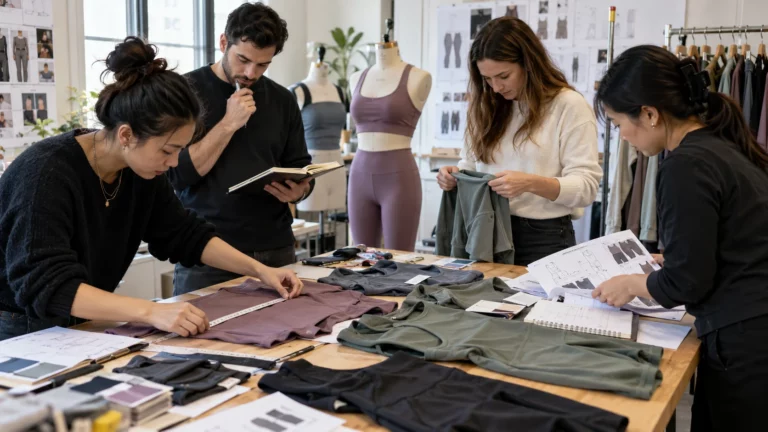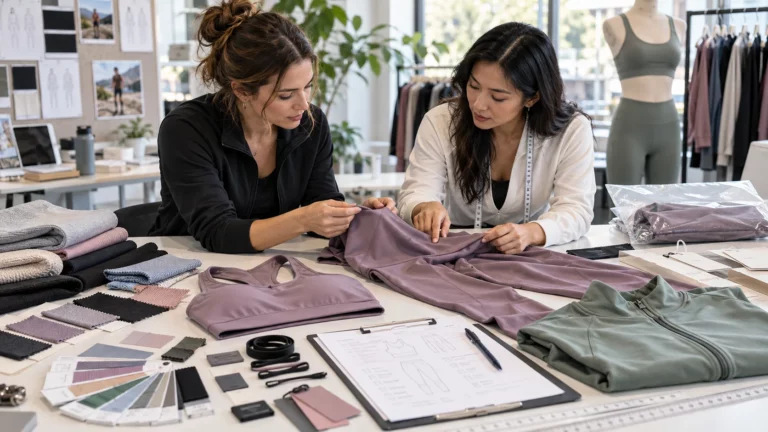


Startups can compare factory samples reliably without maintaining a full fit model library. When deciding how to evaluate clothing samples, replace informal try-ons with a controlled system: one base size, one measurement method, one reference body profile, one scorecard, and one documented approval sample. A dress form or consistent wearer can support the process, but neither should be the sole proof of fit.
Minimum Viable Factory Sample Evaluation System
One target customer profile → one base-size standard → one measurement method → one reference wearer → one evaluation scorecard → one approved reference sample. This is an early-stage comparison system, not a substitute for full size-set or pre-production approval.
This system separates four questions: Is the garment built to specification? Is the workmanship acceptable? Does it perform as intended? Does it fit the target customer? When every factory is assessed against the same evidence, the result is more useful than deciding which sample “feels best.”
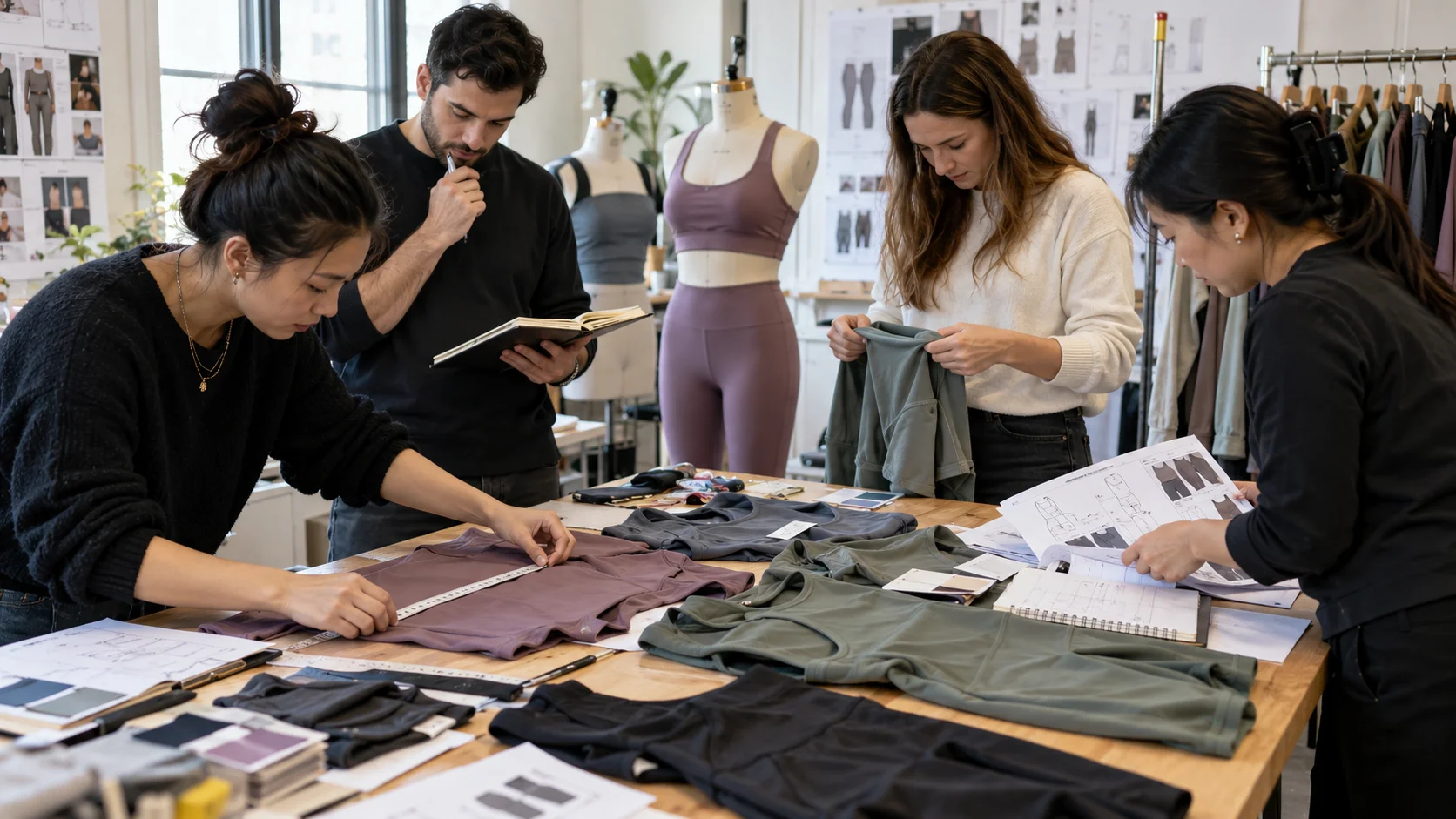
Confirm That You Are Comparing the Same Sample Stage
Sample Stage Comparison
| Stage | Purpose | Main approval question |
| Prototype | Design feasibility | Does the concept and construction work? |
| Fit sample | Fit development | Are measurements, balance and mobility suitable? |
| Size-set sample | Grading verification | Does fit work across selected sizes? |
| PP sample | Production-intent readiness | Are final materials, trims and workmanship approved? |
Do not score a first-round prototype against a third-round fit sample as though the development conditions were equivalent. Before comparing, confirm the same tech-pack revision, target size, sample stage, measurement method and disclosed material substitutions.
A prototype, fit sample, size-set sample, and pre-production sample answer different questions. A prototype may confirm shape and construction while using substitute materials. A fit sample checks balance, measurements, ease, and movement. A pre-production sample should reflect the materials, trims, construction, labeling, and finishing intended for bulk production.
Before scoring, ask each supplier to identify the sample stage and every substitution. Do not rank a rough development sample against a production-ready sample as if they represent equal factory performance.
For a sequence from tech pack and fabric selection through prototype sampling, client proofing, mass production, and inspection, review Harvest SPF’s ODM/OEM development workflow.
Build a Minimum Viable Fit Standard
Target Body Profile and Reference Wearer
| Body measure | Target customer profile | Reference wearer actual |
| Height | Buyer-defined | Record actual |
| Chest / bust | Buyer-defined | Record actual |
| Waist | Buyer-defined | Record actual |
| Hip | Buyer-defined | Record actual |
| Inseam / shoulder | As relevant | Record actual |
Select the target body profile from the intended customer and product use; competitor size charts may inform research but are not verified body-data distributions. Record deviations between the reference wearer and target profile before interpreting comfort feedback.
Three-Level Fit Validation
Level 1: flat garment measurements against the tech pack. Level 2: dress form or mannequin for balance, hang and symmetry. Level 3: the same documented reference wearer for pressure, coverage, mobility and comfort. The three methods complement rather than replace one another.
A startup does not need dozens of professional models to create a stable baseline. It needs one defined target and a repeatable method.
Start with a base-size body profile containing the measurements that affect the style. Establish garment points of measurement, or POMs, in the tech pack. Define where each measurement begins and ends, how the garment is positioned, and whether stretch is relaxed or extended. Add tolerances only when the construction and material justify them.
Use three complementary references:
- A dress form or mannequin for balance, hang, symmetry, and visual comparison.
- The same consistent wearer for mobility, comfort, pressure, coverage, and dressing.
- Flat measurements for objective comparison against the specification.
A consistent wearer is a test reference, not a universal customer. If that person differs from the target profile, record the difference rather than treating the try-on as approval. Keep the accepted sample as the sealed physical reference, or golden sample, for later comparisons.
Use One Factory Sample Evaluation Scorecard
Weighted Factory Sample Scorecard (illustrative)
| Area | Weight | Factory A | Factory B |
| Specification | 20% | 4/5 | 5/5 |
| Construction | 20% | 4/5 | 3/5 |
| Material | 15% | 5/5 | 4/5 |
| Fit | 25% | 3/5 | 4/5 |
| Function | 15% | 4/5 | 4/5 |
| Finish | 5% | 4/5 | 5/5 |
| Weighted total | 100% | 3.85/5 | 4.10/5 |
Weighted score = sum(category score × category weight). Suggested 1–5 scale: 1 unacceptable; 2 poor; 3 conditional/revision needed; 4 good/minor issues; 5 meets agreed expectations. Adjust weights to product use. Critical safety, material-identity or functional failures remain separate approval blockers regardless of total score.
A shared scorecard prevents attractive photography or soft hand feel from masking technical problems. Score every sample in the same order and attach evidence to each decision.
| Review area | What to compare | Evidence to retain |
| Specification | POMs, proportions, component placement | Measurement sheet with actual values |
| Construction | Seams, stitch consistency, hems, reinforcement | Close-up photos and issue locations |
| Material | Fabric identity, hand, stretch and recovery | Supplier record and controlled observations |
| Fit | Balance, ease, drag lines, pressure, coverage | Front, side, and back photos on one reference |
| Function | Movement, opacity, pocket security, closures | Repeatable movement or use test |
| Finish | Shade, labels, print or embroidery, packing | Comparison against approved requirements |
Weight categories according to the product. Fit and movement may matter more for an activewear and fitness/yoga range, while thermal garments may require attention to layering ease and fabric behavior. Do not let factories choose different scoring criteria for their own samples.
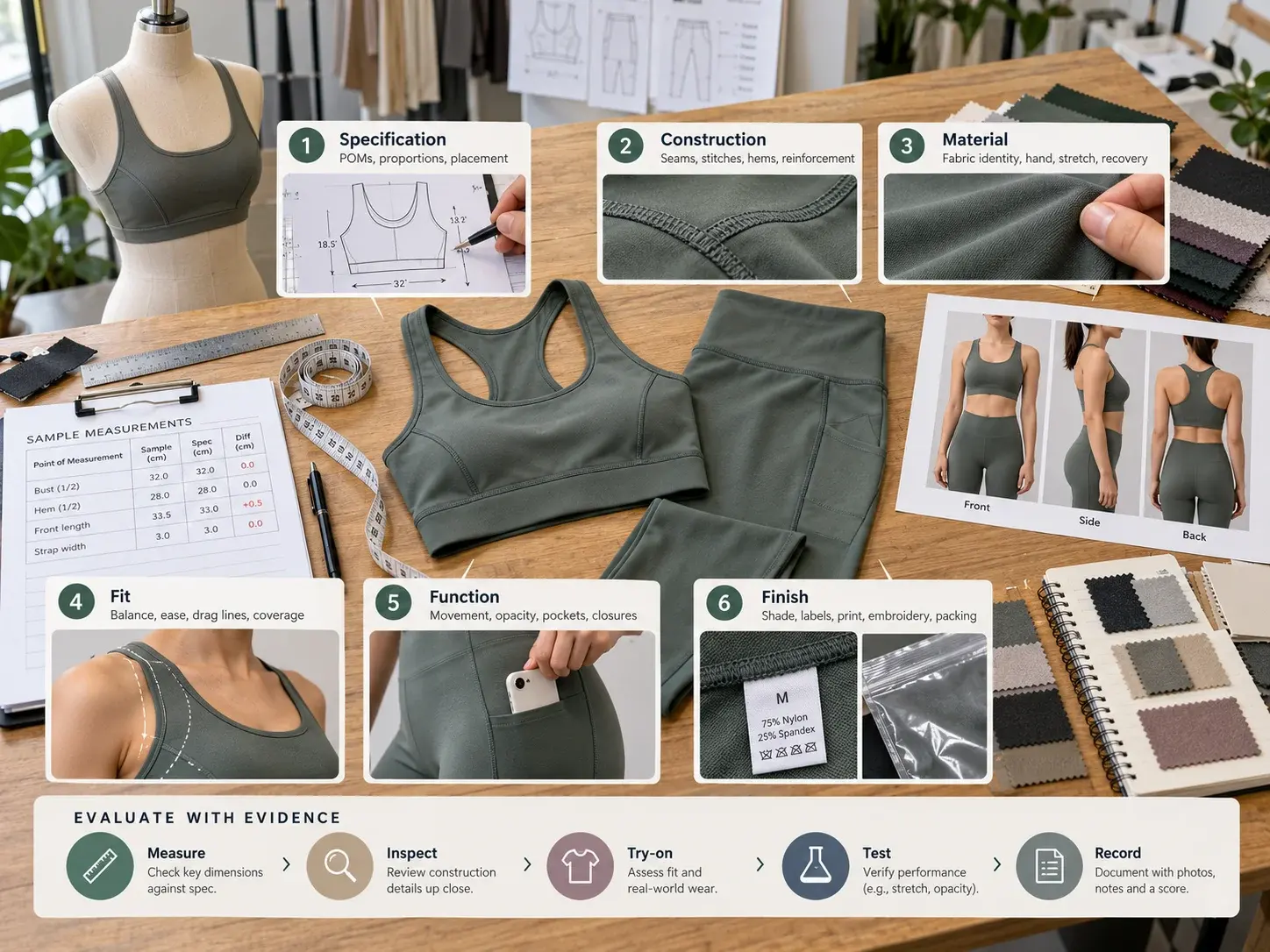
For illustration only. Specifications and material details vary by project and must be verified before approval.
Compare Every Sample in the Same Sequence
1. Condition and Identify the Samples
Allow samples to return to a comparable condition after shipping. Assign each a code so reviewers are not influenced by the factory name. Confirm size, color, material, revision, and sample stage before testing.
2. Measure Before Trying On
Example POM Measurement Comparison (cm)
| POM | Specification | Tolerance | Factory A | Factory B |
| Chest | 96 | ±2 cm | 96.5 | 98.5 |
| Body length | 65 | ±2 cm | 65 | 62.5 |
| Sleeve length | 60 | ±1 cm | 61 | 59.5 |
| Hem width | 48 | ±1 cm | 48 | 49 |
These figures are illustrative, not universal apparel tolerances. The buyer-approved tech pack governs. A garment may pass POM measurements but fail fit because of pattern balance, ease, armhole shape or fabric recovery; a comfortable try-on can also fail the specified POMs.
Use the same surface, tools, and POM definitions. Enter actual values rather than “pass” or “fail.” A sample can look acceptable on one wearer while being outside specification, creating problems during grading or bulk production.
3. Inspect Workmanship Systematically
Review the garment outside and inside. Follow the same route: neckline or waistband, major seams, openings, hems, closures, pockets, trims, labels, and stress points. Photograph defects with a scale reference when size matters. Mark whether each issue is isolated, repeated, cosmetic, or functional.
4. Run a Repeatable Fit and Movement Check
Product-Specific Movement Checks
| Product | Repeatable movement | Observe |
| Leggings | Squat / lunge | Opacity, waistband, crotch |
| Sports bra | Arm raise / movement | Band, straps, coverage |
| Running shorts | Run / squat | Ride-up, pocket security |
| Base layer | Reach / twist | Hem, shoulder, mobility |
| Thermal pants | Squat / kneel | Knee, rise, waistband |
Keep the same wearer, undergarments, movement sequence, camera positions and evaluation criteria across factory samples. A passing base size does not automatically validate the size range.
Use the same dress form or wearer, undergarments, camera positions, and movement sequence. Depending on the product, include sitting, walking, reaching, bending, or a gentle squat. Compare balance, seam position, coverage, restriction, twisting, and recovery.
One try-on cannot validate a complete size range, but it can expose pattern and construction issues in the base size. Review a size-set sample before bulk production when grading is commercially important.
5. Perform Product-Relevant Care and Function Checks
Test only what the brief requires: perhaps a controlled wash observation, stretch recovery, opacity under movement, closure operation, pocket retention, or surface appearance. Record the method and conditions so the next sample receives the same test. Results may vary by fiber, fabric construction, color, finishing, and care method.
Control Variables Before Comparing Factories
Controlled vs. Uncontrolled Variables
Record tech-pack revision, pattern specification, fabric identity and GSM, sample stage, size, trims, tester, conditioning and test method. When fabrics differ, evaluate workmanship and measurements separately from fabric-dependent drape, stretch, opacity and perceived fit. Blind-code samples (A-01, B-01) where practical before revealing supplier identity.
Send every factory the same revision-controlled tech pack, measurement table, bill of materials, color references, artwork, trim requirements, and packing expectations. Ask suppliers to declare unavailable components before construction.
Different fabrics can change stretch, drape, recovery, opacity, and perceived fit even when the pattern is identical. Harvest SPF lists material selection and prototype sampling within its customization process, and its product categories illustrate why evaluation criteria should change with the application.
Write Sample Comments a Factory Can Execute
Sample Revision Tracking Log
| Issue ID | Observation | Requested outcome | Owner | Status |
| F01 | Armhole restricts reach | Improve mobility | Factory | Open |
| F02 | Waistband rolls | Improve stability | Factory | Open |
| F03 | Logo placement low | Correct placement | Factory | Closed |
| F04 | Fabric too sheer | Review material | Material team | Open |
Record sample round, revision date, original result, corrected result and buyer approval. Describe the observed failure before prescribing a technical solution. Decide for each issue: Accept, Revise, Retest or Reject. Not every documentary correction requires a complete new physical sample.
Good comments describe the problem without prescribing an uncertain pattern solution. Each comment should contain:
- Issue and exact location.
- Actual measurement or observed behavior.
- Target specification or approval criterion.
- Annotated photo or sketch.
- Requested outcome.
- Priority: blocker, correction required, or observation.
“The armhole feels wrong” is subjective. “Front armhole restricts forward reach on the agreed reference wearer; see the annotated photo and the relevant POM row; revise for mobility while maintaining specified coverage” gives the factory a testable outcome.
Keep one consolidated comment sheet per revision. Contradictory feedback from different reviewers creates extra rounds and makes supplier comparison unreliable.
Select for Bulk-Production Risk, Not Just Appearance
Reduce Sampling Cost Without Sacrificing Accuracy
Freeze the design brief before comparison, use one controlled tech pack, prioritize fit/material/function blockers, consolidate reviewer comments, attach annotated photographs and measurements, and confirm the revision scope before resampling. Track sample fees, turnaround time, issues closed and remaining blockers. Fewer sample rounds are not inherently better if important questions remain unresolved.
Supplier Selection Beyond Sample Appearance
| Decision area | Evidence to review |
| Sample technical score | Weighted score plus critical pass/fail gates |
| Revision performance | Accuracy, issue closure, communication |
| Production capability | Material control, reproducibility, quality planning |
| Commercial feasibility | MOQ, price, sample cost, lead time |
| Final decision | Authorized approval with unresolved issues listed |
A strong sample is evidence of development capability, not proof of consistent bulk quality. Confirm material approvals, grading, production controls and final release requirements before placing the bulk order.
How Harvest SPF Can Support Startup Sample Development
For projects within its confirmed service scope, Harvest SPF can help review tech packs, clarify fabric and construction options, coordinate prototype and fit revisions, support size-set and PP sample development, and define measurable quality requirements. Buyers should retain final technical approval responsibility.
The winning factory is not necessarily the one with the most polished first sample. Consider whether the supplier measures consistently, reports substitutions, interprets comments accurately, controls revisions, explains material limits, and reproduces approved details.
Before approval, confirm that critical measurements meet the specification, blockers are closed, required materials and trims are represented, construction details are documented, and the approval sample is identified. Keep conditional items open instead of assuming bulk production will correct them.
Startup teams may have limited technical resources. Harvest SPF presents a team with backgrounds including design and materials science; buyers can review the service team when deciding what information to include in a sample request.
Conclusion
Startups do not need a large fit model library to compare factory samples with discipline. They need consistent inputs, objective measurements, a repeatable surrogate fit check, product-specific tests, and one evidence-based scorecard. The method does not replace full size-set validation or specialist fit work, but it makes early supplier decisions clearer.
FAQs
Can one reference wearer approve the entire size range?
No. One wearer supports early comparison; representative size-set validation may still be required.
How should startups rank two factory samples?
Use a common weighted scorecard, then apply separate critical pass/fail gates.
What if fabrics differ?
Isolate fabric-dependent observations and request aligned materials before drawing direct conclusions.
How many sample rounds are normal?
There is no universal number; complexity and unresolved issues determine the need.
How can sample costs be reduced?
Use controlled specifications, consolidated feedback, prioritized revisions and documented issue closure.
Can a Mannequin Replace a Fit Model?
No. A mannequin helps with balance, symmetry, and repeatability, but it cannot report comfort or reproduce movement. Combine it with measurements and a consistent wearer.
How Many People Should Try On the First Fit Sample?
One repeatable wearer close to the documented target profile is more useful for comparison than several changing volunteers. Additional bodies can provide discovery feedback but should not replace the controlled reference.
What Should Be Approved Before a Pre-Production Sample?
Define the design, base-size measurements, materials, trims, construction, colors, labels, artwork, and finishing expectations. Record any approved substitution.
How Can Two Factories Be Compared When Their Fabrics Differ?
Separate pattern and workmanship observations from fabric-dependent behavior. Then request equivalent approved materials or mark the comparison as conditional until materials are aligned.
Get a Startup Apparel Sample Development Review
Share style sketches or reference images, available tech pack, target customer and size range, fabric requirements, current sample problems, development stage, target order quantity and delivery date. Ask Harvest SPF to review missing technical information, material and construction options, fit revision priorities, sampling scope and production feasibility.
Review My Apparel Sample Project