Merino wool socks stand out as top-tier performance footwear. They use the fiber’s special structure—crimped, hollow, and moisture-attracting—to provide excellent temperature control. These socks handle moisture vapor up to 30% of their weight without feeling wet. They also offer natural germ resistance thanks to lanolin and keratin. Plus, they show lower friction levels that beat cotton in shear-force tests. These benefits come from years of progress in material science.
The main lengths include ankle (low-cut), crew (mid-calf), and knee-high (over-the-calf or OTC). Each type adjusts these qualities in its own way. It depends on body movement needs, outside conditions, and shoe fit. This detailed review pulls from real-world test results, friction science knowledge, and activity-based needs to help with the choice.
The Science Behind Merino Wool Sock Performance
Merino wool performs well because of its scale-covered fiber surface. This surface pulls moisture in one direction. At the same time, it holds air to keep things warm. Research on friction blisters proves that wet skin raises the friction level a lot. Merino keeps the skin area drier. It does this by taking in vapor and sending it out. This cuts down shear forces that damage skin layers. Blister rates fall quite a bit compared to cotton in lab tests. Merino mixes cut hotspots even more with special knit patterns. Blends usually have 50-80% merino. This gives softness and strong function. They add recycled nylon for better wear resistance. Elastane brings full recovery from all sides. Newer designs feature seamless toes to remove rub spots. They include shaped arch bands for better hold. Zoned mesh areas improve air flow by guiding it through.
Ankle-Length Merino Wool Socks: Precision for High-Mobility Scenarios
Merino wool Ankle socks cut down on fabric amount. This boosts air flow and foot awareness. Their short height works best in warm to average weather. There, cooling matters more than extra coverage.
- Better air movement — Less fabric means stronger cooling from moving air. Mesh sections in sweaty spots can raise vapor escape by 20-30%.
- Little limit on quick motion — Great for trail running, fast drills, or gym workouts. Extra length there can cause pull or bunching.
- Clean fit — They match perfectly with low-cut sneakers or trail shoes. No visible edges show up. They still give merino’s smell control for hours of use.
- Blister protection in low-rub settings — Thin padding (often 1-2 mm change) takes in shock without extra weight. The short top cuts ankle rub in bendy shoes.
Downsides show up on trails with lots of dirt or in colder air. Bare ankles then let in grit and let heat drop.
Crew-Length Merino Wool Socks: The Versatile Gold Standard
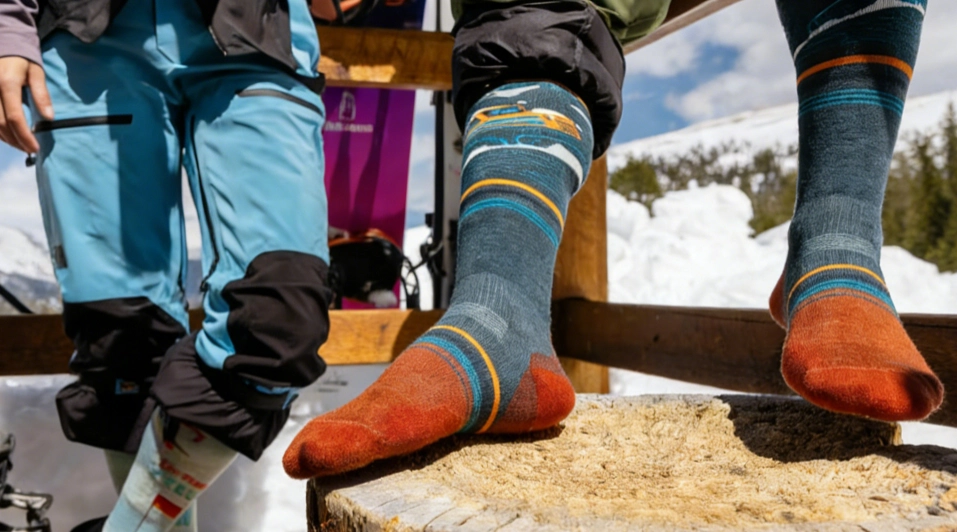
Merino wool Crew socks reach mid-calf. They give the best mix of safety, air flow, and flexibility for different seasons and tasks.
- Ankle guard without too much heat — The coverage stops boot-top scrapes and small dirt entry. This matters on day hikes or mixed ground.
- Smart zone setup for better function — Many have focused padding (heel/toe 3-4 mm, forefoot thinner). Arch squeeze bands cut slip by up to 40%. Mesh openings keep the inner climate steady.
- Reliable across all seasons — Midweight builds work well in 40-70°F. Merino’s warmth stands out when damp. It holds heat during water crossings or heavy sweat times.
- Solid lasting power in tough use — Strong spots in high-wear areas and near-lifetime guarantees in top brands handle rough paths. They keep the fit good.
Expert opinions regularly call crew the most flexible choice. It fits 70-80% of hiking and regular outdoor wants with very few trade-offs.
Knee-High Merino Wool Socks: Engineered for Extreme Protection
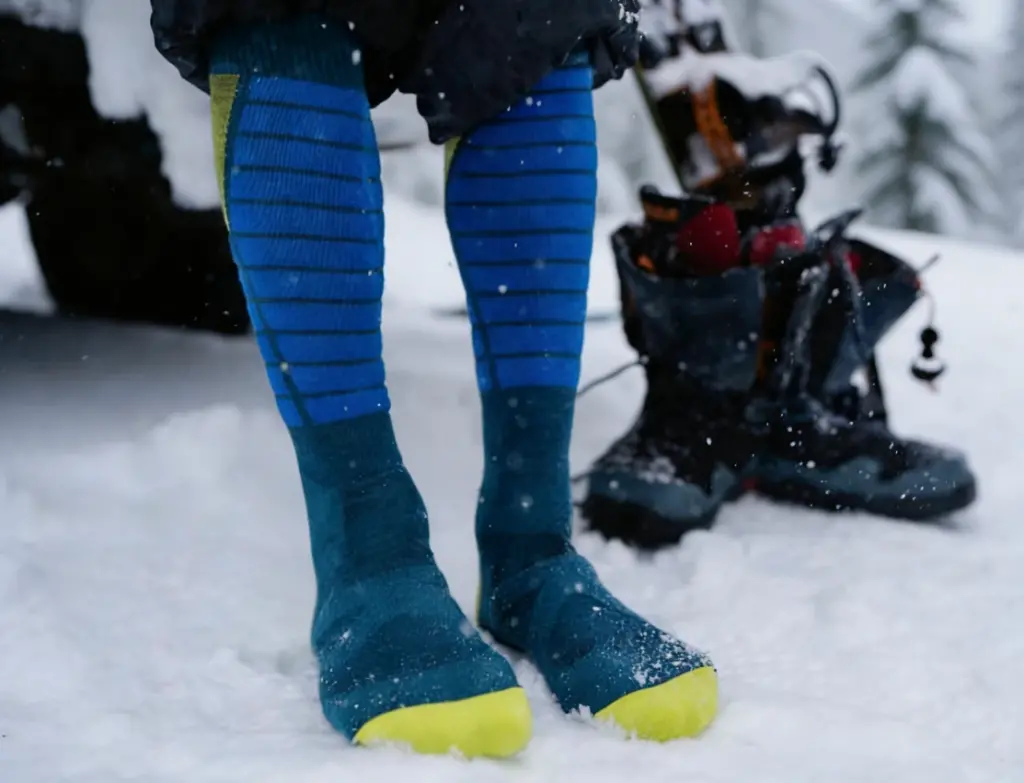
Knee-high (OTC) styles go up to or just under the knee. Knee-High Merino Wool Socks focus on warmth, support like compression, and full leg defense.
- Strong heat shield — Thick padding and more merino make a tiny insulating zone. Perfect for below-freezing skiing, snowboarding, or winter climbing.
- Shin and calf guard — It stops boot friction. It lowers shock shakes on shins. It adds support-like help to fight tiredness during long efforts.
- Improved blood flow and rest — Some have light squeeze pressure (15-20 mmHg level through knit tightness). This helps blood return. It cuts swelling on long downhill trips or plane rides.
- Dirt and squeeze protection — Complete cover keeps snow out. It gives steady hold in tall boots.
Problems include possible over-heating in gentle weather. Extra thickness needs exact boot match too.
Activity-Specific Recommendations: Matching Length to Demand
Body mechanics and outside factors decide the best height.
- Trail hiking and backpacking — Crew styles win for ankle safety and dirt block. Micro-crew types fit low- to mid-cut boots in summer. Knee-high adds shin guard for big loads or winter.
- Running (road/trail) — Ankle or low-crew works for good air flow and low weight. Crew brings side stability on rough ground without losing step power.
- Skiing/snowboarding/winter pursuits — Knee-high leads for shin shock take-up, wet warmth hold, and boot match. Thick merino mixes do great in resorts or backcountry.
- Daily/commuting/warm weather — Ankle gives low-key look. Crew handles changing weather with better smell control for longer wear.
Fit stays most important. A close feel through the foot with no loose parts stops inside shift that raises rub.
Key Decision Factors: Beyond Basic Length
- Seasonal temperature changes — Shorter for >65°F, longer for <45°F.
- Footwear interface — Low-cut needs ankle. Tall boots like crew/knee-high to close gaps.
- Intensity and duration — High effort likes lighter ankle/crew. Long or extreme use likes knee-high with strong zones.
- Advanced features — Look for seamless build, graded padding, and high merino amount (60%+) for top results.
Harvest SPF applies vertical expertise in RWS-certified merino, seamless knitting innovations, and patented functional textiles to produce performance socks that excel in these parameters.
FAQ
How does merino wool reduce blister risk compared to other materials?
Merino keeps a drier contact area by pulling vapor strongly. This lowers skin friction levels. Studies show much lower shear forces than cotton. Cotton takes in water and raises drag.
Is crew length truly the most versatile for year-round use?
Yes—mid-calf coverage balances protection and breathability across seasons. Zoning lets it adjust from summer trails to cooler daily wear.
When do knee-high socks provide measurable advantages over shorter options?
In cold, high-impact activities like skiing or heavy backpacking. There, full-leg warmth, shin safety, and tiredness cut from supportive knit patterns matter a lot.
Do merino socks require unique washing to preserve technical properties?
Cold wash, no bleach/softeners, low tumble or air dry. This keeps fiber crimp, stretch, and germ-fighting power over hundreds of cycles.
Can one sock length handle most activities effectively?
Crew often works for 70-80% of uses because of its balanced design. Still, special needs (extreme cold or max air flow) call for knee-high or ankle.
What role do knit structures play in performance differences?
Zoned padding, mesh openings, and arch bands cut hot spots. They improve hold and air flow. Advanced seamless methods remove rub points fully.
Partner with a Leading Manufacturer for Advanced Merino Wool Sock Solutions
Brands looking to elevate their collections with technically superior merino wool socks—featuring RWS-traceable fibers, OEKO-TEX certification, seamless innovations, and customizable zoning for crew, ankle, or knee-high variants—can leverage proven vertical production expertise. With over 30 patents in functional textiles, rapid 7-day prototyping, flexible low MOQ starting at 500 pieces from in-stock sustainable fabrics, and full ODM/OEM services across global markets, Harvest SPF delivers high-performance, eco-conscious products that stand out in competitive lines. Connect with Harvest SPF to discuss tailored blends, proprietary designs, and scalable solutions that enhance durability, comfort, and brand differentiation. Reach out now to initiate prototyping and explore partnership opportunities.