
For activewear sourcing teams, microfiber shedding should be treated as a measurable pre-bulk production risk. Fiber-fragment release can vary with yarn architecture, fabric construction, finishing, abrasion, and laundering conditions. As concerns about microplastics from clothing increase, procurement decisions should focus on whether the final yarn–fabric–finish combination has been tested under controlled conditions and remains consistent through bulk production. This approach requires coordination between yarn selection, fabric engineering, testing, and bulk production control.
Microfiber vs. Microplastic: Use the Terms Carefully
Microfiber is a size- and shape-related term for small fiber fragments. When those fibers are made from synthetic polymers such as polyester, they may also be discussed in the context of microplastic pollution. Testing standards may use terms such as material loss or fiber-fragment release, so procurement specifications should follow the terminology used by the selected test method.
Microfiber Shedding Control Workflow for OEM Activewear
Define test method → lock yarn specification → develop final fabric construction → complete all finishing → test the final commercial fabric → compare with an approved benchmark → freeze the yarn–fabric–finish specification → verify bulk production.
1. Make Microfiber Shedding a Pre-Bulk Approval KPI
Define the Test Requirement Before Fabric Development
Microfiber risk control should begin in the technical specification before garment sampling starts.
The sourcing specification should identify the laboratory method, reporting unit, sample stage, internal benchmark, retesting conditions, and approved reference fabric. ISO 4484-1:2023 provides a controlled method for collecting material lost from fabrics during laundering, while AATCC TM212 determines fiber-fragment mass released during accelerated laundering.
Neither method establishes a universal activewear pass/fail limit. Procurement teams therefore need an internal benchmark based on comparable approved fabrics tested under the same method.
Results generated under different test methods, laundering conditions, filtration procedures, sample preparation methods, or reporting units should not be treated as directly equivalent. Supplier comparisons should use the same selected method and comparable test conditions.
How to Build an Internal Microfiber Shedding Benchmark
- Select approved reference fabrics with stable commercial performance.
- Test the reference fabrics using one standardized method and consistent conditions.
- Compare like-for-like fabric categories rather than combining very different constructions such as brushed fleece and lightweight jersey.
- Establish a buyer-specific approval range from validated comparable fabrics.
- Use the same benchmark for new development and targeted bulk verification.
2. Lock the Recycled Polyester Yarn Specification
Control Yarn Architecture Before Knitting
Recycled content percentage alone is not enough to evaluate shedding risk. Yarn structure influences how securely fibers remain within the textile.
When qualifying a recycled polyester manufacturer or material supply chain, the technical file should record:
- recycled polyester percentage and blend ratio;
- filament or staple construction;
- yarn count or denier;
- filament count where applicable;
- twist or texturing specification;
- yarn supplier and production lot;
- recycled-material certification references where required.
Once a fabric passes testing, the approved yarn specification should be frozen in the bulk BOM. Any change in yarn source or construction should trigger technical review.
Higher Recycled Content Does Not Automatically Mean Higher or Lower Shedding
Recycled content percentage alone should not be used as a proxy for microfiber performance. A 100% recycled polyester fabric should not automatically be assumed to shed more—or less—than a virgin polyester fabric. The final result depends on yarn architecture, fabric construction, finishing, mechanical wear, and laundering conditions.
Continuous-filament and staple-spun polyester yarns have different surface structures and should not be treated as technically equivalent simply because recycled content percentage and denier are similar.
3. Evaluate Fabric Construction and Finishing Together
Test the Final Commercial Fabric
Fabric structure determines how much yarn surface is exposed to friction. Knit geometry, stitch density, GSM, thickness, elastane percentage, and surface condition can all influence durability and fiber release.
The approved fabric specification should therefore include knit structure, GSM, density, stretch-fiber percentage, and surface treatment.
Mechanical finishing requires particular attention. Brushing, peaching, sanding, and similar processes alter the fabric surface and can increase exposed fiber ends. A fabric that performs well before finishing may behave differently after final treatment.
For this reason, microfiber testing should be conducted on the final commercial fabric after all relevant brushing, washing, heat setting, and finishing processes.
Evaluate Fabric Construction by Product Category
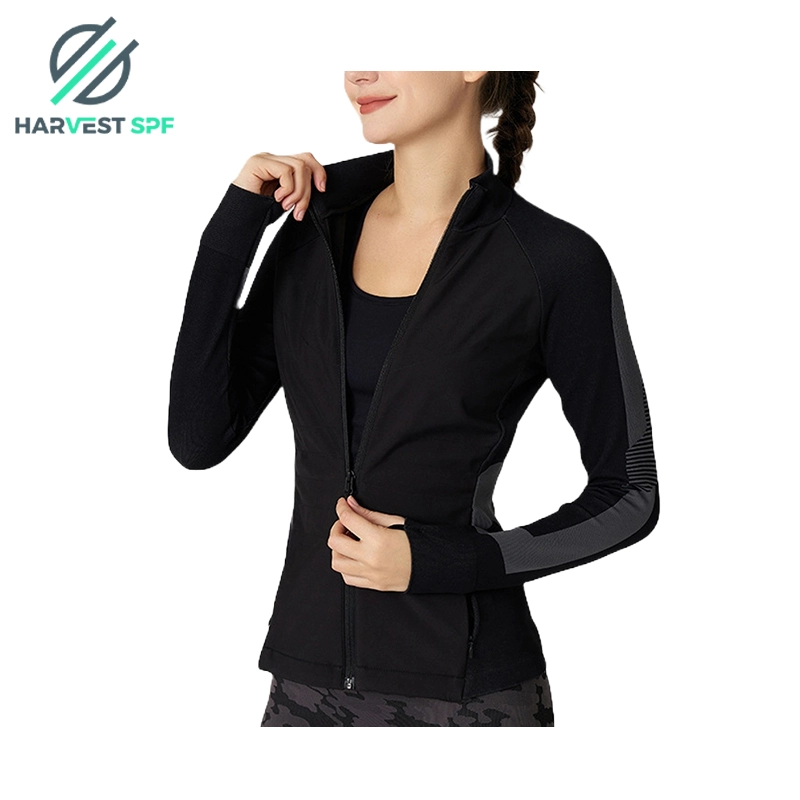
- Smooth interlock or jersey: evaluate the final surface and knit density rather than assuming performance from recycled content alone.
- Brushed legging fabrics: test after the commercial brushing process because mechanical finishing changes surface fiber exposure.
- Fleece constructions: establish a benchmark appropriate to the specific surface structure and finish.
- Seamless activewear: engineered zones may use different yarns or knit structures and should be reviewed as part of the final commercial construction.
Testing greige or unfinished fabric should not be used as a substitute for testing the final brushed, peached, washed, heat-set, or otherwise finished commercial construction.
4. Use Standardized Wash Tests for Supplier Comparison
Keep Testing Consistent Across Development and Bulk
ISO 4484-1:2023 and AATCC TM212 provide standardized approaches for evaluating material or fiber-fragment loss under controlled laundering conditions.
The key procurement principle is consistency. Development samples, pre-production fabrics, and later verification samples should use the same selected method when results are being compared.
For higher-risk fabrics, a buyer-defined repeated-wash protocol can supplement standardized testing. The protocol should clearly state the number of cycles, laundering conditions, sample size, filtration method, and reporting format.
This is particularly useful for brushed polyester, fleece, leggings, and other constructions that may show different release behavior during early washing.
Consider Initial-Wash and Repeated-Wash Behavior
For higher-risk constructions, buyers may choose to distinguish initial-wash release from repeated-wash or cumulative behavior. The exact protocol—including wash cycles, conditions, sample preparation, filtration, and reporting format—should be defined in advance and applied consistently.
5. Combine Shedding Tests With Abrasion Assessment
Evaluate Mechanical Deterioration Relevant to Activewear
Activewear experiences repeated friction during movement, training, equipment contact, and laundering. Wash testing alone therefore does not describe the full durability profile.
Martindale abrasion testing can help identify fabrics that deteriorate rapidly under mechanical stress. ISO 12947-2 evaluates resistance to specimen breakdown, while ISO 12947-3 addresses mass loss under abrasion.
These tests are not substitutes for microfiber testing. However, they can provide complementary evidence about mechanical stability.
For performance-critical programs, a buyer-defined protocol may compare microfiber release before and after controlled abrasion preconditioning.
Abrasion preconditioning should only be used when the buyer has defined the protocol in advance; otherwise results generated by different suppliers may not be comparable.
6. Require Traceable Third-Party Test Reports
Link Laboratory Results to the Actual Production Fabric
A laboratory report has limited procurement value if the tested sample cannot be traced to the commercial fabric specification.
Before bulk approval, the technical file should normally include:
- microfiber shedding test report;
- test method and edition;
- laboratory identification;
- tested fabric lot or batch number;
- composition and GSM;
- yarn specification;
- finishing-process record;
- abrasion or pilling results where required;
- approved fabric swatch or sealed reference sample;
- recycled-material traceability records where applicable.
Third-party testing is especially useful when environmental performance data will support supplier qualification, sustainability reporting, or internal material approval.
Where required by the buyer, testing may be conducted by a laboratory accredited to ISO/IEC 17025 for the relevant testing scope. Laboratory accreditation should be treated as a buyer or program requirement rather than assumed to be mandatory for every development project.
7. Build a Pre-Bulk Testing Matrix
Connect Each Stage to a Procurement Decision
A qualified OEM activewear manufacturer should be able to connect material specifications, laboratory evidence, pre-production samples, and bulk controls into one documented approval process.
The pre-bulk testing matrix should define each production stage, the required control point, the supporting evidence, and the final approval decision.
| Stage | Control | Evidence / Document | Decision |
| Yarn nomination | Yarn specification and recycled-content records | Yarn specification / certification records | Approve or revise |
| Fabric development | Construction, GSM, density and finish | Approved fabric specification | Freeze specification |
| Laboratory testing | Standardized shedding test | Laboratory test report | Compare with benchmark |
| Durability review | Abrasion / pilling where required | Relevant durability report | Assess mechanical risk |
| PP approval | PP fabric vs. approved reference | Sealed swatch / approved sample | Release or hold |
| Bulk verification | Lot identity and targeted retesting | Lot records / verification results | Accept or investigate |
The goal is not simply to obtain one laboratory certificate. The fabric entering bulk production should remain materially equivalent to the fabric that generated the approved result.
8. Add Change Control to the Purchase Order
Treat Material Substitution as a Retesting Trigger
A strong development test can lose value if unapproved changes are introduced during production.
Purchase orders, quality agreements, or technical packs should define which changes require notification and possible retesting, including:
- yarn supplier changes;
- yarn type or denier changes;
- filament configuration changes;
- knit structure adjustments;
- GSM or density changes;
- brushing-intensity changes;
- modifications to heat setting or surface finishing.
No material substitution affecting the frozen yarn–fabric–finish specification should be made without buyer notification and technical approval.
A nominally similar fabric can perform differently after one of these variables changes.
A practical microfiber risk-control sequence is:
specify → sample → test → benchmark → freeze → manufacture → verify.
Use Risk-Based Bulk Verification
Bulk verification does not necessarily mean repeating the full third-party test program for every production lot. Full or targeted retesting may be appropriate when the yarn supplier, yarn construction, finishing process, GSM, density, or another frozen variable changes; when previous results are close to the buyer’s internal limit; or when the buyer specifically requires retesting. Stable repeat programs may instead combine lot traceability, specification verification, and targeted testing.
How OEM Development Can Reduce Microfiber Shedding Risk
The objective should not be to claim “zero shedding,” but to engineer and verify a lower-risk construction against an agreed benchmark. Development may include yarn engineering, adjustment of knit density and fabric construction, review of brushing or peaching intensity, and retesting of revised constructions under the same selected method.
Why Work With Harvest SPF on Recycled Polyester Activewear?
Harvest SPF can support yarn-to-garment development by linking yarn specification, fabric construction, finishing, testing, and bulk controls. Functional textile R&D allows the development team to review yarn, construction, and finishing variables when test results require improvement. Once an approved yarn–fabric–finish combination is established, the specification can be frozen for bulk production, with testing coordination, lot traceability, and change-control review used to support consistency.
FAQ
Does recycled polyester always create more microfiber shedding?
No. Recycled content alone does not determine fiber-fragment release. Yarn structure, fabric construction, finishing, mechanical wear, and laundering conditions can all affect results.
Which test is relevant before bulk production?
ISO 4484-1:2023 and AATCC TM212 are relevant methods for measuring material or fiber-fragment loss under controlled laundering conditions. Supplier comparisons should use the same method.
Is there a universal pass/fail threshold?
No universal activewear pass/fail limit is established by these test methods. An internal benchmark should be developed from validated fabrics and applied consistently.
Should brushed recycled polyester be tested separately?
Yes. Brushing and other surface treatments can alter fiber exposure and surface integrity. Testing should be performed on the final commercial finish.
Is abrasion testing a substitute for microfiber testing?
No. Abrasion testing evaluates mechanical deterioration, while microfiber testing measures released material. The two provide complementary information.
What documents should be available before bulk approval?
The core file should include the frozen yarn and fabric specifications, finishing records, shedding test report, relevant durability results, tested lot identification, approved reference sample, and recycled-content traceability documents where applicable.
Develop a Lower-Risk Recycled Polyester Fabric
For development review, provide the product category, recycled polyester percentage, yarn specification if available, GSM, knit construction, brushed or unbrushed finish, required test method, existing benchmark if available, and estimated order quantity. Harvest SPF can review the yarn–fabric–finish architecture, coordinate testing, and develop a bulk specification against the agreed microfiber benchmark.