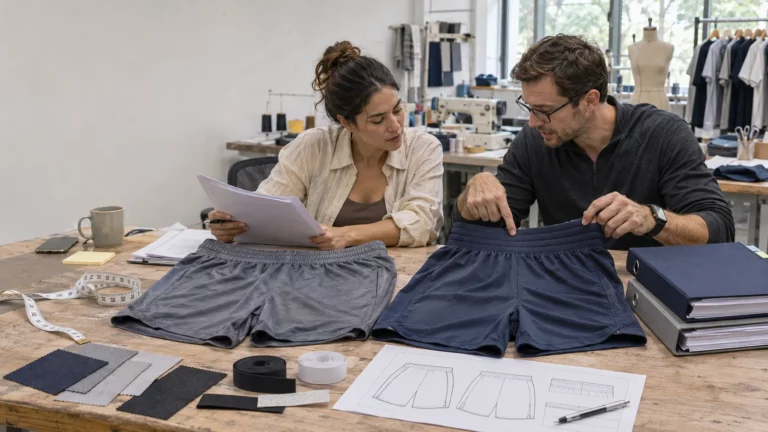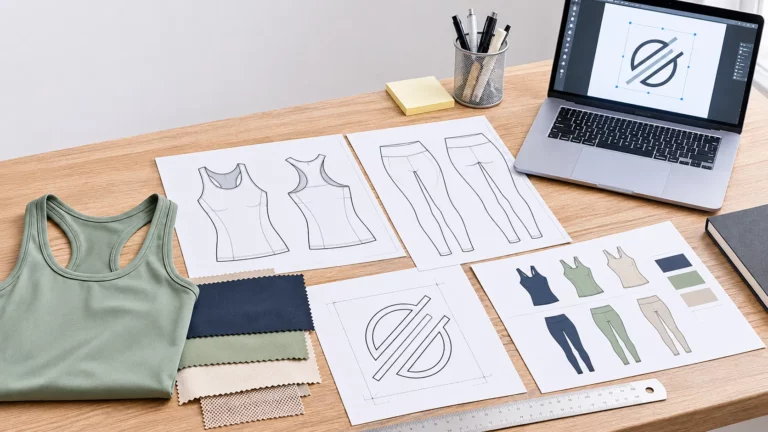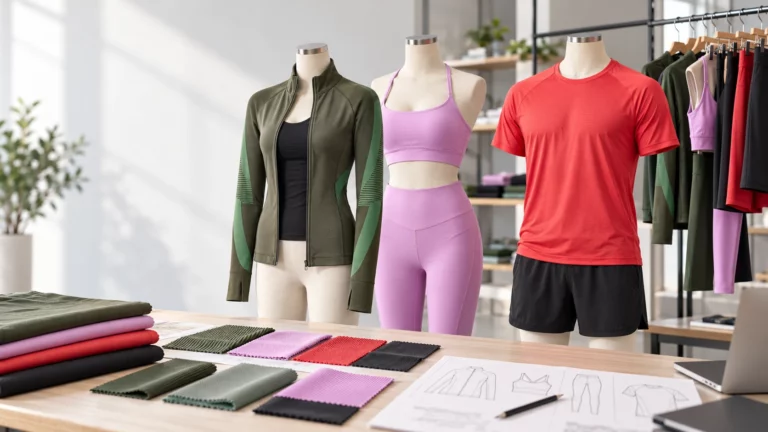


Before sampling custom activewear, buyers should send the original artwork, a readable preview, finished dimensions, color references, dimensioned placement drawings, size rules, and a file revision list. A logo attached to an email leaves too many production decisions unresolved.
This custom activewear artwork checklist helps brand development and sourcing teams prepare that handoff. Its purpose is to define what the factory should sample, so the first development round answers useful questions about appearance, application, and placement.
Production-Ready Artwork Approval Framework
A complete artwork package should connect the approved graphic version with the correct style, colorway, finished dimensions, measurable placement, size rules, decoration process and approval status. Treat artwork approval as a controlled technical decision, not only a visual sign-off.
Recommended sequence: Source-file verification → dimensions and colorway assignment → placement and size rules → decoration feasibility → decoration trial where needed → garment sample and performance review → pre-production approval → controlled bulk release. The scope of trials should reflect project risk.
Build an Artwork Package With Clear File Roles
Artwork File Format & Readiness Matrix
AI/EPS/SVG: useful for vector logos; verify paths, fonts, linked assets and supplier software compatibility. PDF: suitable for previews or production only after checking whether the content is vector or raster. PSD/TIFF: suitable for layered or detailed raster work; check dimensions and layers. PNG: can serve as a transparent preview or raster source when adequate. JPEG: generally a visual reference; check compression artifacts.
Effective PPI = pixel dimension ÷ finished print dimension in inches. Example: 1,200 pixels across a 4-inch finished print = 300 PPI. This is an illustration, not a universal requirement; acceptable resolution depends on the artwork and application equipment.
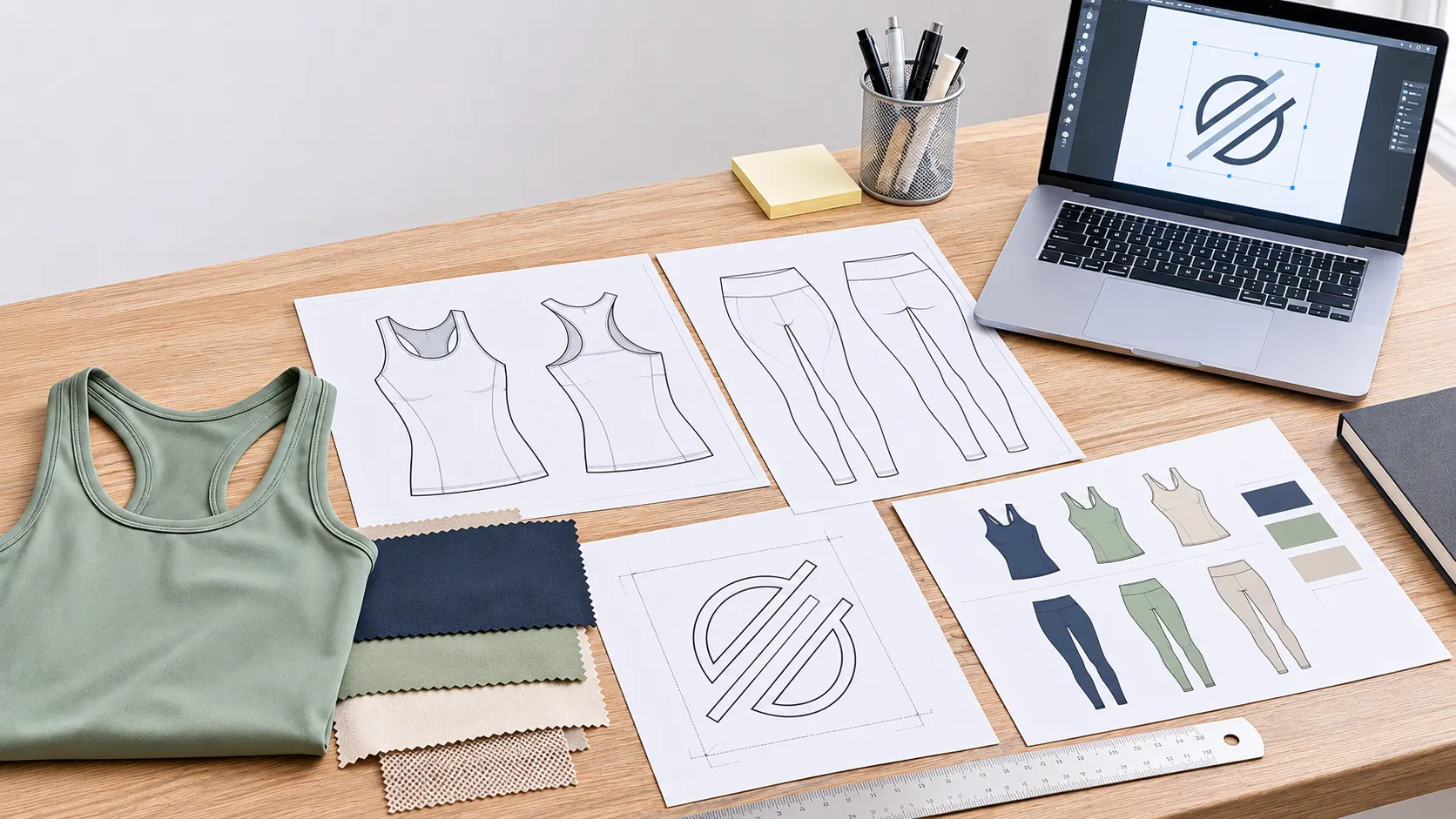
Artwork specification sheet — record: Artwork ID | style/SKU | garment colorway | source file | preview file | finished width/height | color reference | decoration method | garment/artwork placement reference points | size rule | revision | approval status.
Give each file a specific purpose. The factory needs artwork it can process, while merchandisers and sample reviewers need a preview they can read without specialist software.
| File or document | What buyers should provide |
| Original artwork | Editable vector or layered source, where available |
| Visual preview | PDF or image showing the intended appearance |
| Placement sheet | Garment views with dimensions and reference points |
| Colorway matrix | Graphic version assigned to each garment color |
| Revision list | Current filenames, dates, status, and responsible contact |
For simple logos, vector artwork is generally useful because it can be resized without pixelation.
For photographic or textured graphics, provide the original raster file and intended output dimensions. Confirm the required effective resolution at that size. Enlarging a small image or changing its resolution setting cannot restore missing detail.
Outline lettering in the production copy where appropriate, and retain an editable master internally. Include linked assets or embed them as agreed. Identify transparent areas and remove unintended backgrounds.
Specify Finished Dimensions and Color References
Colorway Matrix & Physical Color Approval
Example colorway matrix: Black garment → white LOGO-W01; White garment → black LOGO-B01; Navy garment → light-gray LOGO-G01; Heather-gray garment → navy LOGO-N01. Each combination must identify its own approved artwork version and reference.
RGB/HEX values describe digital appearance and should not be the sole production color standard. Specify an appropriate physical or named color reference and approve the decoration on the intended garment fabric where appearance is critical. Base-fabric shade, texture, finish, stretch and potential polyester dye migration may change the result.
State the finished artwork width and height, with units, separately from the document page size. Clarify whether those dimensions describe the visible graphic or include empty space around it.
“Use the attached logo at 50 mm wide, preserving its proportions” is more actionable than “small chest logo.” The measurement is an instruction for that particular design, not a universal activewear standard.
Provide a color reference for every graphic component. Name the reference system and identify whether the target is a solid color, gradient, metallic appearance, or tonal effect.
Make Logo Placement Measurable
Placement Measurement & Tolerance Matrix
For each logo, record the following information.
| Field | What to record |
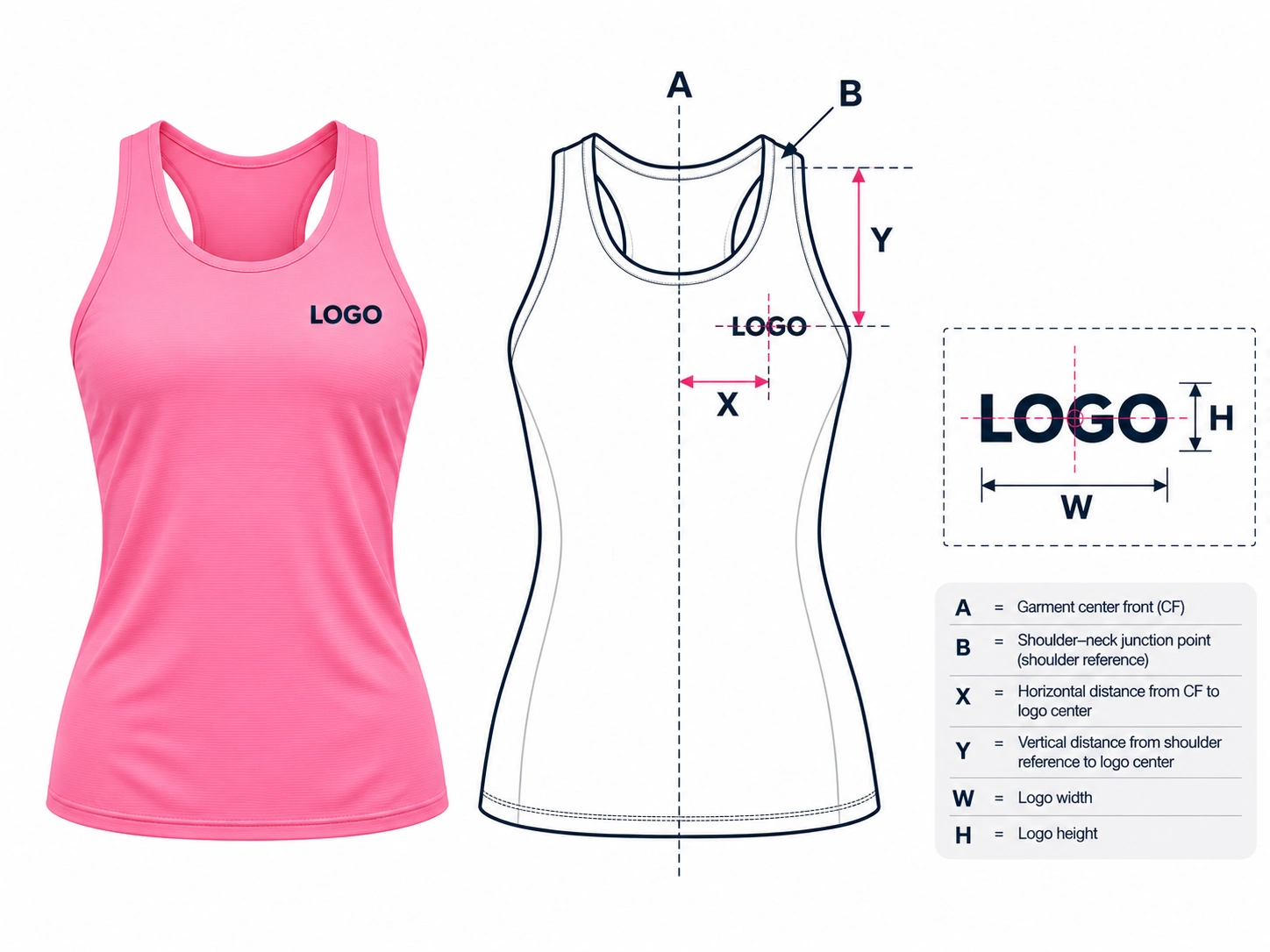
| Placement and garment reference | Left chest from center front or neckline, center back from the center-back seam, waistband from the finished top edge, or leg from a defined side seam |
| Artwork reference point | The point on the artwork used for measurement |
| Offsets | Horizontal offset X and vertical offset Y |
| Finished dimensions | Width W and height H |
| Measurement condition | The condition used when taking measurements |
| Clearance and tolerance | Minimum seam clearance and approved tolerance |
Agree separate horizontal/vertical position, size and rotation tolerances with the buyer before sampling. Do not assume one universal ±3 mm or ±5 mm limit. Check whether measurements are taken on a cut panel or a finished, flat and relaxed garment; seam allowance and sewing can alter final placement.
A useful placement drawing tells the sample maker where to measure and which part of the artwork must meet that measurement. “Left chest” identifies a general area; it does not define a reproducible position.
Include front, back, and relevant side views. Mark left and right from the wearer’s perspective. Show the artwork orientation, particularly for vertical lettering or graphics wrapping around a leg.
For each location, define:
- The garment reference point, such as center back or a specified seam.
- The artwork reference point, such as its center or top edge.
- Horizontal and vertical distances, with units.
- Whether the garment is flat and relaxed during measurement.
- Any required clearance from seams, folds, pockets, or hardware.
For example, an illustrative back-waistband instruction might read: “Center the artwork on center back; position its top edge 20 mm below the finished waistband top edge, measured flat and relaxed.” The buyer and factory must confirm whether that location works for the actual construction.
Avoid mixing a cut-panel edge with a finished-garment measurement. Seam allowances and assembly can change the relationship. For wraparound graphics, show how the design should meet across adjoining panels.
Define What Changes Across Sizes
Artwork Grading & Stretch-Appearance Controls
Size-rule table: XS / S / M (base) / L / XL → logo width (fixed or graded), horizontal offset (fixed or adjusted), vertical offset (fixed or adjusted), and exception notes. Artwork grading is not the same as garment grading: a larger garment does not automatically require a proportionally larger logo.
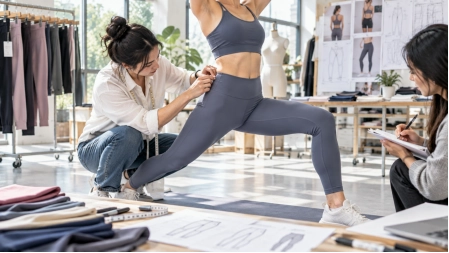
For leggings, sports bras and compression garments, compare the approved graphic on relaxed fabric, at representative wear extension, and after repeated movement. Document distortion, edge lifting, cracking and skin-contact comfort. Define extension and repetitions according to intended use rather than applying a universal stretch percentage.
Decide whether the artwork keeps one finished size throughout the range or changes for selected sizes. Then define placement separately. A fixed logo width does not automatically mean a fixed distance from every seam.
Use a base-size drawing and a simple exception table. State which measurements remain constant, which follow garment grading, and which require individual instructions. Check smaller sizes where available space may narrow.
Stretch adds another decision. A logo can look different on a relaxed garment and when worn. Specify the measurement condition and explain the intended visual result. Ask the factory to flag locations where movement, seam bulk, or fabric extension could affect the application.
For coordinated sets, identify whether matching means identical graphic dimensions or a similar visual balance. A sports bra and leggings have different available surfaces, so copying one measurement may not achieve the intended appearance.
Match the Handoff to the Application Method
Decoration Method & Feasibility Comparison
Heat transfer: check film elasticity, adhesion, hand feel, washing and compatibility with the substrate. Screen printing: check ink/finish, stretch, fine detail and repeat-production consistency. Embroidery: check stitch density, stabilizer, puckering, bulk and skin comfort. Sublimation: verify compatible fiber/dye system and color behavior. Knitted-in motifs: verify knitting feasibility, distortion, development lead time and MOQ.
Before sampling, confirm minimum reproducible line width, small-text legibility, color count, gradients, surface texture, seam interference, setup costs and any restrictions on the intended fabric. The supplier should flag infeasible details and obtain approval for revised artwork rather than silently simplifying it.
The artwork package should identify the requested method or clearly state that a recommendation is needed. Heat transfer, screen printing, embroidery, and knitted graphics involve different preparation decisions.
For printing or transfers, describe solid colors, gradients, transparency, and the desired finish. Ask the supplier to confirm fine-line limits and suitability for the selected fabric. Do not prescribe production settings without agreement.
For embroidery, send the original design, finished dimensions, placement, and color references. Confirm who will prepare the machine file. An existing stitch file may need review when the fabric, size, or construction changes.
For full-panel graphics, request the relevant pattern template before arranging artwork. Confirm bleed, seam allowance, matching points, and whether panel alignment is essential. For knitted motifs, clarify whether the design forms part of garment development rather than a later decoration step.
Harvest SPF’s activewear customization options include branding applications such as heat transfer and embroidery. Buyers should confirm the appropriate route for each style.
Decoration Durability & Failure-Diagnosis Matrix
Agree risk-based verification for washing (peeling/fading/cracking), stretch (distortion/cracking), abrasion (surface damage), colorfastness (change/staining), adhesion (edge lift or separation), and appearance (definition/alignment). Record method, conditions, acceptance criteria and responsible reviewer; no single test applies to every decoration.
Possible failure investigations: transfer peeling → adhesion/substrate/process; print cracking → extension mismatch or ink/film behavior; color migration → dye/substrate interaction; embroidery puckering → stitch density/stabilization/fabric; logo distortion → garment extension or placement. These are hypotheses to verify, not automatic diagnoses.
Send a Controlled Package for Sampling
Artwork Approval Stages & Decision Record
Suggested checkpoints: (1) file and version acceptance; (2) technical feasibility; (3) strike-off or decoration trial if warranted; (4) garment sample review for dimensions, color and placement; (5) agreed stretch/wash verification; (6) pre-production sample approval; (7) bulk artwork release. Stages may be combined when justified by risk.
Approval record: artwork revision | dimensions | colorway | placement drawing | size rules | application method | decoration sample | durability evidence | PP sample | authorized approver | date | status (Approved / Open / Hold). A visual PDF approval alone does not authorize bulk manufacturing.
Give the supplier one current package with a clear index. Filenames should identify style, graphic, colorway, and revision. Use a date or revision code rather than several files called “final.”
Artwork Revision Register & Reapproval Triggers
Revision register example: LOGO-01 R01 — initial (Superseded); LOGO-01 R02 — width revised (Approved); LOGO-02 R01 — new colorway (Pending). Keep approved source art, placement sheet, colorway matrix and decoration sample linked under one revision-controlled package.
Changes to graphic size/color, location, garment pattern, fabric, transfer material, embroidery construction, decoration method or size rules require documented impact review and appropriate retesting/reapproval before affected production proceeds.
Before sending it, check these points:
- Every graphic matches a placement drawing and garment colorway.
- Dimensions use consistent units.
- Preview files match the production artwork.
- Size exceptions and measurement conditions are recorded.
- Unresolved questions have a named decision-maker.
- The requested sample quantity, sizes, and purpose are stated.
Request acknowledgment of missing files, proposed artwork adjustments, and any setup charges before work begins. If the factory simplifies a graphic or changes its size for manufacturability, require an updated preview showing the proposed change.
How Harvest SPF Supports Artwork Development
Harvest SPF can discuss artwork-file readiness, functional-fabric and decoration compatibility, measurable placement and size rules, coordination of decoration sampling, relevant performance-verification needs, and approved specifications for production. Specific services and tests should be confirmed for each OEM/ODM project.
Later, the pre-production sample approval checklist can support production release. The initial artwork package remains the reference for what was requested during development.
Conclusion
A complete artwork handoff links each design to a file, finished size, colorway, measurable location, and size rule. Buyers should resolve those instructions before sampling and label any remaining choices clearly. This gives the supplier a defined task and makes sample feedback more precise.
Request an Artwork Review and Custom Activewear Quotation
What to Submit
- Style drawings or tech pack
- Source artwork, preview files, and finished artwork dimensions
- Dimensioned placement drawings and a colorway matrix
- Size range and artwork size rules
- Fabric composition and construction, plus your preferred decoration method
- Required wash and stretch performance
- Estimated quantities by style and color, target FOB price or budget, and requested delivery date
Before commissioning samples, ask Harvest SPF to review artwork readiness and decoration feasibility, flag any missing specifications, and confirm the sampling and testing scope, applicable MOQ, estimated costs (including sampling costs), and lead time.
Review My Activewear Artwork Package
FAQs
Can a buyer send only a PNG logo?
A PNG may support initial review or some production workflows, but suitability depends on its dimensions, quality, and application. Send the original source when available and request confirmation.
Should logo placement stay identical across sizes?
It depends on garment proportions and the intended appearance. State whether distances and artwork dimensions remain fixed or change, then identify exceptions.
Is a garment mockup enough to start sampling?
A mockup communicates appearance. Add finished artwork dimensions, fixed measurement references, colorway assignments, and source files so the supplier can reproduce the instruction.
Who prepares embroidery machine files?
Agree this with the supplier. Buyers should provide the original design and requirements, then confirm digitizing responsibility, charges, and whether an existing file is suitable.
What file format is best?
Editable vectors often suit simple logos; detailed raster art may require suitable layered files. Production readiness depends on the method, not the extension.
How should placement tolerances be defined?
State both reference points, garment measurement condition, offsets, dimensions and buyer-approved tolerances.
Should stretch-fabric logos be tested?
Yes, where extension could affect appearance, adhesion, comfort or durability; agree the conditions.
Is artwork approval the same as PP sample approval?
No. Artwork approval confirms the graphic specification; PP sample approval addresses the production-intent garment and applicable decoration requirements.
Can one logo method work on polyester, nylon and merino?
Not automatically; verify substrate compatibility, appearance and durability for the actual fabric.