

When fit-related returns expose a recurring gymwear problem, the next purchasing decision should begin with comparable correction proposals. Ask manufacturers to separate investigation, development, verification, and production costs. Then define what must be approved before the revised order proceeds.
For new brands, the challenge is purchasing a correction that addresses the documented problem without creating an unclear commitment to new materials, additional development rounds, or unsuitable inventory. A useful quotation explains what the supplier will change, what evidence it will provide, and which costs remain conditional.

Fit Correction: A Technical and Commercial Decision
Fit-related returns should be verified before suppliers are asked to quote. The buyer should distinguish the original-order claim, the technical correction, and the commercial commitment for the next order.
Decision flow: Analyze fit returns → Classify responsibility → Define correction brief → Compare like-for-like quotations → Evaluate total cost and material exposure → Verify revised samples → Authorize controlled reorder.
Illustrative Fit-Related Return Rates
| Style and size | Units sold | Fit-related returns | Fit return rate |
| Leggings S | 500 | 15 | 3.0% |
| Leggings M | 800 | 24 | 3.0% |
| Leggings L | 600 | 48 | 8.0% |
| Leggings XL | 400 | 44 | 11.0% |
Fit return rate = fit-related returned units ÷ units sold × 100%. Use the same reporting period, definition of a fit-related return, and basis for counting units sold across all sizes.
COMPLAINT DIAGNOSIS: Waistband sliding → investigate recovery, rise and hip fit; sheer leggings → assess fabric and extension; tight sports bra → review band, grading and elastic; riding-up shorts → check inseam and pattern; restricted top → assess armhole and shoulder; post-wash shrinkage → verify dimensional stability. Customer complaints are evidence of symptoms, not proof of root cause.
Separate the Previous Shipment from the Next Development Order
Responsibility and Claim Separation
CLASSIFICATION MATRIX: Bulk outside approved measurement tolerance → potential original-order nonconformity; wrong approved fabric → potential nonconformity; revised target customer profile → new development; brand requests a different fit despite approved conformity → new development; bulk recovery differs from approved reference → investigate possible nonconformity; ambiguous specification → investigate and agree responsibility.
Track A — Previous shipment: evidence, nonconformity investigation, claim, credit/replacement or other agreed remedy. Track B — Revised product: new specifications, samples, tests and reorder quotation. Approval of a revised sample should not automatically waive a previous-shipment claim unless expressly agreed. Cost responsibility depends on the contract, approved specifications and evidence.
Before requesting a revised price, distinguish a failure to meet an approved specification from a change to that specification.
If delivered garments differ from agreed measurements, materials, or construction, document the discrepancy and address it under the original order terms. Request the supplier’s investigation and proposed remedy. Do not automatically classify this work as a new, paid development project.
If garments meet the approved requirements but the brand wants a different fit, construction, or target customer profile, request a separate development quotation. Responsibility for those costs should be agreed before work begins.
Both situations may exist in one style. Keep two records: one covering the previous shipment and another defining the proposed revision. Approval of a new sample should not unintentionally close an unresolved shipment claim.
Send Suppliers One Commercially Complete Correction Brief
Standardized Fit-Correction Brief
Use one brief for every supplier: Style/SKU; approved tech-pack revision; production lot; affected sizes/colors; anonymized complaints and return data; measured POM deviation and tolerance; movement or wash failure; existing fabric composition/GSM/recovery; observable required outcome; proposed size/color quantities; target FOB; deadline; and whether the scope includes diagnosis, correction and validation.
State the failure rather than an unverified remedy. Example: “Reduce waistband sliding during repeated squats in sizes L–XL without introducing excessive waist pressure,” rather than “tighten elastic by 3 cm.” Request each supplier to state assumptions and required evidence.
Include the current style reference, approved specification, affected sizes and colors, complaint summary, and available measurements. Identify whether feedback concerns initial try-on, movement, or performance after washing. Remove customer names and contact details before sharing records.
Add the commercial context:
- Expected order quantity and size-color breakdown.
- Intended use and target customer body profile.
- Required delivery window and latest acceptable approval date.
- Available reference garments and technical files.
- Whether the supplier should quote correction, redevelopment, or both.
- Whether existing materials must be retained or alternatives may be proposed.
Compare the Scope Behind Each Quotation
Like-for-Like Quotation and Total Program Cost
ILLUSTRATIVE QUOTE MATRIX (USD)
| Item | Supplier A | Supplier B |
| Investigation | 200 | 0 |
| Pattern correction | 350 | 500 |
| Sampling | 250 | 300 |
| Size-set verification | 180 | 250 |
| Testing | 150 | 150 |
| Courier/inspection | 120 | 100 |
| Development subtotal | 1,250 | 1,300 |
| Unit FOB | 8.50 | 8.20 |
| Quantity | 3,000 | 3,000 |
| Production | 25,500 | 24,600 |
| Total | 26,750 | 25,900 |
| Effective cost/unit | 8.92 | 8.63 |
These are examples, not Harvest SPF prices.
Total program cost = development + testing/verification + production + non-duplicated material commitments + other agreed charges. Separately identify refundable deposits, development credits, conditional charges, currency, Incoterms, and quote exclusions. The lowest FOB or total does not automatically mean the best correction.
Compare deliverables before comparing totals. A lower quotation may cover one base-size adjustment, while another includes pattern redevelopment, additional sizes, and production-intent components.
| Quotation item | What the buyer should clarify | Purchase risk if unclear |
| Investigation | Findings included and information still required | Paying for a correction based on assumptions |
| Pattern or construction work | Exact areas changed and deliverables supplied | Different interpretations of the revised product |
| Sample rounds | Included rounds and additional-charge triggers | Unplanned development spending |
| Size coverage | Sizes included in development and verification | Buying an unverified size range |
| Materials | Approved components, substitutions, and minimums | Samples that do not represent production |
| Production transfer | Documents and references passed to manufacturing | Approved changes missing from bulk production |
Ask suppliers to identify exclusions. Does the price omit courier costs, testing, revised artwork, or additional size samples? Are optional items necessary to resolve the complaint, or merely available enhancements?
Keep competing quotations in the same currency, delivery basis, quantity assumptions, and material scope. Otherwise, a lower garment price may conceal a larger overall commitment.
Agree Who Pays for Additional Revision Rounds
Revision Rules and Tracking
Revision cost rules (subject to agreement): supplier failure to implement an accepted change → investigate rework responsibility; buyer changes the brief → request a change quote; proposed material substitution → approve cost and technical impact; extra size tests → confirm whether included; failed agreed performance test → establish cause and remedy; cancellation → apply agreed termination terms.
REVISION LOG
| Round | Issue | Action | Cost status | Verification |
| R1 | Waistband sliding | Review pattern/recovery | Quoted | Movement test |
| R2 | Hip restriction | Revise balance | Conditional | Fit retest |
| R3 | XL grading issue | Review size grading | To agree | Size-set test |
Each round needs an objective, owner, cost status, due date and closure evidence.
Define the difference between a sample missing the accepted brief and the buyer changing that brief.
If the sample does not implement agreed modifications, ask how the supplier will correct it and whether another charge applies. If the brand introduces a new requirement after reviewing the sample, request a change quotation before authorizing further work.
Also confirm:
- Which development fees are payable upfront.
- Whether any fees are credited against a production order.
- Whether extra charges require written approval.
- What happens if development stops without a production order.
- Which drawings, patterns, and records the buyer can receive.
These are negotiation points, not universal supplier policies. Put the accepted arrangement in writing. A clear revision allowance makes a quotation easier to evaluate than an undefined promise to continue sampling until the buyer is satisfied.
Price Material Exposure Alongside Garment Cost
Material Exposure and Three Separate Authorizations
MATERIAL RISK REGISTER: Main fabric 1,000 m → partly reusable; waist elastic 5,000 m → possible write-off; labels 3,000 pcs → reusable; packaging 3,000 pcs → reusable. Record committed cost, reusable value, non-recoverable exposure, cancellation liability and who owns unused stock. Quantities are illustrative.
Development authorization permits investigation and agreed samples. Material booking authorization separately defines approved components, quantities, deposits and cancellation exposure. Bulk production authorization follows technical approval and the agreed purchase order. Do not treat one authorization as permission for all three stages.
A correction can change more than the garment’s unit price. Different elastic, lining, fabric, or construction may create new material commitments while leaving previously purchased components unused.
Request separate figures for development charges, production price, material minimums, and any agreed unused-material liability. Confirm whether minimums apply by style, color, size, or component.
Ask what happens to remaining materials if the revised sample is rejected or the order quantity falls. Establish whether the supplier can use available components without compromising the correction.
Keep the first revised order commercially proportionate to the evidence. Ordering additional units solely to spread development costs may increase inventory exposure before the modification has been validated with customers. The appropriate quantity depends on demand, material commitments, and the agreed manufacturing route.
Compare Keeping the Factory with Moving the Style
Factory Switching Cost and Technical-File Rights
COMPARE BOTH ROUTES: Existing factory — prior pattern knowledge, material history, known quality performance and potentially lower transfer cost. New factory — fresh technical approach but may require file transfer, fabric matching, sample redevelopment, qualification and additional lead time. Compare total cost and evidence needed to reach the same approved product.
Before transfer, confirm ownership or license rights to patterns, grading files, tech packs and approved construction details, plus any third-party confidentiality restrictions. Neither staying nor switching should be selected solely by unit price.
Compare the cost and evidence needed to reach an approved revised product. Include file preparation, reference garments, material matching, sampling, verification, and the effect on delivery.
Confirm the right to share existing patterns and technical information before transferring them. Ask a replacement supplier to disclose which details it can reproduce and which require redevelopment.
For an existing partner, evaluate the quality of its investigation and change records. For a new partner, evaluate how it identifies missing information. Neither familiarity nor a lower initial quote establishes that the next order will resolve the complaint.
Tie the Order Commitment to Defined Approval Conditions
Correction Verification and Controlled Reorder Gate
VERIFY AGAINST ORIGINAL FAILURE: Waistband sliding → repeated movement and migration record; grading complaint → representative size-set fit; bagging → extension/recovery test; shrinkage → agreed wash-cycle dimensional test; seam discomfort → wear trial. Retest in comparable conditions and check for new failures.
BEFORE/AFTER EXAMPLE (not acceptance limits): Waistband migration 5 cm → 1 cm; manual adjustments 6 → 1; comfort 2/5 → 4/5; size-set 2 failed sizes → all tested sizes pass. Improved samples do not guarantee future return rates.
DECISION GATES: APPROVE when evidence and specifications pass; REVISE when correctable issues remain; RETEST when evidence is insufficient or material/conditions change; HOLD when critical issues remain unresolved. Sample approval does not itself authorize bulk production.
REORDER ECONOMICS: If fixed development cost is $1,500, allocation per unit is $3.00 at 500 units, $1.50 at 1,000, $0.75 at 2,000, $0.50 at 3,000 and $0.30 at 5,000. Do not increase inventory solely to reduce allocated development cost.
Scenario ROI: estimated return-cost savings = projected units sold × expected reduction in fit-related return rate × net cost per fit return. Example: 3,000 × (10%−5%) × $12 = $1,800 projected savings. This is a scenario, not a validated forecast; compare it with development cost, incremental unit cost and inventory risk.
Distinguish authorization to investigate or make samples from authorization to purchase materials or begin production. State what each approval permits, especially when material booking is requested before fit development is complete.
The correction-specific approval should confirm that the documented problem has been addressed under agreed conditions. Broader manufacturing checks belong in the pre-production sample approval checklist.
Identify the accepted revision, sample reference, updated specification, materials, affected sizes, and applicable purchase order. Record any remaining conditions and who can close them.
If the supplier requests an early commitment to protect capacity or materials, ask what is refundable, transferable, or at risk if approval fails. Confirm delivery timing against the actual approval sequence rather than an assumed repeat-order schedule.
Prepare a Focused Inquiry for Harvest SPF
How Harvest SPF Can Support a Fit-Correction Program
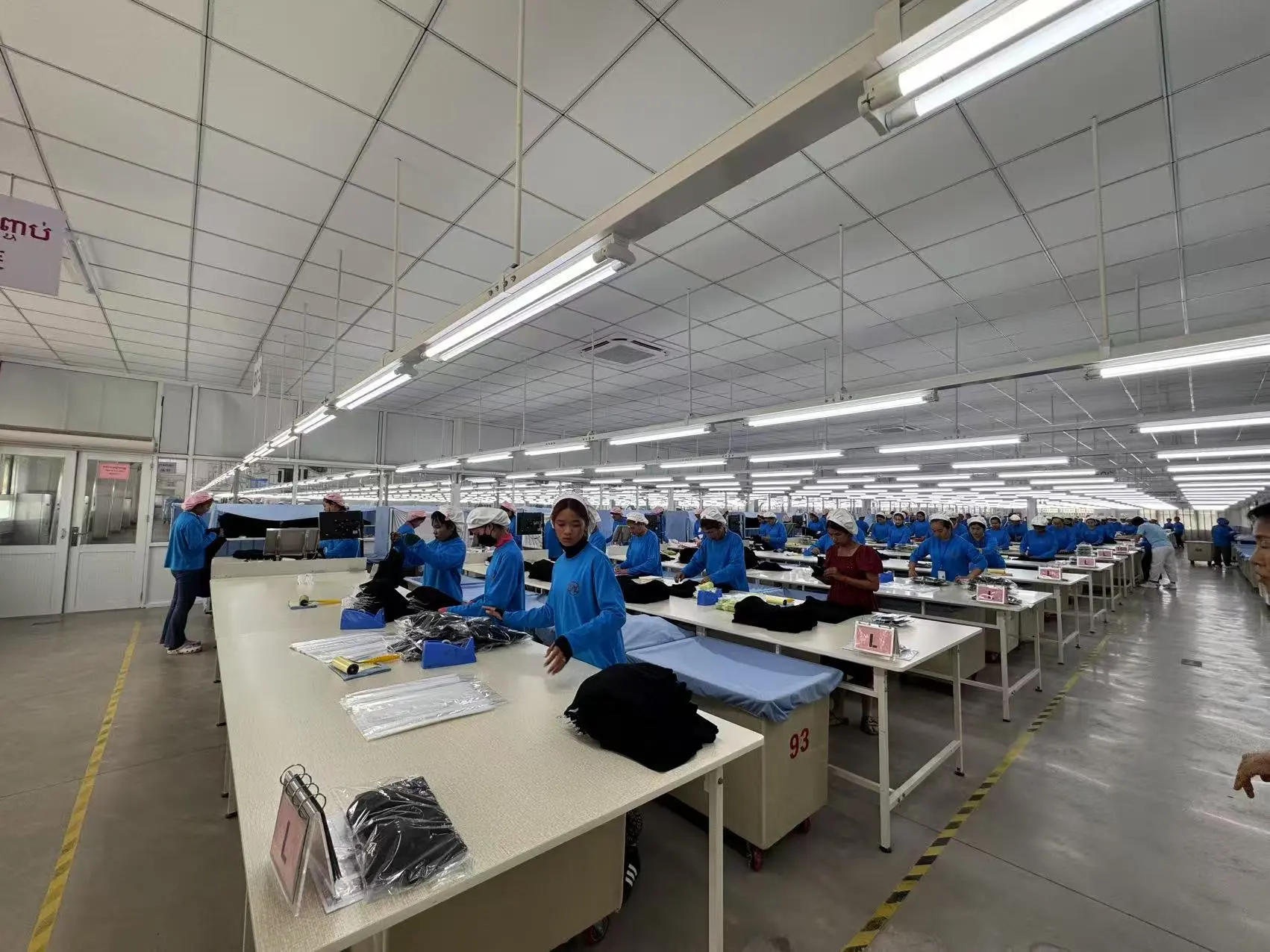
Depending on project scope, Harvest SPF can review documented complaints and affected sizes; coordinate fabric and construction assessment (stretch, recovery, GSM, waistband); develop or coordinate pattern/grading revisions and sample rounds; plan fit, movement and wash verification; and separate development fees, material commitments, production prices and approval milestones.
Harvest SPF helps apparel brands connect technical fit corrections with commercially transparent OEM/ODM development and production planning.
Harvest SPF’s gymwear range includes training tops, shorts, and yoga-related bottoms. Its ODM/OEM development process includes tech-pack work, fabric selection, prototype sampling, and client fitting review.
For a correction inquiry, identify the product, construction, complaint pattern, available technical files, and expected order quantity. Request confirmation of feasibility, development scope, applicable minimums, quotation exclusions, and approval stages.
Ask Harvest SPF to distinguish requirements that can be quoted immediately from those needing sample review. That distinction helps the brand understand whether it is receiving a preliminary estimate or a production quotation based on an accepted specification.
Conclusion
A gymwear fit-correction quotation should make technical scope and commercial exposure visible together. Separate previous-shipment responsibility from new development, compare equivalent deliverables, and define additional charges before authorizing work. The revised order should follow an accepted specification and clear approval conditions.
Request an OEM Gymwear Fit-Correction Quote for Your Next Order
Please submit the approved tech pack or sample, anonymized fit-return data, affected sizes/colors, complaint photographs, fabric specification, prior order quantity, planned reorder by size/color, required improvement, target FOB and delivery deadline. Ask for an investigation scope, revision plan, material reuse assessment, test requirements, development fees, production quotation and approval timeline.
Request My Gymwear Fit-Correction Review.
FAQs
Who pays if bulk garments fail approved specifications?
The answer depends on contract terms, the approved specification, production evidence and the agreed remedy; investigate separately from new development.
How can brands compare correction quotations?
Align investigation, pattern work, included rounds, size coverage, testing, materials, exclusions and production terms.
Should a brand reorder before the revised fit is approved?
Release bulk production only after the revised fit meets the agreed acceptance criteria and the buyer has authorized production. Sampling and material booking can be approved separately.
How many revision rounds should be included?
No universal number applies; agree on included rounds, additional charges and responsibility for failed corrections.
How can a brand assess correction ROI?
Compare projected return-cost savings against development, incremental production costs, demand and inventory exposure, using explicit assumptions.
Should correction costs be included in the next unit price?
Request separate development and production figures first. Any combined pricing arrangement should explain its quantity assumptions and conditions.
Can a supplier quote without receiving the returned garment?
A preliminary estimate may be possible. Confirm which assumptions remain unresolved and what information is required before the quotation becomes firm.
Should a brand change factories after fit-related returns?
Compare investigation quality, correction evidence, commercial terms, and transfer costs. Returns alone do not establish which supplier route is preferable.
What should accompany a correction inquiry?
Provide the current specification, reference photographs, anonymized complaints, affected sizes and colors, intended use, proposed quantities, and delivery requirements.