

1. International Market Trends and the Role of Chinese Suppliers
1.1 Background of Global Custom Athletic Sportswear Demand Growth
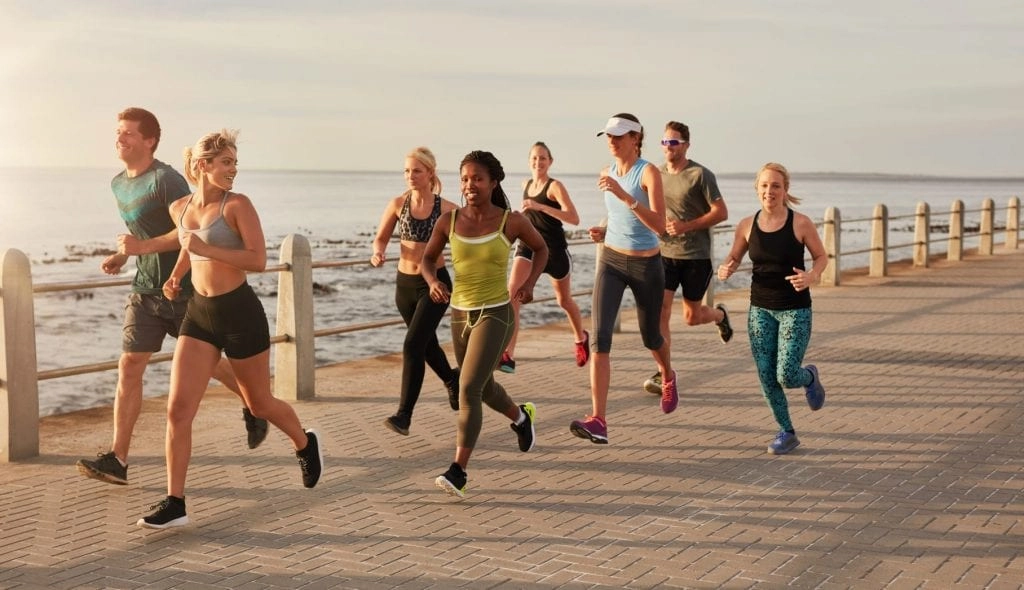
The global athletic sportswear market keeps strong growth. Increased health awareness, home fitness popularity, and athleisure trends drive it. Demand upgrades from basic styles to “functionality plus sustainability.” Brands and consumers pay more attention to moisture-wicking, antibacterial, deodorant, and UV-resistant performance. They also require compliance with environmental standards such as recycled polyester or OEKO-TEX® certification. Industry reports predict the global functional athletic sportswear market will maintain a CAGR of 6%-8%. Customized orders rise, especially from D2C brands, small sports communities, and corporate procurement.
1.2 How Chinese Suppliers Meet International Demand
Chinese manufacturers respond effectively with complete industrial chains, flexible production, and continuous innovation. They develop high-UPF sun protection, high-efficiency antibacterial (≥99%), and moisture-wicking quick-dry fabrics. They also popularize GRS-certified recycled materials and closed-loop processes. They generally comply with ISO 9001, OEKO-TEX®, and BSCI certifications to meet European and American market requirements. Flexible lines support 500-piece minimum orders and 7-day sampling. Chinese suppliers become an essential core partner in the global custom athletic sportswear supply chain.
2. Common Product Types and Application Scenarios of Custom Athletic Sportswear
2.1 Classification by Sport Type
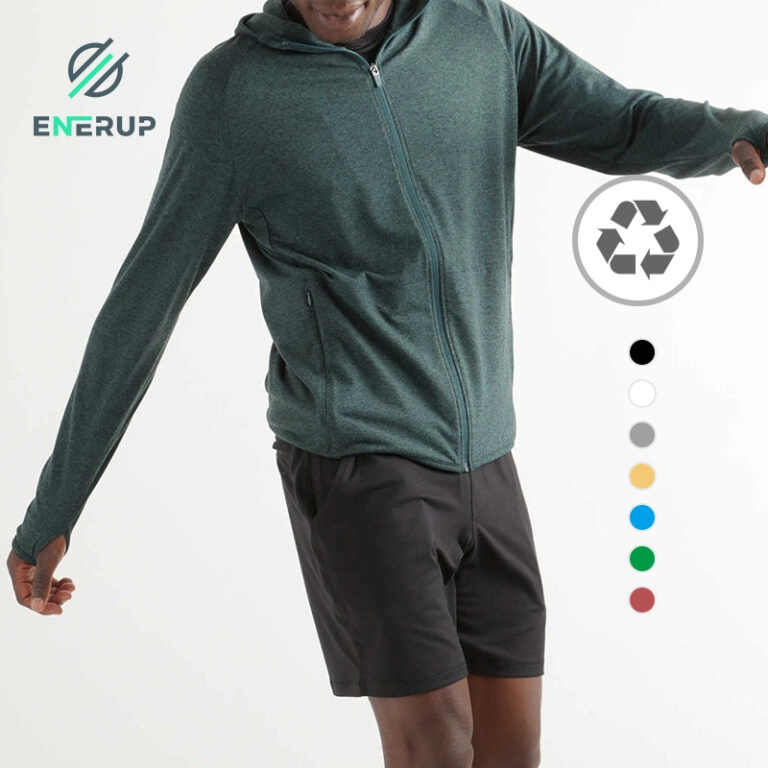
Custom athletic sportswear changes in fabric selection and functional design according to different sports needs. Running wear seeks ultimate lightweight and quick-dry performance. It uses polyester moisture-wicking fabrics and mesh breathable designs. Fitness wear emphasizes elasticity and support. It uses spandex and polyester blends for four-way stretch and muscle support. Yoga wear focuses on high elasticity and comfortable fit. It uses nylon and spandex blends. It often features seamless designs to reduce friction. Outdoor series (cycling, hiking, fishing) need higher wear resistance, UPF sun protection, windproof and waterproof functions. Some products reach UPF 50+.
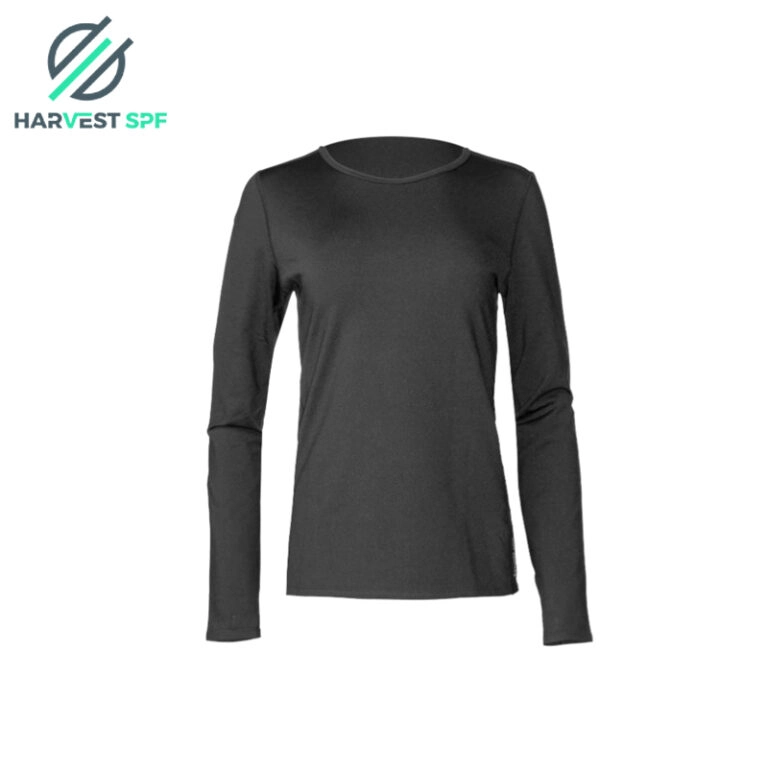
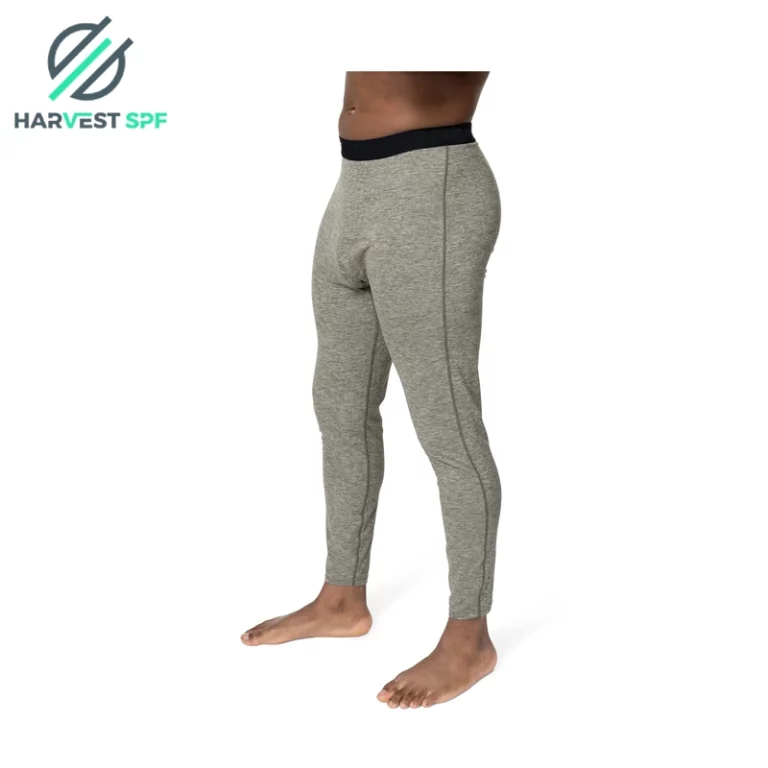
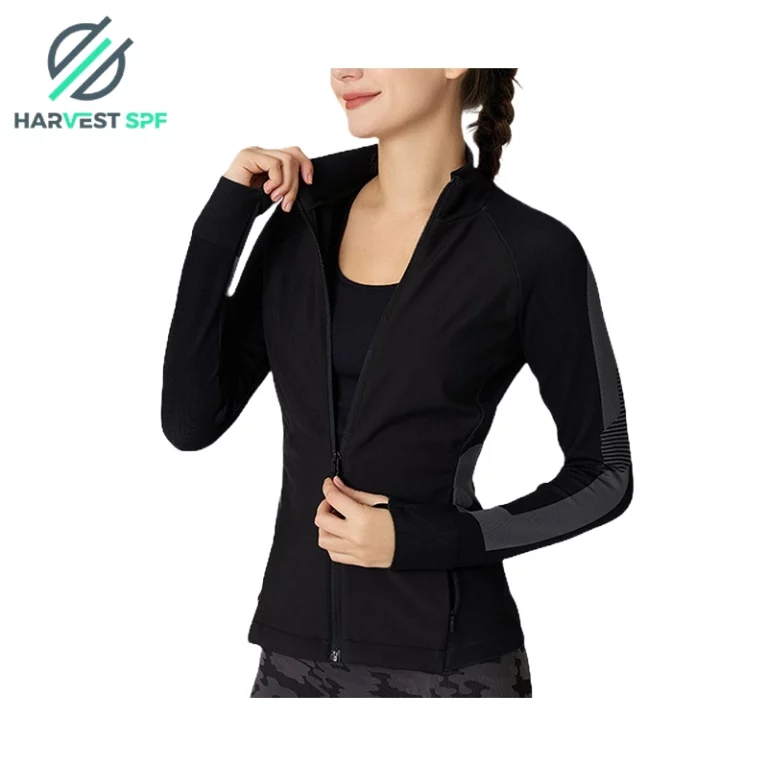
In Harvest SPF’s portfolio, the most popular categories include sports T-shirts, fitness compression wear, seamless yoga wear, and running short-sleeve shorts. These cover gym, outdoor, and daily sports scenarios.
2.2 Scenario-based Needs
Custom athletic sportswear sees wide use in team customization, brand promotion, and retail channels. Teams, corporate unions, and sports clubs use uniform clothing to build cohesion and brand image. Enterprises employ it as employee activity wear, event sponsorship gear, or promotional gifts for mobile advertising effects. D2C brands and e-commerce sellers use flexible supply chains for small-batch customization and zero-inventory rapid product launches.
3. How China Became the Global Hub for Custom Athletic Sportswear Manufacturing
Over the past two decades, China has risen steadily from the “world’s factory” to become the main center for global custom athletic sportswear manufacturing.
Global Advantages of Custom Athletic Sportswear Manufacturing in China
Industrial Cluster and Scale Advantages
China holds a complete vertical industrial chain from textile yarns and functional fabrics to garment manufacturing. This highly connected system allows smooth links from R&D and sampling to bulk delivery of custom products. Manufacturers can combine raw material procurement and production resources around the world. They keep lead times stable and quality under control. They also give customers real end-to-end supply chain solutions.
Flexible Supply Chain Response Capability
Global brands need varied, small-batch, and fast customization. Chinese manufacturers show strong flexible production abilities in response. Production lines can change schedules quickly for orders of dozens of pieces or hundreds of thousands of pieces.
4. Supply Chain Architecture of Custom Athletic Sportswear Manufacturing in China
4.1 Fabric Supply and Innovation Capabilities
Comparison of Mainstream Athletic Sportswear Fabric Types and Characteristics
Different sports scenes need different fabric performance. Polyester is widely used in running and fitness wear. It offers high abrasion resistance and strong moisture absorption and sweat-wicking through hydrophobic plus moisture-conducting structures. It is also durable and washable. Spandex (Lycra) has become the first choice for yoga wear and compression sportswear because of its excellent elasticity. Bamboo fiber has natural antibacterial and sweat-wicking functions. It suits eco-friendly sportswear. Regenerated fibers such as Tencel® meet the needs of brands that focus on sustainable consumption.
Technology Innovation Trends
Innovation in functional fabrics focuses on three main directions. Moisture-wicking technology uses profiled cross-section fibers or hydrophilic agents to move sweat to the surface quickly. It helps athletes stay dry and comfortable. Antibacterial and deodorant treatments such as copper ions, silver ions, and chitosan can limit odor growth effectively. UV-resistant fabrics give extra protection for outdoor sports. They add UV absorbers or increase fabric density.
Rise of Eco-friendly and Sustainable Fabrics
Environmental awareness grows. Demand for sustainable fabrics such as recycled polyester, Tencel®, Modal®, and bamboo fiber rises quickly. Many Chinese suppliers have gained Global Recycled Standard (GRS) certification. They have built a closed-loop supply chain from waste bottle recycling to finished athletic sportswear.
4.2 Production Processing and Process Flow
Full Process from Sampling to Shipment
Custom athletic sportswear production needs strict quality control. First comes sample making. It turns customer designs into physical samples and confirms patterns and functions. Then performance tests occur on fabrics. These cover tensile strength, shrinkage rate, and color fastness. They make sure the fabrics meet sports mechanics and durability requirements. After mass production begins, each batch goes through in-line inspection and third-party sampling. These cover sewing strength and functional indicators such as moisture-wicking and quick-dry rate. Final shipment happens only after full inspection or AQL sampling.
In the fabric testing stage, Harvest SPF strictly performs multi-dimensional performance tests on athletic sportswear fabrics according to international standards. These cover key indicators such as UV resistance, antibacterial properties, mechanical strength, dimensional stability, and color fastness.
In UV resistance performance testing, Harvest SPF uses the GB/T 18830 standard. It employs a UV spectrophotometer to measure UVA and UVB transmittance. In antibacterial performance, it carries out quantitative testing based on AATCC 100 and ISO 20743 standards. Test data shows that the antibacterial rate of its treated fabrics reaches 99.8%. It uses AATCC 6538 Staphylococcus aureus as the test strain. This is verified by Intertek. After 30 washes, the antibacterial rate stays above 80%. Shrinkage testing follows AATCC 135. It requires warp ≤3.0% and weft ≤2.5%. Color fastness testing is based on AATCC 61 and ISO 105-C06. It needs color change grade ≥4 and staining grade ≥3. Sweat fastness must meet both acidic and alkaline conditions. Harvest SPF can also provide additional tests such as UV durability (ASTM D6544), rubbing color fastness (AATCC 8), and light color fastness (AATCC 16).
5. How to Evaluate and Choose a Custom Athletic Sportswear Manufacturer
5.1 Production Capacity and Production Line Evaluation
When selecting a custom athletic sportswear manufacturer, one should evaluate factory scale, degree of automation, and production capacity stability in a systematic way. Manufacturers should have vertically integrated abilities from yarn procurement to finished product delivery.
5.2 Quality Control Capability
Qualified suppliers should keep a full-process quality management system. This includes incoming material inspection, semi-finished product patrol inspection, and finished product shipment inspection. They should arrange regular third-party testing by organizations such as SGS and Intertek. These cover tensile strength (ASTM D5034), shrinkage rate (AATCC 135), color fastness (AATCC 61), and antibacterial rate (AATCC 100/ISO 20743).
6. Core Competitiveness of China’s Top Custom Athletic Sportswear Suppliers
6.1 Diversified Customization Capability and Flexible Response
China’s top custom athletic sportswear manufacturers such as Harvest SPF match different brand needs precisely through full-dimensional customization. They support pattern customization from simple logos to large-area full-width printing, gradient patterns, and complex digital printing. They ensure color fastness and pattern integrity under sports stretching. Customers can choose functional fabrics such as quick-dry, UV-resistant, antibacterial, and deodorant types. They can also combine multiple performances such as “antibacterial plus moisture-wicking.” Suppliers provide exclusive ergonomic pattern designs for running, yoga, basketball, cycling, and other sports. Flexible production lines respond quickly to small-batch sampling and bulk repeat orders. They complete delivery within 7-14 days after sample confirmation. This shortens new product launch cycles greatly.
6.2 Process Technology and R&D Investment
Custom athletic sportswear needs continuous technological R&D. R&D teams improve comfort through high-tech fabrics and processes such as moisture-wicking and quick-dry, seamless bonding, and laser perforation. These achieve temperature-humidity balance and reduce friction. 3D pattern design uses virtual simulation technology for digital testing of pressure distribution and stretchability before sampling. Leading enterprises also invest in automated cutting and heat transfer printing equipment.
6.3 International Standards and Quality Systems
International certification works as the passport for global market entry. Top Chinese suppliers generally hold ISO 9001, OEKO-TEX® Standard 100, and GRS certifications. The quality control system covers the entire process from incoming inspection to shipment. Each batch receives tests for shrinkage rate, color fastness, pilling resistance, and functional indicators such as UPF value and antibacterial rate.
7. Common Mistakes When Choosing Manufacturers
When choosing a custom athletic sportswear manufacturer, the following common mistakes occur easily:
7.1 Only Looking at Price
Many brands focus only on unit price. They ignore long-term costs such as fabric quality, functional stability, lead time reliability, and after-sales service.
7.2 Ignoring Functional Fabric Verification
Failing to request detailed functional test reports such as moisture-wicking and quick-dry rate, antibacterial rate, UPF value, and wash durability leads to problems. It also skips third-party verification. Delivered products then perform far below advertised levels.
7.3 Ignoring MOQ and Hidden Costs
Focusing only on surface MOQ numbers without understanding real requirements for different fabrics and processes causes issues. Hidden costs such as dyeing fees, pattern development fees, mold fees, and sample fees also get overlooked.
7.4 Inability to Scale and Replicate
Small-batch samples may perform well. But issues such as color differences, pattern deviations, and functional degradation appear in mass production. It then becomes difficult to move smoothly from trial sales to large-scale replication.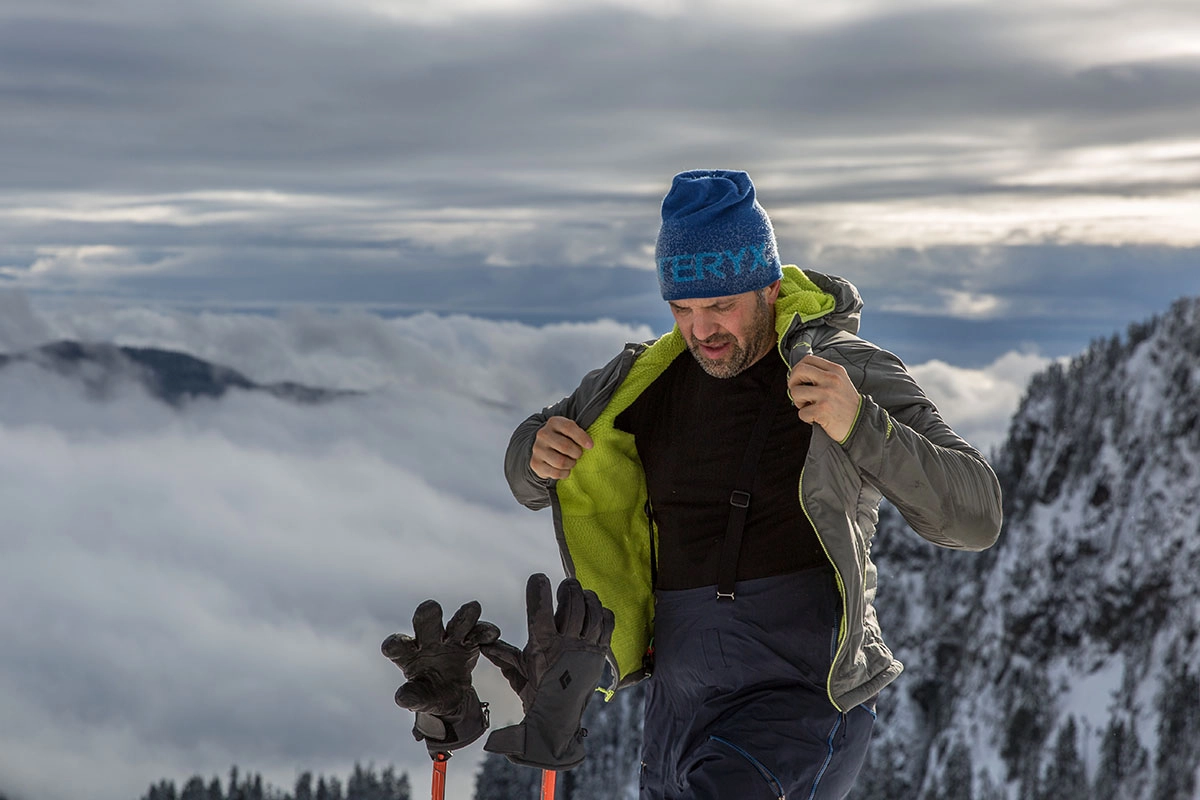
8. China vs. Other Countries: Why Choose Chinese Manufacturers
In the global athletic sportswear supply chain, China, Vietnam, Turkey, and India serve as the main production bases. The following table compares their advantages and disadvantages:
| Country | Advantages | Disadvantages |
| China | Complete vertical industrial chain, strong functional fabric R&D, strong flexible production (small-batch fast response), fast technological innovation, stable lead times, significant scale effect | Labor costs slightly higher than Vietnam, stricter environmental regulations in some areas |
| Vietnam | Low labor costs, export tariff advantages (CPTPP, EVFTA, etc.), convenient sea transport | Incomplete industrial chain (fabrics rely on imports), weak functional fabric R&D, limited scale capability, large lead time fluctuations |
| Turkey | Geographical location close to Europe, fast market response, good quality control, advantages in some high-end processes | Smaller production scale, limited fabric selection, higher labor costs, greatly affected by geopolitics |
| India | Low labor costs, rich natural fiber resources such as cotton, strong price competitiveness | Imperfect infrastructure, unstable lead times, weak functional fabric technology, poor quality consistency, differences in environmental and labor standards |
China keeps clear comprehensive advantages in functional custom athletic sportswear. Harvest SPF, as China’s top vertical manufacturer of functional athletic sportswear, provides global customers with the most competitive solutions based on these strengths.
9. Harvest SPF’s Positioning and Advantages in Custom Athletic Sportswear Manufacturing
9.1 Enterprise Positioning and Development History
Established in 1993, Harvest SPF has always followed the philosophy of “Dress for Health, Dress for Energy.” It commits to the R&D of functional fabrics and athletic sportswear manufacturing as a vertical ODM/OEM producer. The company focuses on high value-added functional fabrics that cover sun protection, antibacterial, and moisture-wicking functions. It applies innovative technologies such as copper-infused fibers. After more than thirty years of development, Harvest SPF has obtained more than 30 patents. It serves customers across more than 60 countries and regions in North America, South America, Europe, and Australia. These include large retailers, Amazon sellers, and D2C brands.
9.2 Core Technologies of Custom Athletic Sportswear
Harvest SPF has built deep technical strength in moisture-wicking and quick-dry, antibacterial, and UPF sun protection fabrics. Sirospun® technology is one of its core patents. Through optimized fiber arrangement, the fabric becomes naturally soft and durable. It has a softness index 0.42 higher than ordinary cotton yarn. It also offers excellent moisture-wicking, sweat-wicking, and breathable performance. Athletic sportswear using Sirospun® reaches an antibacterial rate of 99.8% (tested per ISO 20743 and AATCC 100). It shows significantly improved anti-pilling performance. It reduces reliance on chemical auxiliaries through physical processing. The company also develops innovative products such as UPF protective clothing, double-layer structure fabrics, and intelligent temperature-regulating fibers.
9.3 Flexible Manufacturing and Supply Chain Advantages
Harvest SPF supports 7-day rapid sampling and pattern development. This shortens customers’ product launch cycles greatly. Prepared fabrics allow a minimum order of 500 pieces per style. This suits low-inventory trial sales and small-batch customization perfectly. Its highly automated production lines enable efficient switching from dozens of samples to large-batch orders.
9.4 International Certifications and Quality Systems
Harvest SPF holds multiple international certifications including ISO 9001, OEKO-TEX® Standard 100, GRS, and BSCI. All products receive tests by third-party organizations such as SGS and Intertek. This ensures compliance with global quality, environmental, and safety standards.
10. Frequently Asked Questions (FAQ)
What is the minimum order quantity (MOQ) for custom athletic sportswear? Are there differences for different styles or fabrics?
Yes, MOQ varies by style and fabric. For stock fabrics: sewn T-shirts are 100-200 pieces per color; seamless garments and socks are 300-500 pieces per color per style; custom fabric production requires 800-1000 pieces per style. Small-batch dyeing is available with additional fees.
How long is the complete production cycle from sampling to bulk shipment?
Sample development takes 15-20 days; bulk production takes 30–35 days. A 30% deposit is required after order confirmation to start procurement and production. Quotations come within about 48 hours from inquiry.
What is the sample fee and policy? Is it charged? Can the design be modified after sampling?
Sample fees are usually 2–3 times the production cost. New fabric development may incur an initial sampling fee. It is typically refunded after bulk order placement. Customers can request modifications based on sample evaluation. Once confirmed, production follows the approved technical package and samples strictly.
What customization options are supported? Can printing, embroidery, labels, and packaging be customized?
Yes. Printing options include screen printing, heat transfer, and digital printing for logos to complex patterns. Embroidery suits fine brand logos. Labels (woven, care, hang tags) and packaging (carton labels, stickers, folding instructions) can all receive customization. Harvest SPF also offers custom fabric solutions for moisture-wicking, heat setting, UV resistance, and other functions.
Does it support eco-friendly and sustainable fabrics? What green-certified options are available?
Yes. Options include organic cotton, bamboo fiber, Tencel®, modal, recycled polyester, and recycled nylon. Recycled polyester carries GRS certification (at least 50% recycled content); merino wool products have RWS certification; all products meet OEKO-TEX® Standard 100 for harmless substances.
What are the payment methods, deposit ratio, and trade terms? What shipping methods are supported?
Standard terms: 30% deposit prepaid, 70% balance before shipment. Orders under USD 2,000 may require 100% prepayment. International payments support T/T and other methods. Shipping options include sea freight, air freight, and express. DDP door-to-door service is recommended for first-time importers or certain regions (Middle East, South America); FOB is common for clients with their own logistics partners.
11. Conclusion
Harvest SPF, established in 1993, commits to functional textile R&D and ODM/OEM vertical production. The company has more than 30 patents and serves a wide international customer base. It cooperates with global brands to create high-performance, sustainable, and comfortable sportswear solutions.
Whether one is a startup sports brand or an established retailer, Harvest SPF welcomes contact for consultation, exclusive customization solutions, and samples. They work together to create the next best-selling athletic sportswear.