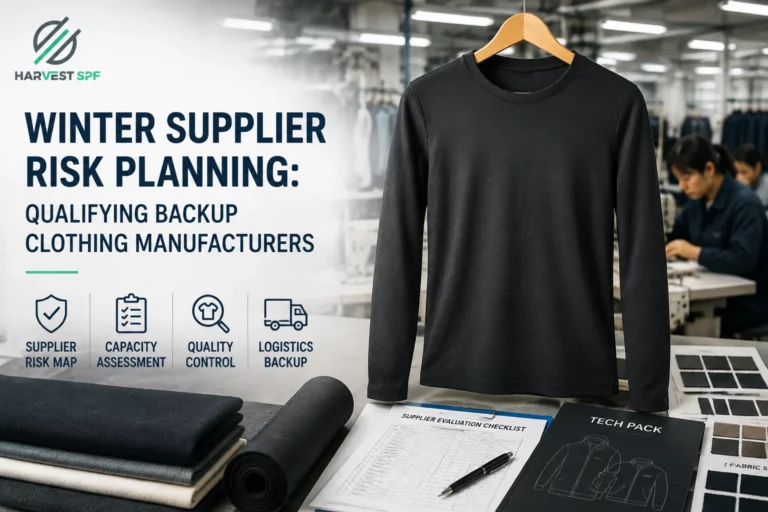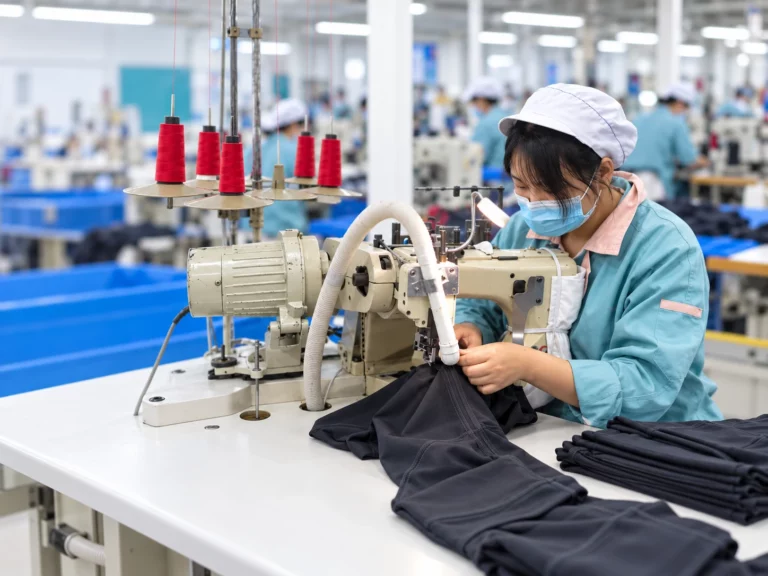

Winter collections compress a year of product work into a narrow selling window. Effective winter supplier risk planning addresses fabric, quality, and capacity failures that can push a launch past the weather that creates demand. A qualified backup clothing manufacturer gives the brand a tested second source that can be activated when needed.
A Backup Supplier Is Not Simply a Supplier on a List
A backup manufacturer is not simply a factory that has quoted the product. A qualified backup source has reviewed the technical package, confirmed material and capacity assumptions, produced acceptable samples, demonstrated quality controls, and has a documented activation path.
Backup readiness can be viewed as a progression:
Quoted Supplier -> Technically Reviewed -> Sample Approved -> Pilot Qualified -> Activation-Ready.
Define the Failure Scenario Before Selecting the Backup Supplier
- Factory capacity failure: the primary manufacturer cannot secure the required production line or shift.
- Fabric or material failure: a critical yarn, fabric, insulation, trim, or finishing source is delayed or unavailable.
- Quality failure: bulk production repeatedly fails agreed inspection or performance requirements.
- Compliance or documentation failure: required certification, traceability, labeling, or shipment documentation cannot be maintained.
- Logistics or regional disruption: production or transport is interrupted by a route, port, customs, or regional event.
- Replenishment failure: the primary source cannot support the repeat quantity within the selling window.
The backup strategy should match the failure scenario. A second garment factory that relies on the same critical fabric mill may reduce sewing-capacity risk without reducing fabric-source risk.
Start With a Winter-Specific Risk Map
Supplier risk planning should begin with the collection, not a generic vendor scorecard. List every style, fabric, trim, and process that could stop shipment. Heavy knits, brushed fleece, merino, insulation, waterproof finishes, heat-transfer graphics, and bonded seams may rely on different equipment or sub-tier mills. Mark which items are weather-critical, which have long material lead times, and which cannot be substituted without changing the hand feel, fit, or care label.
Score consequences such as launch dates, wholesale appointments, and freight premiums. Ask procurement, design, technical, and operations teams to agree on the latest acceptable ex-factory date, minimum release quantity, and unacceptable quality deviations. This prevents approval based only on price.
Identify Single Points of Failure
| Supply-Chain Node | Primary Route | Backup Route | Planning Question |
| Yarn / fiber | Primary source | Alternative or none | Is this material single-sourced? |
| Fabric mill | Primary mill | Second mill or shared mill | Does the backup depend on the same fabric source? |
| Dyeing / finishing | Primary processor | Alternative or shared processor | Is a critical finish concentrated at one facility? |
| Garment production | Primary factory | Backup factory | Can the second factory reproduce the approved style? |
| Freight | Primary mode/route | Alternative mode/route | Is a realistic logistics fallback available? |
A Second Factory Is Not Necessarily a Second Supply Chain
Primary and backup garment factories may still share the same yarn mill, fabric mill, dye house, waterproof-finishing plant, zipper supplier, or other sub-tier source. Record these shared dependencies so the team can distinguish garment-production redundancy from material- and process-supply redundancy.
Use a Buyer-Defined Winter Risk Matrix
| Risk | Probability | Impact | Lead-Time Sensitivity | Backup Action |
| Critical winter yarn or fabric | Buyer-defined | Buyer-defined | Buyer-defined | Qualify alternate source or reserve material |
| Brushed / finished fabric quality | Buyer-defined | Buyer-defined | Buyer-defined | Define approved standard and alternate route |
| Garment capacity | Buyer-defined | Buyer-defined | Buyer-defined | Qualify backup production capacity |
| Packaging / standard trims | Buyer-defined | Buyer-defined | Buyer-defined | Assess whether a separate backup is necessary |
Probability and impact should be assigned by the brand using its own supply history, launch timing, product criticality, and commercial exposure rather than treated as universal industry scores.
Define the Backup Manufacturer’s Job
A secondary source can play several roles. It may hold a complete replacement program, produce only a high-risk style, make replenishment units, or supply an approved component such as a base layer. Write the role into the sourcing brief. A factory that is excellent at merino seamless garments may not be the right emergency source for a coated shell, even when both are called winter apparel.
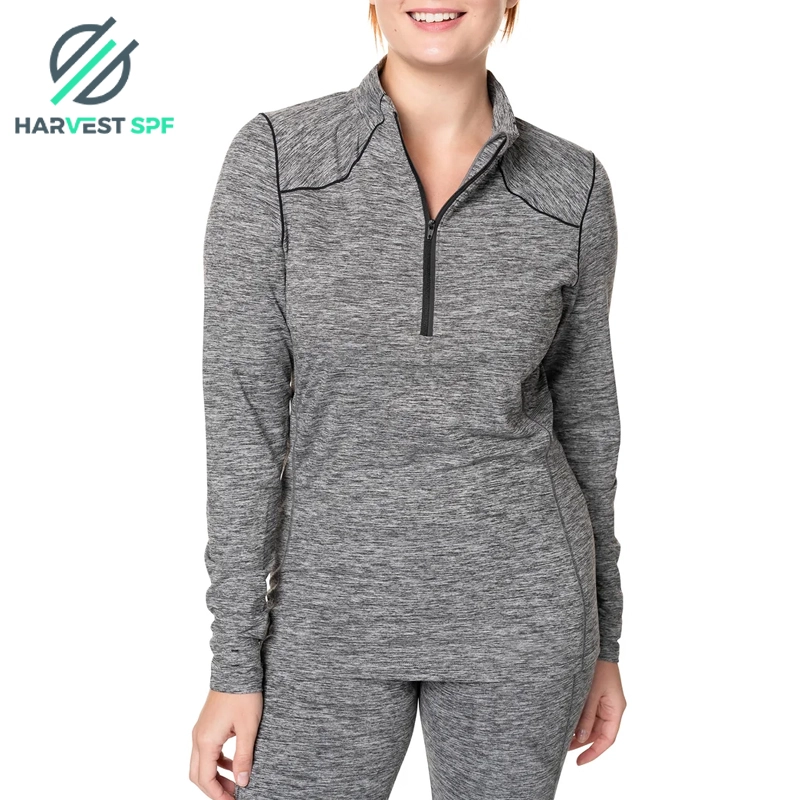
Use the Outdoor & Thermal product range as a reference when mapping capabilities. The category shows base layers, long johns, half-zips, socks, and other cold-weather constructions. The useful question is whether the manufacturer’s machinery, fabric library, pattern files, and inspection plan can reproduce the approved style.
Four Backup Manufacturing Models
| Backup Model | Role | Qualification Focus |
| Full Program Backup | Can assume most or all of the program | Broad technical, material, capacity and logistics qualification |
| High-Risk SKU Backup | Pre-qualified for selected critical styles | Deep validation on the chosen styles and materials |
| Replenishment Backup | Supports repeat orders during the season | Material access, repeat lead time and surge capacity |
| Component / Material Backup | Supplies a critical fabric, base layer or component | Material/process equivalence and traceability |
The backup role determines how much qualification work is required before activation; not every contingency model needs full-program qualification.
Define Backup Readiness Levels
| Readiness Level | Typical Status |
| Tier 1 – Activation Ready | Sample approved; material confirmed; pilot completed; capacity and commercial activation plan confirmed |
| Tier 2 – Technically Qualified | Technical package and sample approved; pilot or current capacity confirmation still pending |
| Tier 3 – Candidate | Capability and RFQ reviewed, but production performance has not been validated |
A supplier that has only quoted the program should not be described internally as an activation-ready backup source.
Qualify Technical and Capacity Fit
Request a capability pack before discussing an emergency order. It should identify product categories, fabric types, knitting or sewing processes, printing and finishing equipment, standard size ranges, and known exclusions. Ask which operations are performed in-house and which are subcontracted. Subcontracting is not automatically a weakness, but the handoff, ownership, and inspection points must be visible.
Capacity should be expressed in the units that drive your risk: pieces per style, kilograms of fabric, sewing lines, and available shifts during peak months. Ask for a normal plan and a surge plan, and confirm how fabric, patterns, trims, and line time would be reserved after activation. Without reserved inputs, a backup may help later replenishment but not an immediate continuity event.
Harvest SPF describes ODM/OEM support, in-stock fabric from 500 pieces per style, and rapid prototyping. Verify the actual fabric, style, quantity, and seasonal slot in the RFQ; capabilities remain configuration-dependent.
Normal Capacity Is Not the Same as Activation Capacity
Instead of asking only for nominal monthly capacity, define the activation scenario. For example: if the backup is activated on a specified date, how many units can be produced and shipped by the required ex-factory date? Confirm material readiness, line-booking delay, pilot-to-bulk lead time, weekly output after activation, maximum surge quantity, and how long surge output can be maintained.
For selected constructions, available material programs may support lower-volume development or backup production, subject to confirmation of the actual fabric, color, style, quantity, and seasonal production slot.
Test Quality Before the Crisis
Do not qualify a backup from a presentation deck. Send the same tech pack, graded measurements, artwork, bill of materials, and tolerance sheet used with the primary factory. Compare the first sample for fabric weight, stretch and recovery, shrinkage, seam construction, zipper or trim placement, label content, and appearance after the agreed care test. Record the result in a signed sample comment log.
Follow the sample with a small pilot lot large enough to expose cutting, sewing, packing, and inline-inspection variation while limiting inventory risk. Define measurement tolerances, visual defects, shade references, packaging, carton marks, and shipment documents before production. If the backup cannot meet the same criteria, classify it as a different-tier source or remove it from the contingency list.
Harvest SPF states that its quality process can include pre-production guidance, in-process and final pre-shipment inspections, plus third-party or buyer-led inspection support. Convert these options into a written control plan naming approvers, inspection points, defect rules, and shipment release authority.
Four Backup Supplier Qualification Gates
| Gate | Evidence | Release Status |
| 1. Technical Capability | Tech pack review; machinery/process fit; material route; subcontracting visibility | Proceed to sampling or reject |
| 2. Sample Approval | Approved fit, fabric, construction, workmanship and required test results | Sample qualified |
| 3. Pilot Qualification | Production repeatability, QC, packing and documentation evidence | Pilot qualified |
| 4. Activation Readiness | Current material, capacity, commercial, logistics and escalation plan | Activation-ready or hold |
A showroom-quality sample demonstrates sample-room capability; a pilot lot provides stronger evidence of production-system capability. One acceptable sample alone should not be treated as proof that the backup source can reproduce the product at bulk scale.
Validate Communication and Change Control
Run a response drill: send a revised measurement, trim-substitution request, and shipment-date question. Measure completeness, including impacts on cost, materials, capacity, and approvals.
Lock tech packs, grading rules, marker files, color standards, and packaging artwork with revision numbers and named approvers. Define who authorizes changes and withdraws obsolete files. Appropriate confidentiality and intellectual-property terms should also be in place before production data is shared.
Run a Backup Supplier Activation Drill
Periodically simulate a realistic continuity event, such as the primary supplier being unable to ship a defined quantity of a critical style. Ask the backup supplier to respond within a buyer-defined time window with material availability, MOQ, available capacity, earliest sample or PP date, earliest ex-factory date, cost changes, required approvals, logistics options, assumptions, and key risks. Record both response time and completeness.
Define Backup Activation Triggers Before the Crisis
| Trigger Type | Example Buyer-Defined Trigger | Decision |
| Material | Critical material misses an agreed milestone | Review recovery vs. backup activation |
| Quality | Repeated major failure remains unresolved after CAPA | Escalate backup allocation |
| Capacity | Primary cannot confirm required line/capacity | Activate defined backup scope |
| Delivery | Forecast ex-factory date crosses latest acceptable date | Review transfer and freight options |
| Compliance | Required certification/documentation becomes unavailable | Hold affected route and assess backup |
Triggers should initiate a documented management review rather than force automatic transfer. The team should compare the primary supplier recovery path with the backup supplier readiness and available launch buffer.
Build a Commercial and Logistics Fallback
An emergency transfer can fail financially even when sewing quality is acceptable. Compare the landed-cost effect of minimum quantities, patterns, testing, labels, packaging, inspection, freight, duties, and possible rework. Clarify payment milestones, currency assumptions, tooling ownership, and the treatment of unused materials if the order is cancelled.
Create at least two transport scenarios and a latest-ship decision date. Sea, air, and express options carry different cost and schedule risks, so compare them against margin and launch priority. Confirm carton dimensions, labeling, export documents, and import requirements. Treat any quoted lead time as conditional until material availability, approvals, and booking conditions are written into the order documents.
Harvest SPF lists express, air, and sea freight options and customer-service support. Verify who books freight, provides tracking, and escalates exceptions. Its service-team information identifies a communication route, while the ODM/OEM process can help buyers align design ownership and private-label requirements.
Define the Maximum Cost of Continuity
Before an emergency, establish how the brand will compare normal landed cost with backup-supplier premiums, expedited freight, additional inspection or testing, rework, and the commercial exposure of missing the launch. The resulting emergency cost ceiling should be business-specific rather than based on a universal percentage.
Decide Whether Backup Materials Should Also Be Reserved
| Material Strategy | Advantage | Trade-Off |
| No reservation | Lowest carrying cost | Slowest activation if materials are unavailable |
| Shared approved material | Supports consistency and may speed transfer | Does not protect against failure at the shared material source |
| Dedicated backup material | Fastest material activation for defined products | Higher inventory and working-capital exposure |
For winter programs dependent on merino yarn, brushed fleece, custom-dyed fabric, insulation, membranes, or other seasonal materials, factory qualification alone may not provide continuity unless the critical material route is also addressed.
Keep the Backup Manufacturer Ready
A dormant supplier can quickly become an untested supplier. Schedule a pre-winter readiness review covering capacity, materials, contacts, certifications, banking details, and shipping lanes. Re-run a fit check after material or construction changes, and identify sub-tier sources shared with the primary manufacturer.
An approved substitute list should remain tied to testing and labeling requirements. Replacing a yarn, fabric, zipper, elastic, or insulation material during an emergency may affect performance, appearance, care instructions, or regulatory documentation.
Periodic pilot or replenishment orders can also reveal whether the backup manufacturer still has the required machinery, operators, material access, and quality discipline.
Revalidate Backup Qualification When Conditions Change
- A new season materially changes the product or delivery assumptions.
- Fabric, construction, finishing, or critical trim changes.
- The factory relocates production or introduces a new key subcontractor.
- Major machinery or process changes affect the approved construction.
- The supplier has been inactive long enough that material, capacity, or operator readiness is uncertain.
- Relevant certification or compliance status changes.
- A significant quality incident calls the prior qualification into question.
The revalidation scope should match the change; it does not necessarily require repeating every qualification step when the underlying risk has not changed.
Assign Ownership Before Activation
| Function | Primary Responsibility |
| Procurement | Supplier status, commercial terms and capacity |
| Technical / Product | Product specification, fit and material requirements |
| Quality | Pilot evidence, inspection criteria and CAPA |
| Logistics | Freight, customs assumptions and latest ship decision |
| Finance | Emergency-cost approval and payment exposure |
| Merchandising / Planning | SKU priority, quantity allocation and launch impact |
| Activation Owner | Final documented decision to activate, hold or expand the backup |
Use an Activation Decision Tree
Primary Supplier Risk Identified -> Can the primary supplier recover within the approved buffer? If YES, continue with corrective action and monitoring. If NO -> Is the backup activation-ready? If YES, allocate the defined backup volume. If NO -> Can a partial transfer protect the critical launch quantity or SKU? If YES, activate the qualified partial scope. If NO, escalate logistics, assortment, quantity, or launch decisions.
Use a Cross-Functional Approval Gate
Create one evidence file that engineering, procurement, quality, finance, and merchandising can review and approve. Include:
- The supplier capability assessment
- Factory audit or visit notes
- Sample measurements and comments
- Pilot-order inspection results
- Open corrective actions
- Normal and surge-capacity scenarios
- Commercial terms
- Logistics assumptions
- The activation decision tree
Assign an owner and expiry date to each item. Certifications and social-compliance evidence should be current and matched to the legal manufacturing entity. Record renewal dates instead of relying only on certification logos in a presentation.
Harvest SPF reports experience serving scaled retailers, Amazon sellers, and D2C brands, together with textile research and development activities. Final approval should still be based on the specific winter style and documentation submitted for the program. A technical fit review should receive the model or drawing, measurements, materials, quantity, destination, and target schedule.
RFQ and Activation Checklist
Send the backup clothing manufacturer a complete, version-controlled package:
- Style number, sketches, graded measurements, construction details, and approved sample reference.
- Fiber composition, fabric weight or gauge, color standards, finish, testing requirements, and approved alternatives.
- Trim and packaging bill of materials, labeling language, carton marks, and any required sustainability or traceability documents.
- Quantity by size and color, pilot-order quantity, repeat potential, latest acceptable ex-factory date, destination, and preferred transport modes.
- Inspection method, defect tolerances, sample approvals, corrective-action timing, payment terms, and ownership of patterns and unused materials.
Ask the supplier to return a capacity-confirmation date, assumptions, exclusions, identified risks, and escalation contacts. Store the response under the same RFQ revision so the sourcing decision remains auditable.
Require a Structured Backup Supplier Response
- Confirmed product and process capability.
- Assumptions and exclusions.
- Current material status and critical sub-tier dependencies.
- Sample, pilot and activation lead times.
- Activation capacity and earliest realistic ex-factory date.
- MOQ and commercial changes under the emergency scenario.
- Disclosed subcontractors and alternate material/process routes.
- Identified risks and named escalation contacts.
Compare the Primary and Backup Production Routes
| Item | Primary Supplier | Backup Supplier | Gap / Action |
| Fabric / material route | Approved route | Approved or proposed backup route | Check shared dependencies |
| MOQ | Current program | Backup requirement | Assess inventory exposure |
| Lead time | Current | Activation lead time | Compare with launch buffer |
| Capacity | Reserved/actual | Activation capacity | Confirm usable volume |
| Pilot evidence | Production history | Completed / pending | Close qualification gap |
| Testing / QC | Approved system | Verified / pending | Align acceptance criteria |
| Logistics | Normal route | Fallback routes | Confirm latest ship option |
| Readiness | Live source | Tier 1 / 2 / 3 | Define next action |
Conclusion
Qualifying a backup clothing manufacturer is a continuity project, not a race to collect a second quotation. Winter brands reduce their exposure when they define the failure they are preparing for, match technical capabilities, prove quality through a pilot order, document change control, and rehearse commercial and logistics decisions before peak season.
A maintained, evidence-based backup source can absorb a defined share of production risk without forcing rushed material substitutions, uncontrolled outsourcing, or unexpected landed costs.
How Harvest SPF Supports Winter Backup Manufacturing Programs
- Technical Feasibility Review: assess the winter style, construction, material requirements, and production route.
- Material Matching and Development: review merino, thermal knits, brushed fabrics, and other functional winter materials against the approved specification.
- Backup Sampling and Pilot: progress from technical review through sample correction and pilot qualification.
- Material and Capacity Planning: assess seasonal material access, line availability, and activation assumptions.
- Quality Control: connect incoming, in-process, and final inspection to the approved product standard.
- Activation Planning: define the quantity, lead time, logistics assumptions, escalation contacts, and release evidence required for a contingency order.
- Functional Textile R&D: support development and validation of alternatives where the original material route cannot be transferred directly.
FAQs
How early should a brand qualify a backup factory?
Begin before winter material bookings and production capacity are committed. Earlier qualification leaves time for samples, a pilot lot, corrective actions, commercial review, and logistics planning.
Should the backup manufacturer be in another country?
Not automatically. Geographic separation may reduce exposure to a regional disruption, but different customs procedures, transit times, compliance duties, and material sources can create additional risks. Compare the complete scenario.
Can a backup factory use substitute fabric?
Only after written technical approval. A substitute may change warmth, stretch, shrinkage, shade, care labeling, or required documentation and should therefore be tested before bulk production.
What information is required for an initial fit check?
Provide the style reference, measurements, materials, construction details, quantity, destination, target date, and any testing, labeling, or inspection requirements. Complete inputs support a more responsible feasibility assessment.
Does a Backup Clothing Manufacturer Need to Complete a Pilot Order?
Not every contingency model requires the same pilot scope, but a supplier should not be considered fully activation-ready solely because it produced one acceptable sample. The required pilot scope should reflect the product, quantity, process complexity, and risk that the backup is expected to cover.
Should the Primary and Backup Manufacturer Use the Same Fabric Supplier?
Using the same approved fabric source can simplify product consistency and reduce redevelopment work, but it does not protect the brand from disruption at that shared material source. Brands should distinguish garment-production redundancy from material-supply redundancy.
Get a Winter Backup Supplier Readiness Review
Send Harvest SPF the product category, tech pack, approved sample, fabric specification, current primary-supplier structure, critical material source, quantity and SKU breakdown, current lead time, required ex-factory date, destination, and the primary risk concern.
Harvest SPF can review the technical requirements, identify shared supply-chain dependencies, assess material and capacity assumptions, and define the sampling, pilot, and documentation steps required to qualify a backup production route.