
Changing an activewear OEM supplier shortly before peak season is possible, but it should be managed as a controlled transfer rather than a normal sourcing exercise. The objective is not simply to find a factory with a lower quotation. It is to reproduce the approved product, performance, fit, appearance, and delivery requirements with a new manufacturing partner before demand accelerates.
The safest approach is to establish a clear technical baseline from the existing program, convert approval knowledge into measurable documents, qualify the new OEM partner against the same standards, and release production through structured sampling and quality checks. A supplier with strong activewear ODM/OEM capabilities can support the transition, but the brand must still own the specification and approval gates.
Should You Switch Activewear OEM Suppliers Before Peak Season?
The decision should be based on remaining approval steps versus the available critical-path time rather than on a fixed number of weeks.
Activewear Supplier Transfer Risk Matrix
| Situation | Typical Conditions | Transfer Approach |
| Lower risk | Complete tech pack; approved fabric; golden sample; sufficient approval time | Full qualification may be practical |
| Medium risk | Some material or fit redevelopment; several colors/sizes; limited schedule buffer | Pilot or selected-SKU transfer |
| Higher risk | New custom fabric; incomplete fit/testing; very tight shipment deadline | Maintain continuity supply while qualifying the new supplier |
The more high-complexity variables present, the stronger the case for a pilot or phased transfer rather than immediate full-volume production.
| Transfer Variable | Lower Complexity | Higher Complexity |
| Fabric | Stock or established fabric | Custom development or difficult-to-match finish |
| Fit | Stable approved fit | Fit still being corrected |
| Colors | Limited established colors | Multiple custom colors |
| Construction | Standard proven construction | Bonding, seamless, or complex construction |
| Documentation | Complete measurable specification | Golden sample or informal comments only |
| Timeline | Meaningful approval buffer | Peak shipment window approaching |
Why an Activewear Supplier Change Creates Quality Risk
An activewear program contains more information than a tech pack. The current supplier may hold practical knowledge about fabric behavior, pattern corrections, sewing tension, elastic recovery, print placement, grading, and acceptable appearance variation.
When a program moves, this knowledge can be lost unless it is documented. A replacement supplier may follow the written specification accurately and still produce a different result because the original approval relied on informal references, verbal corrections, or an unrecorded “golden sample.”
The main risks include:
- Different fabric composition, GSM, stretch, or recovery
- Changes in opacity, hand feel, shade, or surface appearance
- Pattern and grading differences between size ranges
- Seam puckering, skipped stitches, or inconsistent coverstitch tension
- Variations in trims, labels, heat transfers, or packaging
- Insufficient time for fit corrections before the selling season
- Bulk production beginning before the new supplier has demonstrated repeatability
A supplier change should therefore begin with a transfer audit, not a purchase order.
Build the Technical Transfer Baseline Before Qualification
Organize the transfer package into five controlled groups:
- Product Specification— Tech pack, patterns, grading, and measurements
- Material Specification— Composition, GSM, construction, finish, stretch, and recovery
- Approval Standards— Golden sample, sealed fabric, lab dip, and artwork
- Quality History— Test reports, previous defects, CAPA records, and approved concessions
- Commercial Requirements— Quantity, size ratio, color breakdown, and shipment window
A Golden Sample Is a Reference, Not a Complete Specification
A golden sample can define appearance, a construction reference and general fit, but it cannot independently define GSM tolerance, stretch and recovery, shrinkage, colorfastness, seam strength, measurement tolerance or functional performance.
A stronger transfer standard combines the golden sample with the tech pack, sealed fabric standard, measurement tolerances, test requirements and written approval comments.
Define “Must Match” vs. “Can Be Re-Engineered”
| Must Match | May Be Re-Engineered With Buyer Approval |
| Fit and key measurements | Yarn or material supplier |
| Buyer-defined functional performance | Certain internal construction methods |
| Appearance and core color standards | Fabric manufacturing route where performance is revalidated |
| Logo placement and compliance requirements | Trim or packaging source |
| Required test limits | Other production details not fixed by the buyer |
Any re-engineered element should be documented and approved before it becomes part of the new bulk specification.
Prepare the Existing Activewear Program Before Qualifying a New Supplier
Before contacting a new activewear manufacturer, create a controlled transfer reference package. Use this approved transfer baseline to evaluate every new sample and bulk lot.
At minimum, collect:
- The latest approved tech pack, pattern files, graded measurements, artwork, and bill of materials.
- A sealed golden sample representing the approved fit, construction, appearance, and finishing.
- Fabric information, including fiber content, construction, GSM, width, color standard, stretch direction, and recovery targets.
- Test reports and acceptance limits for shrinkage, colorfastness, pilling, abrasion, dimensional stability, and relevant moisture or performance properties.
- Records of previous defects, corrective actions, and concessions.
- Packaging, labeling, folding, carton, and barcode requirements.
- The commercial forecast, target quantities, size ratio, color breakdown, and required ship window.
Do not rely on photographs alone. Images can show appearance but cannot reliably define stretch, recovery, measurement tolerance, or seam performance. Where the original supplier used a special fabric finish or construction method, record the process requirement rather than describing the result only with words such as “soft,” “breathable,” or “premium.”
This is also the point to identify what is mandatory and what can be redesigned. A new supplier should not receive an unclear brief that mixes fixed requirements with negotiable preferences.
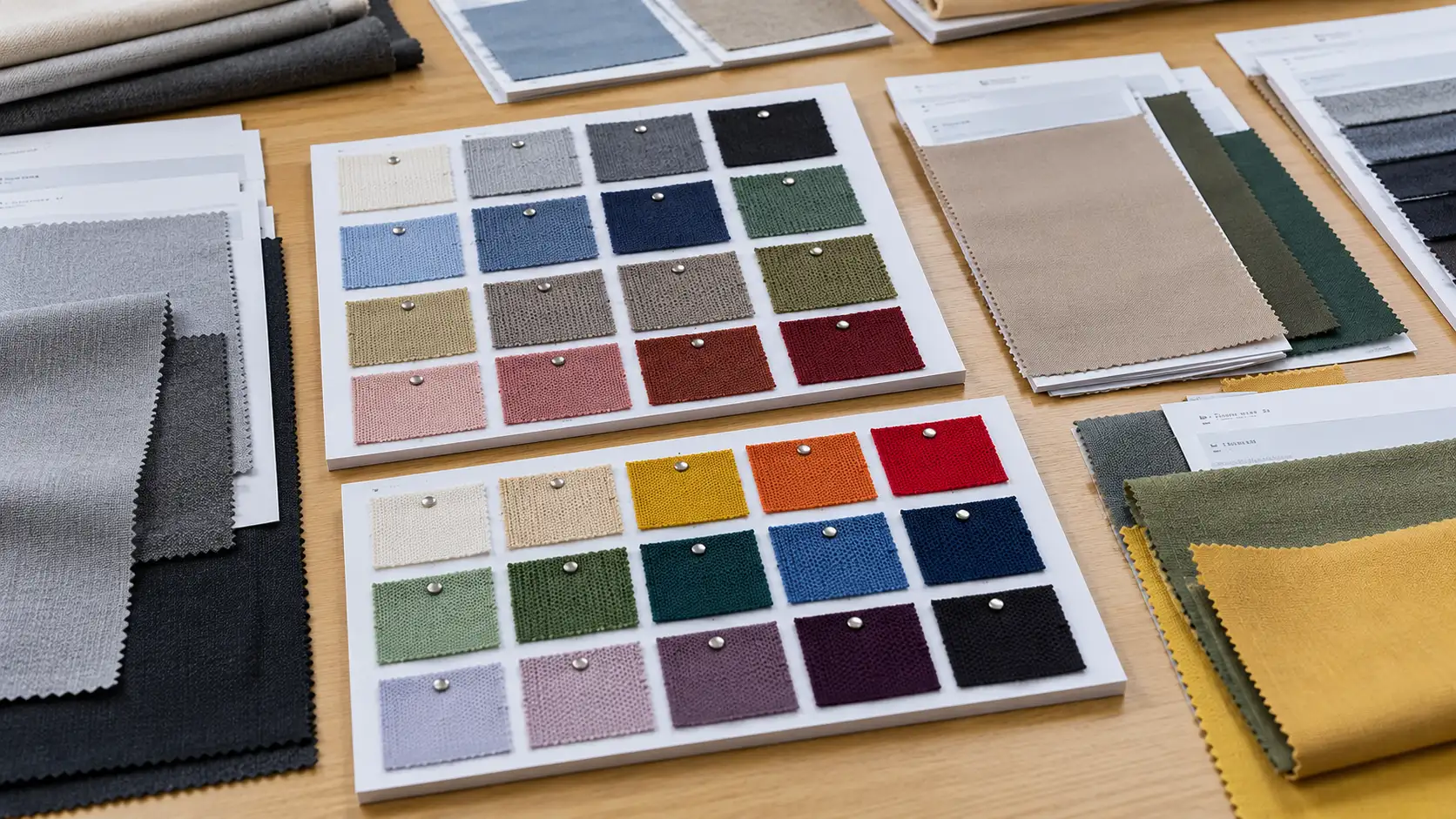
Qualify the Replacement OEM Supplier Against the Same Gates
The correct supplier is not necessarily the one with the largest product catalog. Brands should assess whether the factory can reproduce the particular activewear program under the available timeline and quantity.
Review the supplier in five areas:
Product and Process Fit
Confirm experience with the relevant activewear product categories, such as leggings, sports bras, performance tops, base layers, seamless garments, or training sets. Ask which operations are performed internally and which are subcontracted.
A supplier’s sampling process should cover technical review, fabric selection or development, pattern work, prototype sampling, fit approval, pre-production confirmation, bulk production, and inspection. Harvest SPF describes a comparable ODM/OEM process that moves from initial discussion and tech-pack review through fabric development, sampling, mass production, quality inspection, and shipping.
Material Control
The supplier should explain how it will source or develop the approved fabric, how color is controlled, and how incoming material is inspected. If the program uses recycled, regenerated, or natural fibers, request the documentation needed to support composition and sustainability claims.
Material substitutions should never be accepted solely because the substitute looks similar. A different yarn, finish, or knit structure can change stretch, drying behavior, pilling, shade, and fit.
Minimum Order and Capacity
MOQ should be evaluated by fabric availability, color count, dyeing requirements, garment complexity, and decoration method. Harvest SPF publishes different MOQ bands for cut-and-trim, full-package ODM, seamless, and socks programs, which illustrates why a single factory-wide MOQ can be misleading.
Ask the supplier to separate fabric lead time, sampling time, production time, inspection, packing, and freight. Also confirm whether the factory can support repeat orders during the same peak period.
Documentation Discipline
A supplier should be willing to record every change to fabric, GSM, color, trims, measurements, print method, and finishing. If revisions are handled only through chat messages, the risk of producing from an outdated version increases sharply.
Corrective-Action Capability
Ask how the supplier handles a failed sample or bulk defect. A credible process should identify the root cause, define the correction, set a recheck date, and confirm whether affected goods must be held or reworked.
Replacement Supplier Qualification Matrix
| Area | Evidence to Request |
| Product capability | Relevant activewear products and comparable construction experience |
| Material capability | Existing sourcing route or redevelopment capability |
| Machinery | Required sewing, bonding, seamless, printing or finishing equipment |
| Testing and QC | Incoming, in-process and final inspection; test coordination |
| Capacity | Planned line, weekly capacity and production window |
| Subcontracting | Processes and facilities performed externally |
| CAPA | Root-cause, correction and recheck process |
| Documentation | Specification version and change-control system |
Available Capacity Is Not the Same as Reserved Capacity
At quotation stage, confirm not only current availability but also the planned production line, expected weekly output, the date capacity will be reserved, what happens if pre-production approval is delayed, and whether repeat-order capacity can still be supported during peak season.
Audit Existing Materials and Production Assets
- Remaining fabric and dyed fabric: confirm ownership, lot/shade, quantity and transferability.
- Custom trims, labels, packaging and heat transfers: confirm usable quantities and compatibility with the new program.
- Printing screens, molds, tooling and other production assets: confirm ownership and whether they can be transferred.
- Digital patterns, grading files and artwork: confirm the brand has access and the right to transfer them.
Confirm Ownership Before Transferring Supplier-Developed Assets
Before transferring proprietary patterns, artwork, tooling, or supplier-developed materials, confirm the brand’s contractual right to use and transfer those assets.
Six Approval Gates for an Activewear Supplier Transfer
| Gate | Approval Evidence | Release Decision |
| 1. Technical review | Written technical review and resolved questions | Proceed or clarify |
| 2. Material approval | Sealed fabric / approved lab dip / material data | Approve or redevelop |
| 3. Prototype | Prototype and documented construction comments | Revise or proceed |
| 4. Fit & construction | Measurements and signed fit comments | Approve or correct |
| 5. Pre-production | Signed PP sample using final inputs and method | Release pilot or hold |
| 6. Pilot lot | Inspection and relevant test data | Bulk release or corrective action |
Transfer the Program Through Controlled Sampling
Do not move directly from quotation to bulk production. Use a staged transfer:
- Technical review:The new supplier reviews the tech pack, golden sample, patterns, and material brief. Any ambiguity is resolved in writing.
- Material confirmation:Submit fabric swatches, lab dips, or development samples for composition, weight, color, stretch, recovery, and hand-feel comparison.
- Prototype sample:The factory produces the first sample using the proposed construction and trims. This stage checks manufacturability, not final approval.
- Fit and construction review:Compare measurements, balance, seam placement, elastic tension, coverage, and movement against the approved sample.
- Pre-production sample:The supplier makes a sample using the final fabric, trims, artwork, machines, and production method intended for bulk.
- Pilot or controlled first lot:Where timing and quantity allow, release an initial lot, inspect it, and review measurement and defect data before authorizing the full order.
The brand should retain the approved sample, sealed fabric standard, measurement chart, test requirements, and signed comments. A sample is not approved because it “looks close.” It is approved because the defined attributes fall within agreed tolerances.
Build Quality Control Around Measurable Standards
Quality control should be divided into incoming, in-process, and final checks.
Incoming inspection verifies fabric shade, width, GSM, composition documentation, rolls, trims, and packaging components. In-process inspection checks cutting accuracy, panel matching, seam construction, elastic insertion, print or heat-transfer placement, and measurement consistency. Final inspection evaluates appearance, workmanship, labeling, packing, and sampling-based defect limits.
For performance activewear, include tests that reflect the end use. Depending on the garment, this may include:
- Stretch and recovery
- Dimensional change after laundering
- Colorfastness to washing, perspiration, and rubbing
- Pilling, abrasion, and snagging resistance
- Seam strength and coverstitch performance
- Opacity and coverage in extended positions
- Moisture-management or drying behavior where relevant
A new supplier should not be judged only by the first sample. Repeatability across multiple sizes, colors, and production lots is the more important signal.
For broader fabric-selection context, brands can review Harvest SPF’s activewear fabric sourcing guide, which explains how fiber systems, construction, GSM, stretch, recovery, testing, and end use should be connected in a professional sourcing brief.
Verify More Than One Size and Color
The transfer plan should include enough size and color coverage to detect grading, shade, opacity and production-repeatability problems before bulk release.
The base size can confirm overall fit, while selected smaller and larger sizes help verify grading; a secondary color can expose shade, print or opacity differences that the core color does not show.
Use Product-Specific Performance Verification
Exact test methods and pass/fail limits should be defined by the buyer according to product design, destination market and end use.
| Product | Priority Verification Examples |
| Leggings | Stretch/recovery, opacity, pilling and seam performance |
| Sports bra | Elastic recovery, seam strength and dimensional stability |
| Performance top | Moisture/drying behavior, dimensional change and colorfastness |
| Base layer | Moisture management, relevant thermal/comfort requirements and dimensional stability |
| Seamless activewear | Stretch/recovery, grading and size consistency |
Define Defect Categories Before Bulk Inspection
Before bulk production, agree how critical, major and minor defects will be defined for the program and what inspection acceptance criteria apply. Examples may include regulatory or safety errors as critical issues; measurement failures, open seams, severe shade variation or incorrect logos as major issues; and limited workmanship issues that do not affect function as minor issues.
Protect the Timeline Before Peak Season
Work backward from the required in-market date. Separate the critical path into technical review, material approval, prototype, fit corrections, pre-production approval, bulk manufacturing, inspection, packing, freight, customs, and receiving.
Build contingency time around the stages most likely to create delay: custom fabric development, lab dips, revised patterns, failed testing, and corrective samples. Avoid using the entire calendar simply to negotiate price. A lower unit price is not useful if the supplier cannot complete approval before the selling window.
One practical approach is to keep the current supplier active for confirmed continuity orders while the new supplier proves capability on a carefully selected style or controlled pilot. This reduces concentration risk without allowing two factories to make undocumented changes to the same specification.
Work Backward From the Required In-Market Date
| Critical-Path Stage | Illustrative Planning Range |
| Technical transfer | Several days |
| Material confirmation / redevelopment | About 1-3+ weeks depending on material |
| Prototype and fit corrections | About 1-4+ weeks depending on approval rounds |
| Pre-production approval | About 1-2+ weeks |
| Bulk production | Often several weeks depending on quantity/capacity |
| Inspection / packing | Several days to about one week |
| Freight / customs / receiving | Depends on shipping mode and destination |
These ranges are illustrative only. Actual timing depends on fabric availability, product complexity, order quantity, approval rounds, factory capacity and shipping mode.
Calculate the Latest Practical Supplier-Transfer Start
Required In-Market Date – Receiving/Warehouse Buffer – Customs – Freight – Final Inspection/Packing – Bulk Production – PP Approval – Fit/Prototype Corrections – Material Approval – Contingency = Latest Practical Transfer Start. This is a project-planning tool rather than an industry-standard formula.
Select the First Transfer SKU Carefully
Do not combine supplier-transfer risk with unnecessary product-development risk.
| Better First-Transfer Candidate | Poor First-Transfer Candidate |
| Stable approved fit | New or still-changing fit |
| Existing approved fabric | New custom fabric |
| Limited colors | Many custom colors |
| Simple, proven construction | Complex bonding or unfamiliar construction |
| Complete documentation | Incomplete testing or specifications |
| Meaningful but controllable volume | Extremely tight delivery window |
Use Controlled Dual Sourcing Where Appropriate
The existing supplier may continue continuity orders while the new supplier proves capability on a selected SKU or pilot. Both suppliers should manufacture against the same controlled specification revision unless a documented supplier-specific deviation has been approved.
When to Hold the Supplier Transfer
Hold the transfer if:
- Pre-production sample fails a critical fit, construction or performance requirement.
- Final fabric cannot meet the approved material standard.
- Required production capacity cannot be reserved for the bulk window.
- Mandatory testing fails or required documentation remains unresolved.
- A key subcontracted process or facility is undisclosed.
- The critical path no longer supports the required delivery window.
- Pilot-lot quality exceeds the buyer’s agreed defect or acceptance limits.
Recommended control:
HOLD -> root-cause review -> corrective action -> re-sample or re-test -> re-approval before bulk release.
How Harvest SPF Supports an Activewear Supplier Transfer
Harvest SPF can support a supplier-transfer project through:
- Technical Transfer Review: review the tech pack, golden sample, BOM, tolerances and test requirements.
- Fabric Matching and Redevelopment: compare composition, GSM, construction, stretch/recovery and finishing requirements.
- Functional Textile R&D: develop and revalidate alternatives where the original material cannot be transferred directly.
- Controlled Sampling: manage prototype, fit, pre-production and pilot stages against documented approval criteria.
- Testing Coordination: align verification with the garment category and buyer-defined requirements.
- Specification and Change Control: maintain the approved fabric-construction-trim specification for bulk production.
- Bulk Production and QC: connect incoming, in-process and final inspection to the approved transfer baseline.
Where Harvest SPF May Fit
Harvest SPF presents itself as a functional textile and ODM/OEM partner for activewear, outdoor, thermal, and sustainable apparel programs. Its published process includes tech-pack review, fabric selection or development, prototype sampling, mass production, quality inspection, and packing and shipping. The company also lists material options such as merino wool, Tencel, Modal, Ingeo PLA, and organic cotton, subject to project requirements and specification verification.
For brands transferring an activewear program, the relevant question is whether the supplier can match the approved transfer baseline, document deviations, support required testing, and meet the project’s quantity and timing. A technical discussion should begin with the product brief rather than a generic catalog request.
Get an Activewear Supplier Transfer Feasibility Review
Send Harvest SPF the product category, current tech pack, golden or reference sample, fabric specification, current quality/test requirements, current supplier issue, order quantity, size/color breakdown, destination market and required shipment date.
Harvest SPF can review the technical baseline, identify transfer risks, evaluate material-matching requirements, and assess whether the program is better suited to direct transfer, pilot production, or phased dual sourcing.
Conclusion
An activewear OEM supplier change before peak season should be treated as a controlled quality-transfer project. Establish the approved transfer baseline, document the golden sample, qualify the new factory against measurable gates, approve materials and fit in stages, and protect the schedule with a realistic critical path.
The brands most likely to preserve quality are those that treat supplier knowledge as part of the specification and require evidence before bulk authorization. A new supplier can bring useful capability, but only a disciplined transfer process can make the result repeatable.
FAQs
How early should a brand change an activewear OEM supplier?
Start as soon as the risk is identified. The required lead time depends on fabric availability, sample revisions, testing, order quantity, and the peak-season deadline.
Can a new supplier use the old supplier’s approved sample?
Yes, as a reference, provided the brand has the right to use it and the sample is accompanied by written specifications, measurements, fabric information, and approval comments.
What is the most important quality document during a supplier transfer?
The most important package is usually the combination of the approved golden sample, sealed fabric standard, tech pack, measurement chart, test protocol, and signed pre-production approval.
Should the brand place the full order immediately after the first sample?
Usually not. A pre-production sample and, where practical, a controlled pilot provide stronger evidence that the supplier can reproduce the product consistently.