
This guide focuses on how activewear brands translate market performance benchmarks into measurable fabric specifications, helping OEM buyers develop original, commercially viable products while avoiding imitation of protected brand elements.
Well known brand inspired activewear fabrics are often used as commercial benchmarks in private-label, OEM, and ODM development. In professional sourcing, “inspired” should describe a target level of performance, hand feel, appearance, and price positioning—not imitation of protected logos, graphics, or proprietary design elements.
A sound program converts a market reference into measurable requirements, verifies them through testing, and confirms reproducibility in bulk. Harvest SPF supports this process through healthy functional textile research, fiber and fabric innovation, vertical ODM development, sustainable solutions, and more than 30 patents developed since the company was established in 1993.
What “Well Known Brand Inspired” Means in B2B Sourcing
Benchmark Performance, Not Brand Identity
A reference garment can define density, stretch direction, compression, texture, opacity, drape, drying behavior, and perceived quality. It should function as a technical benchmark, not a design template. Protected identity elements should remain outside the brief.
Instead of requesting “the same fabric,” a specification should state fiber content, construction, finished weight, width, stretch, recovery, colorfastness, shrinkage, pilling resistance, and required finishes.
Convert the Reference into a Specification
Strong briefs combine a physical reference with a written specification and end-use profile covering garment category, activity intensity, climate, retail tier, wash frequency, size range, and decoration method.
Laboratory analysis may be needed when composition or construction is unclear. The resulting document should control quotation, sampling, testing, approval, and bulk inspection.
Example performance benchmarks by category
• Premium yoga wear: softness, opacity, recovery, matte appearance → nylon-spandex systems.
• Running apparel: moisture transport, lightweight construction, ventilation → polyester-spandex systems.
• Compression wear: power stretch and shape retention → high-recovery nylon blends.
• Outdoor base layers: temperature regulation and odor resistance → merino blend systems.
Build the Fabric Brief Around End Use
Match Fiber Systems to Activity and Climate
Polyester-elastane fabrics commonly suit high-sweat training through lightweight construction, moisture transport, quick drying, and dimensional stability. Nylon-elastane fabrics are frequently considered for leggings and compression garments where softness, abrasion resistance, stretch, and a smooth surface are priorities.
Natural and regenerated fiber blends may suit lower-impact training, travel, athleisure, or base layers. Wool blends can support thermal positioning, while cellulosic blends provide softness and drape. Recycled synthetics may support sustainability goals, but recycled content does not replace performance validation.
Define Structure, Weight, and Hand Feel
Consider listing specific textile testing standards in the final version, such as moisture management, abrasion resistance, pilling, colorfastness, dimensional stability, and chemical compliance testing, to improve technical credibility with professional sourcing teams.
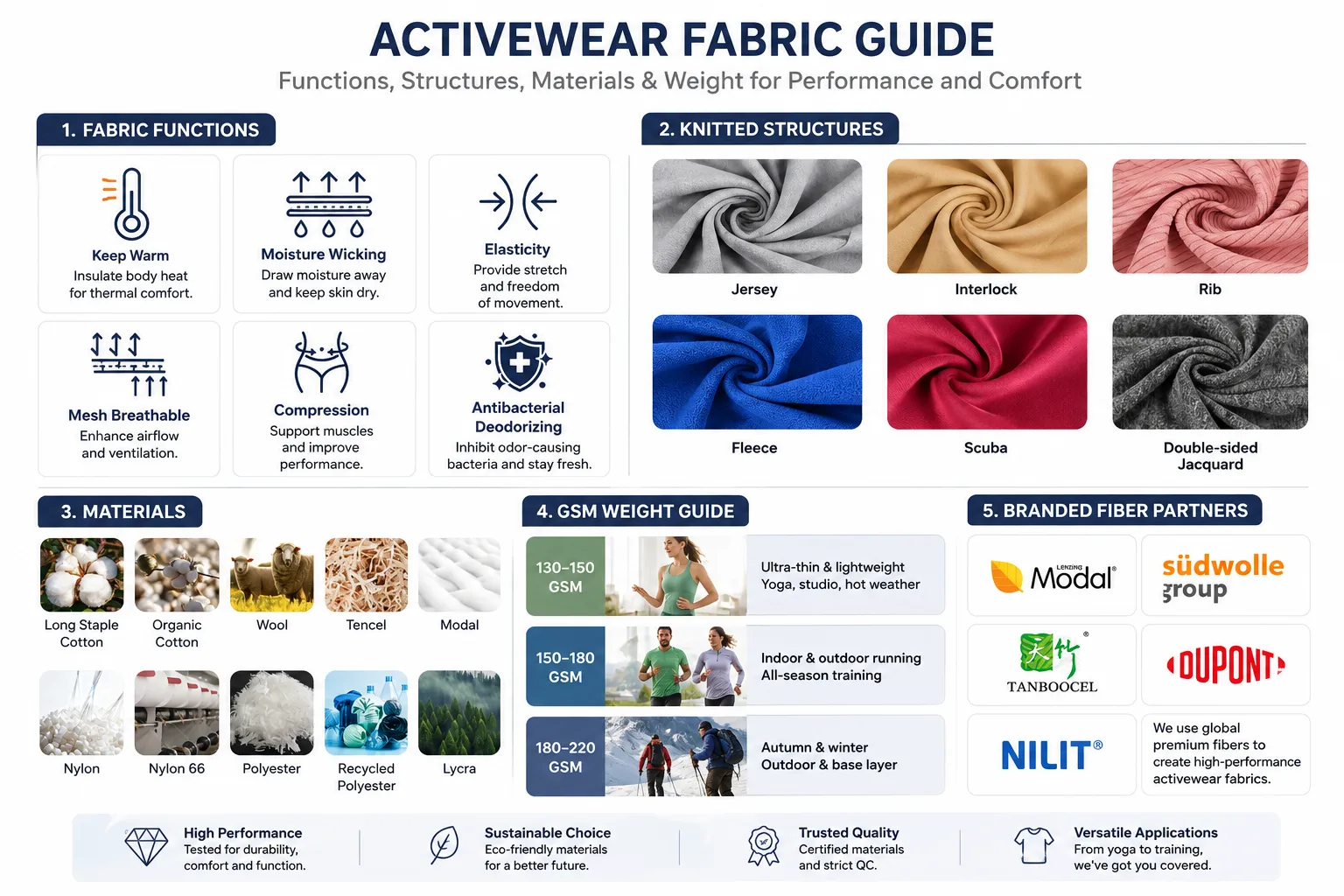
Fiber content alone cannot predict performance. Jersey, interlock, rib, mesh, fleece, double-knit, and seamless structures respond differently to extension, laundering, printing, and sewing. Weight influences opacity, drying time, compression, and seasonality.
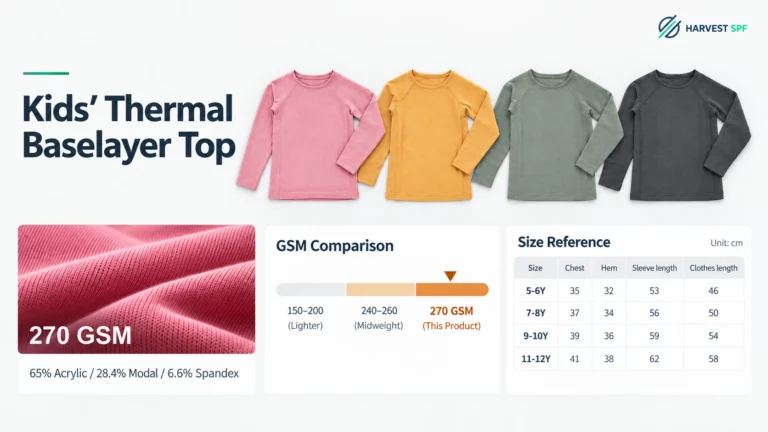
A specification should record GSM tolerance, construction, width, stretch direction, recovery, opacity, surface finish, color standard, and approved hand feel. Brushed or peached treatments should also be identified because finishing can change warmth, pilling, and shade.
Evaluate Performance with Procurement-Grade Testing
Moisture, Breathability, and Thermal Control
Terms such as “moisture-wicking,” “breathable,” and “quick-dry” require defined methods and acceptance criteria. Moisture-management testing can assess liquid transport, while drying-rate, air-permeability, and water-vapor tests help compare candidate fabrics.
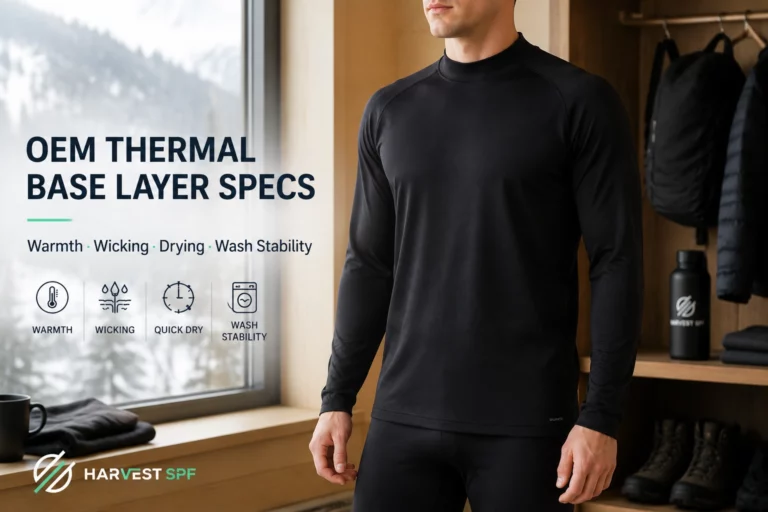
Testing should match the use case. Yoga fabrics may prioritize softness, opacity, and recovery; running fabrics may emphasize drying rate and ventilation; cold-weather base layers may combine moisture control with thermal resistance.
Stretch, Recovery, Durability, and Colorfastness
Activewear is exposed to repeated extension, friction, perspiration, laundering, and equipment contact. Approval should therefore cover stretch and recovery, bursting or tensile strength, seam compatibility, abrasion, pilling, snagging, and dimensional change.
Color performance should include laundering, perspiration, rubbing, and relevant light exposure. Pass criteria should be written into the purchase order or quality manual. Recognized textile test systems include methods for perspiration, rubbing, light exposure, laundering, moisture management, and dimensional change.
Validate Sustainability and Chemical Compliance
Verify Claims Through Traceability
Sustainability claims should be supported at material and transaction level. For recycled fibers, chain-of-custody systems can verify the movement of certified material through supply-chain stages. Procurement files may require valid scope certificates, transaction documents, composition records, supplier declarations, and approved claim language.
A facility certificate does not automatically validate every fabric or shipment. Product eligibility, certified inputs, and transaction coverage should be checked before claims are released. Current chain-of-custody frameworks are designed to preserve the accuracy of material claims from input through final production.
Align Finishes with Destination-Market Rules
Functional finishes affect moisture management, odor control, water repellency, softness, or antimicrobial performance. Each finish requires review for durability, compliance, claim wording, and market restrictions.
Restricted-substance controls should be built into material approval and bulk testing. Water-repellent programs require particular attention because certain fluorinated substances used historically in textile treatments are restricted in several jurisdictions. Higher-risk finishes may require third-party testing rather than supplier declarations alone.
Assess Supplier Capability Beyond Fabric Swatches
Review Development and Sampling Discipline
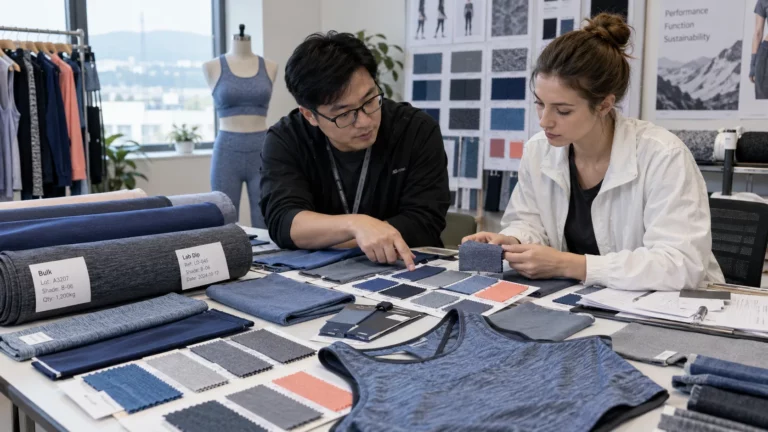
A capable supplier should follow a controlled sequence: requirements, technical design, fabric selection or development, quotation, prototypes, lab dips, fit review, pre-production approval, bulk manufacturing, and inspection.
Every revision to composition, GSM, color, trims, print method, and finish should be recorded. The approved sample, sealed swatch, test report, and measurement chart should form the production standard.
Examine MOQ, Capacity, and Delivery Logic
MOQ should be assessed by fabric status, color quantity, dyeing requirements, garment complexity, and decoration method. Stock fabric may support smaller trials, while custom knitting or dyeing usually requires higher commitments and longer lead times.
Planning should separate fabric lead time, garment lead time, inspection, packing, and freight. A critical path provides stronger visibility than a single shipment date. Peak-season and repeat-order capacity should also be verified. Supplier lead times can vary substantially depending on whether fabric is already available or requires new production.
Create a Commercial Sourcing Scorecard
Apply Technical Gate Criteria
A fabric should pass mandatory gates before price ranking begins. Common gates include composition, GSM tolerance, stretch and recovery, opacity, dimensional stability, pilling, abrasion, colorfastness, moisture performance, and chemical compliance.
Failure on a critical property should trigger redevelopment; lower cost cannot offset returns, seam failures, or inconsistent fit.
Compare Commercial and Operational Factors
After technical approval, a scorecard can compare landed cost, MOQ, sampling cost, responsiveness, capacity, traceability, documentation, payment terms, lead time, packaging support, and corrective-action capability.
Weighted scoring prevents an attractive first sample from dominating the decision and creates an auditable basis for cross-functional approval.
Why Brands Work With Harvest SPF for Activewear Fabric Development
Harvest SPF supports brands from fabric concept to bulk production through functional textile research, custom fabric development, vertical ODM capability, and performance verification. Our development process combines fiber innovation, yarn solutions, knitting, dyeing and finishing expertise to create activewear fabrics with targeted performance, quality consistency, and commercial scalability.
Our capabilities include:
• Functional performance fabrics for moisture management, thermal regulation, odor control, and comfort.
• Premium yarn and fiber solutions including innovative structures such as Silrospun™ technology.
• Merino and natural fiber blend solutions for outdoor and base-layer applications.
• Seamless activewear development for improved comfort, body mapping, and reduced seam irritation.
FAQ
What Is the Best Fabric for Premium Activewear?
No single fabric fits every category. Nylon-elastane may suit smooth, fitted garments, while polyester-elastane may suit high-sweat training. Final selection depends on activity, climate, construction, cost, and test performance.
How Can a Reference Garment Become a Sourcing Brief?
The garment should be translated into targets for composition, construction, GSM, stretch, recovery, opacity, hand feel, color, function, and wash durability. A sealed swatch and test plan improve accuracy.
Which Tests Are Most Important?
Core tests include composition, weight, stretch and recovery, dimensional change, colorfastness, pilling, abrasion, bursting strength, moisture management, and chemical compliance. The protocol should match the product and sales market.
How Should Sustainable Claims Be Verified?
Verification should include certified material eligibility, chain-of-custody documentation, transaction records, composition evidence, and approved claim wording. Facility certification alone should not be treated as proof for every order.
When Is Custom Fabric Development Appropriate?
Custom development is suitable when existing fabrics cannot meet the required combination of performance, weight, texture, color, sustainability positioning, or cost. Budgets should account for trials, testing, color work, revised sampling, and higher minimum quantities.
Conclusion
Well known brand inspired activewear sourcing works best when market references are converted into original, testable, and commercially realistic specifications. The lowest-risk process links end-use requirements to fiber selection, construction, testing, compliance, garment trials, and production controls before final price approval.
Develop Your Next Activewear Collection With Harvest SPF
Harvest SPF provides functional fabric development, activewear ODM/OEM support, rapid prototyping, flexible customization, sustainable material options, and vertically coordinated production for international B2B programs; procurement teams seeking a technically grounded fabric or garment development discussion may contact Harvest SPF with a product brief, target market, estimated quantity, and required performance criteria.
Share your target garment, reference sample, performance requirements, and estimated quantity. Harvest SPF can support fabric selection, custom development, testing, prototyping, and bulk production for global activewear brands.