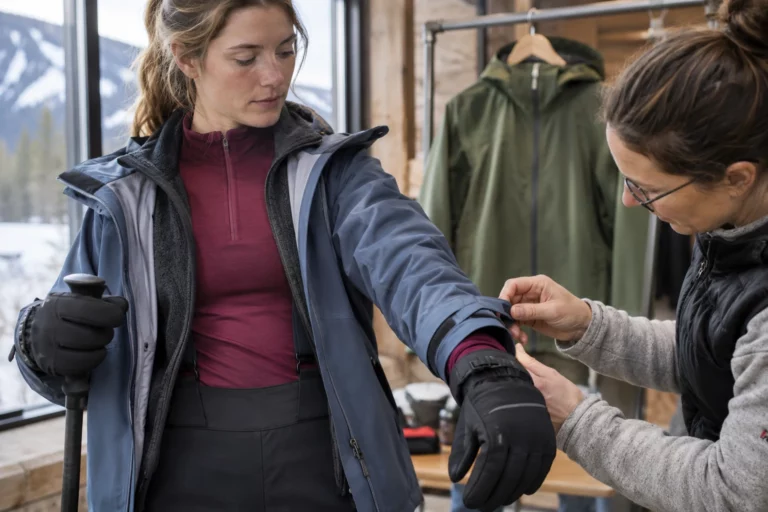


A merino base layer can pass under a rain shell and still need a revision under a ski shell. Fit the same sample on the same wearer in both outfits. Close each shell as it will be worn, then check whether the collar presses, the glove and sleeve stay overlapped, and the base layer still covers the waist in motion. Record a decision for each pairing before approving the style for both.
Consider a top that sits flat under a rain jacket worn directly over it. Under a ski shell with a fleece and gloves, the inner zipper might press into the throat, even though the top fits well through the chest. If that pressure disappears when the fleece collar is opened, the buyer has a specific combination to investigate before asking the factory to change the base-layer pattern.
Layering-System Fit-Test Framework
Define rain and ski clothing systems → record sample and garment specifications → run repeatable movement tests → measure collar, wrist, and hem outcomes → isolate the cause → revise and retest both pairings → approve the relevant size range.
A base layer should be evaluated within the intended clothing system, not only as a standalone garment.
Set Up the Two Outfits Before the Fitting
Choose the rain and ski shells from the intended line or use the exact reference models in the development brief. Note the model, size, and fit of each. A rain shell can have a narrower wrist opening than a ski shell, while the ski outfit can leave less usable room once insulation and glove gauntlets are added. The actual closures and layers determine which fit check is more demanding.
Start with the rain shell directly over the sample if that matches the intended use. For the ski pairing, include the specified midlayer, gloves, and pants or bibs. If the rain outfit also includes gloves or a midlayer, record and use them. Set the wrist tabs and hem adjusters as the wearer would normally use them. Keep a note of whether the top is tucked.
Run both outfits as specified first. When a problem appears, repeat the same movement while changing one thing, such as loosening the shell cuff or opening the fleece collar. Return to the intended settings for the final pass or fail. This gives the factory a way to reproduce the symptom and gives the buyer a way to see which change actually resolves it.
Layering Configuration & Sample Traceability
Use one record per outfit: base-layer style/SKU, sample revision, size, fiber composition and GSM; tester ID and date; shell model/size; midlayer; glove type and whether gauntlet is over or inside the shell cuff; pants/bibs; zipper, wrist-tab and hem settings; and whether the base-layer hem is tucked. Record the intended use before any diagnostic adjustments. Do not directly compare different sample revisions as if they were the same sample.
Close the Collar and Locate Any Zipper Pressure
Start with the outer zipper fully closed where that is a normal wearing position. Ask the wearer to look down and turn their head with the hood up. For a crew neck, see whether the binding stays flat against the body or folds under the shell collar. Check again if a midlayer collar sits between the two garments.
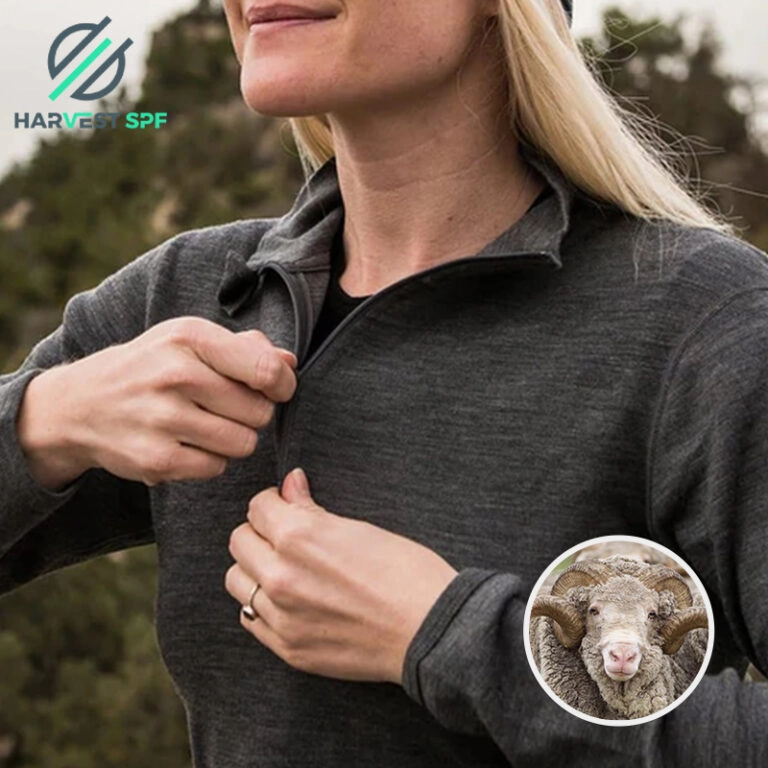
For a quarter zip, test the base layer with its zipper fully closed and partly open if both are intended positions. Have the wearer point to the pressure while the shell is still closed. When you open the jacket, look for the part directly underneath that point. It could be the inner pull, the top stop, or the folded edge of the midlayer collar. A pressure point that shifts when the fleece collar is opened gives the team a reason to check the midlayer stack before changing zipper hardware or collar height.
Collar and Zipper Pressure Diagnosis
Record head turn, look-down, hood-up, and intended full/partial zip positions. Locate the contact point (zipper pull/top stop, crew-neck binding, fleece collar, or shell collar).
Use a 1–5 subjective severity scale:
- No pressure.
- Minor contact.
- Noticeable pressure.
- Frequent discomfort or adjustment.
- Unacceptable pressure.
This is a wear-trial scale, not an objective pressure measurement. Repeat with one layer or closure changed to isolate the source.
Check Sleeve Coverage With the Gloves in Place
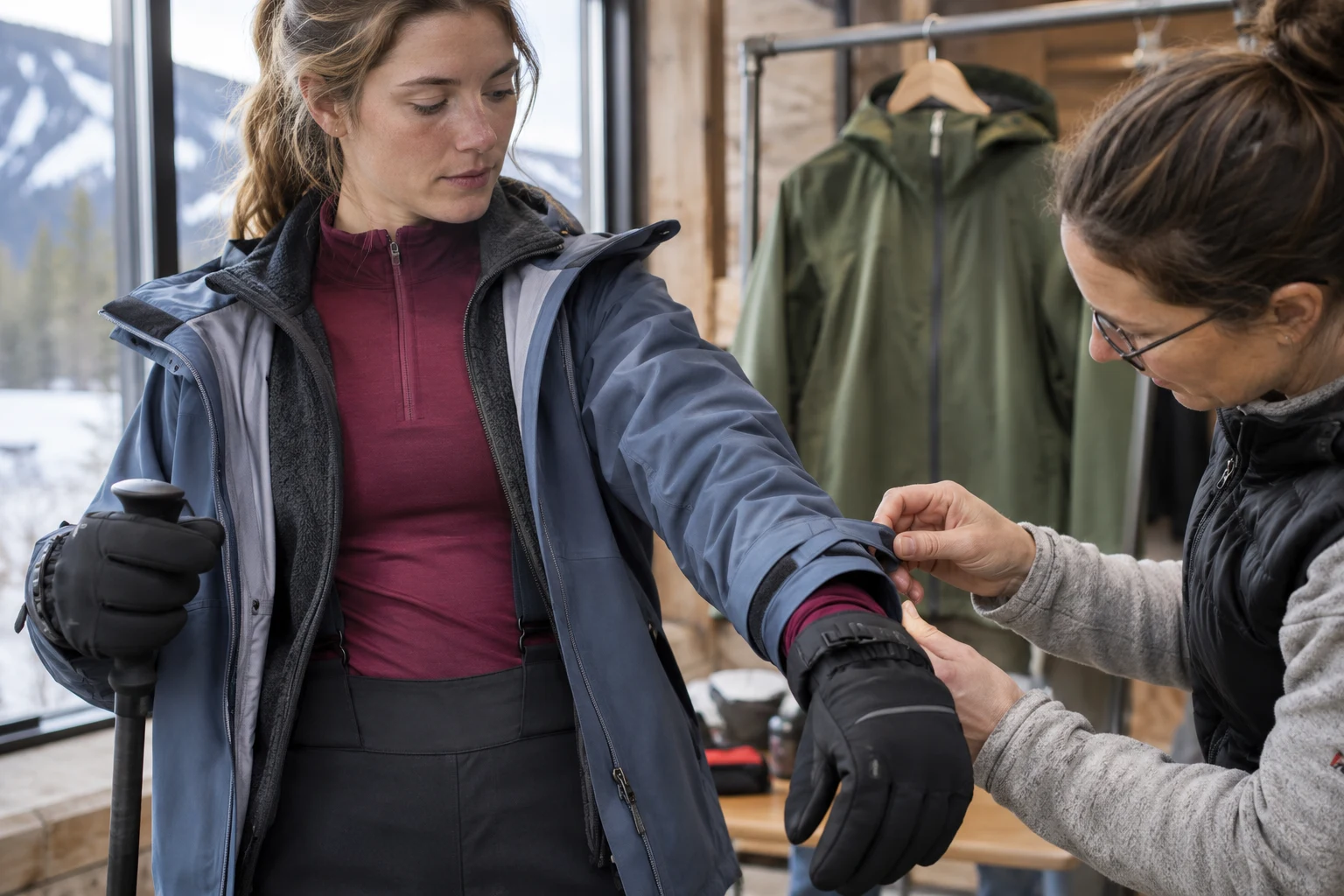
With the hands relaxed, note where the base-layer sleeve ends relative to the wrist crease. Have the wearer reach forward in a pole grip, flex the wrist, and return to the starting position. Watch whether the sleeve pulls free of the glove opening, folds inside the shell cuff, or stays displaced when the hand comes back. Repeat after the wearer removes and puts the glove back on.
Record the glove position for each pairing. A gauntlet worn over the shell can press an adjusted cuff against the sleeve underneath. A glove worn inside the shell cuff adds material inside that opening. If the sleeve bunches only with the wrist tab tightened, repeat with the tab loose to check for interference at the closure. If it also pulls without the shell, inspect sleeve length and shoulder ease before changing the cuff.
Sleeve Migration & Glove Overlap Measurement
For each pairing, record the initial sleeve endpoint relative to a fixed wrist landmark, remaining glove overlap after forward pole reach, wrist flexion and overhead reach, maximum sleeve displacement (cm), bunching frequency, and residual displacement on return. Example only: initial overlap 35 mm; after movement 25 mm under rain shell versus 5 mm under ski shell. Define measurement direction and buyer-approved acceptance limits before fitting; these figures are not universal pass/fail criteria.
Glove Configuration Comparison
Compare gauntlet-over-shell-cuff and glove-inside-shell-cuff configurations only where both are intended. Record wrist-tab tension, glove thickness, shell opening, base-layer cuff bulk and sleeve recovery. A sleeve that pulls up without the shell may require review of sleeve length, armhole or shoulder mobility rather than only the outer cuff.
Check the Hem Against the Intended Pants or Bibs
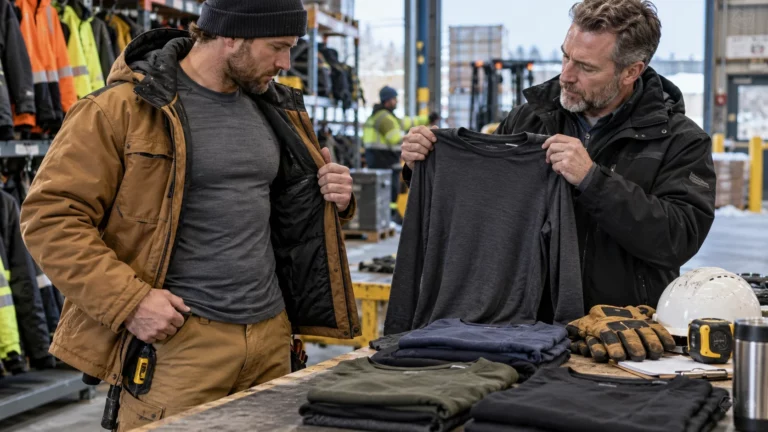
Use the actual waistband or bib as the reference. Have the wearer bend forward and reach overhead. An untucked top should maintain the overlap agreed for the outfit. For a tucked top, check that the hem stays inside the waistband without the wearer holding or readjusting it. Check the back and sides, especially where a short shell hem or a cinch can catch the fabric.
If coverage disappears in the ski outfit, repeat the reach with the shell and base layer and then add the midlayer back. Keep the tuck and shell adjustment consistent. Watch for a fold that travels upward as the midlayer moves. If the hem still pulls clear with the base layer alone, review back length and pattern balance. Recheck the rain pairing if the correction adds length or bulk at the waist.
Hem Coverage & Ride-Up Record
Measure initial overlap with the intended waistband or bib, minimum overlap during forward bend, overhead reach and squat, hem ride-up (cm) relative to a defined reference point, exposure/pull-out (yes/no), and manual adjustment count. Test tucked and untucked configurations only where intended. A longer body alone may not correct ride-up caused by pattern balance, fabric stretch, or midlayer friction.
Standardized Dynamic Movement Protocol
For each outfit, specify repetitions, hold duration and rest interval for: head turn with hood; look down; forward pole reach; overhead reach; forward bend; squat; and return to standing. Capture collar severity, sleeve displacement, hem coverage and adjustment count. Use consistent conditions; a static standing fit is not sufficient evidence of dynamic fit.
Record a Separate Decision for Each Shell Pairing
Agree with the supplier on the required coverage and any acceptable movement before fitting. Give each outfit and sample size its own entry. Record the sample revision, shell model and size, cuff and hem settings, and whether the top is tucked. The example below shows two results for the same size L sample.
Quantitative Fit-Test Scorecard (Illustrative Only)
| Metric | Rain-Shell Pairing | Ski-Shell Pairing |
| Collar severity | 1/5 | 2/5 |
| Sleeve migration | 1 cm | 3 cm |
| Minimum glove overlap | 2.5 cm | 0.5 cm |
| Hem ride-up | 1 cm | 2 cm |
| Manual adjustments | 0 | 2 |
| Decision | Pass | Hold |
Set project-specific acceptance criteria in advance. Approval of one outfit does not approve the other.
Size-Set & Critical Approval Gates
Test representative small, base, large and grading-break sizes, including relevant arm and torso proportions. Base-size approval does not validate the full range. Use Approve (all critical criteria met), Revise (correctable issue), Retest (insufficient/changed evidence), or Hold (critical failure). Fit-sample approval is separate from bulk production authorization.
| Shell and layers | Collar | Wrist | Waist | Decision |
| Rain shell over the base layer, hiking pants, no gloves | Collar closes and stays comfortable during a head turn. | Sleeve maintains the agreed coverage at full reach. | Back hem still overlaps the waistband after bending. | Pass this pairing. |
| Ski shell over fleece, gloves over shell cuffs, ski bibs | Both intended inner zipper positions clear the closed outer collar. | Right sleeve catches under the wrist tab during a forward pole reach. | Hem stays tucked in the bib after overhead reach. | Hold this pairing for a cuff check. |
In the ski fitting, repeat the pole reach with the glove still on and the wrist tab loosened. If the sleeve releases, record exactly where it caught and whether the looser setting is acceptable for the intended use. If the specified setting must stay, ask the supplier to review the amount of fabric at the wrist and submit the affected sample for another fitting. Repeat both outfits if the proposed change alters the shared cuff or sleeve pattern. When the program also needs evidence on prolonged wear, moisture, and comfort, follow with a full-day merino base layer trial.
Root Cause, Revision & Dual-System Retest
Possible causes include zipper/collar stacking, shoulder ease or sleeve length, wrist-tab interference, cuff bulk, hem/pattern balance, midlayer friction and size grading. Treat these as hypotheses, not proven causes. Log issue ID, R01 symptom, isolated variable, proposed R02 change, test evidence and owner. Retest the failing ski pairing and any previously passing rain pairing affected by a shared pattern or construction change.
After-Wash Layering Fit Stability
Where dimensional change could affect performance, repeat critical checks after the agreed care cycles: sleeve and body length, collar shape, glove overlap, hem coverage and recovery. Record pre/post-wash measurements, wash method, cycle count and agreed tolerances. No universal wash-cycle count or pass limit is implied.
Harvest SPF’s men’s merino crew-neck top and women’s merino quarter-zip top show two neckline constructions for a sample brief. The crew-neck example is made from 200 GSM, 100% merino wool. The quarter-zip example uses a 260 GSM double-layer construction with merino wool on one side and polypropylene on the other. If the development decision is specifically about neckline shape or hardware, request comparison samples in the same target fit and fabric so the team can isolate the change.
How Harvest SPF Supports Merino Layering Development
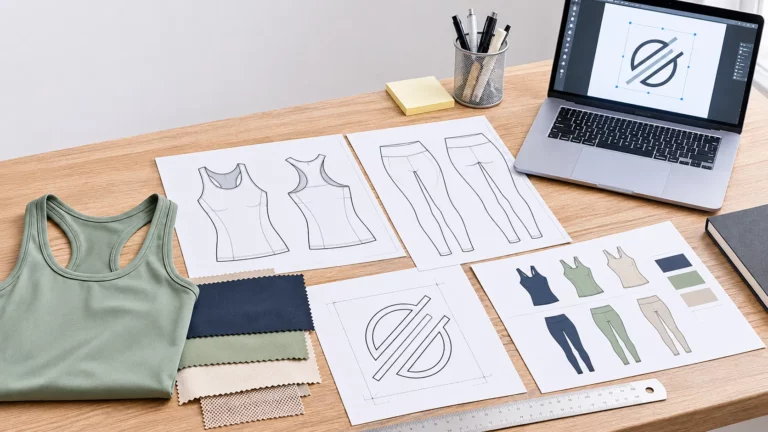
Harvest SPF can support or coordinate merino composition, micron/GSM and knit selection; crew-neck and quarter-zip construction review; shoulder, sleeve and body-length pattern development; controlled sample revisions; representative size-set fitting; and approved measurement/construction/QC documentation, according to the agreed project scope. The 200 GSM 100% merino crew neck and 260 GSM merino/polypropylene double-layer quarter zip differ in more than neckline: isolate fabric and fit variables before attributing performance differences to collar design.
Conclusion
Approve the rain and ski outfits separately. When only one fails, record the contact point and the layer or closure setting that reproduces it. A targeted revision can then be checked against the failing outfit and the pairing that already passed.
FAQs
If the rain shell pairing passes, what should be retested under the ski shell?
Repeat the collar check with the intended midlayer, the wrist check with the actual ski glove, and the hem check with the intended pants or bibs. Use the ski shell’s normal closure settings throughout.
Can the same merino base layer pattern work under both shells?
Yes, if it meets the agreed criteria in both outfits and across the relevant sizes. Record which shell models, midlayers, and glove configurations were used for approval.
When should a cuff issue trigger a pattern revision?
Repeat the reach with the cuff loosened, then with the shell off. Use the results to decide whether to review sleeve length and ease, the bulk of the cuff, or the way the glove and shell closure overlap.
How is sleeve migration measured?
Use a fixed wrist reference and measure before/after standardized movements.
Can a rain-shell pass and ski-shell fail?
Yes; layers, glove and closure settings differ.
Should fit be retested after washing?
Yes, when dimensional changes may affect coverage.
Does thicker merino always mean more pressure?
No; compressibility, construction and surrounding layers matter.
When can one pattern be approved for both?
Only after both intended systems, relevant sizes and required durability checks meet agreed criteria.
Request a Merino Base Layer Fit Review for Rain and Ski Shells
Before approving a merino base layer for both outfits, request a sample fit review from Harvest SPF.
Expanded Fit Review Submission Checklist
Send the base-layer tech pack, composition/GSM, sample revision and sizes, rain/ski shell models and sizes, midlayer and glove configurations, pants/bibs, intended cuff/zip/hem settings, issue photos, required collar/wrist/waist criteria, target size range, order quantity, target FOB and delivery schedule. Ask for a documented fit-review, revision and retest scope before bulk approval.
Review My Merino Layering Fit Project.