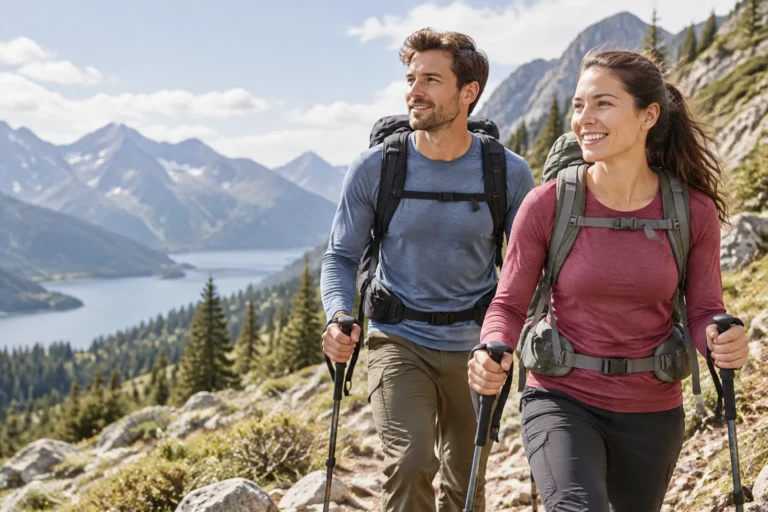


For a full-day hiking or travel itinerary, evaluate a merino base layer as part of a clothing system, not from a five-minute fitting-room impression. Outdoor buyers need a repeatable record connecting material and construction with exertion, weather, layering, pack pressure, and end-of-day recovery. Track seven points: conditions, thermal comfort, moisture, drying time, mobility, skin comfort, and appearance or odor.
This produces more useful evidence than “comfortable” or “too warm.” It shows what is stable, what depends on the environment, and what should change before a production sample or bulk order.

1. Define the trial before leaving
Define the sample, tester panel, and trial conditions before departure. A useful wear trial connects every observation to a specific garment and use scenario, allowing product and sourcing teams to compare findings and plan the next sample.
Tester Panel and Comparable Conditions
Record each tester’s height, body measurements, usual size, tested garment size, activity level, fit preference, and wool sensitivity. Identify whether the findings come from one tester, a small panel, or repeated trials.
Document the itinerary, distance, elevation, temperature range, wind, precipitation, start time, planned stops, backpack weight, and every layer worn.
Where feasible, compare garments on similar routes with comparable weather, activity intensity, backpack load, and layering. Field trials cannot remove all environmental variation; record those differences rather than attributing every result to the fabric.
Sample Identity and Traceability
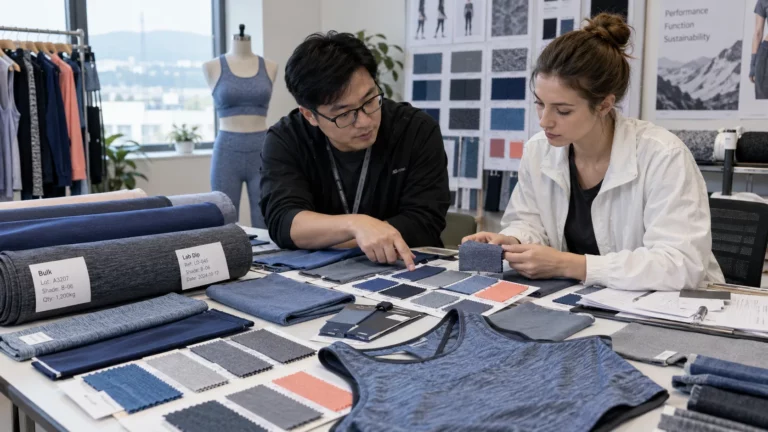
Create a sample identity sheet and attach it to every trial record. Include:
- Style or sample ID and revision.
- Sample stage: prototype, revised sample, or pre-production sample.
- Garment size, color, and measurement reference.
- Fiber percentages and stated wool micron, if specified.
- Fabric weight in GSM.
- Knit structure and garment construction, including whether the style is seamless.
- Finishing treatments and yarn or fabric lot.
- Care instructions, wash history, and previous wear.
- The approved comparison garment, if available.
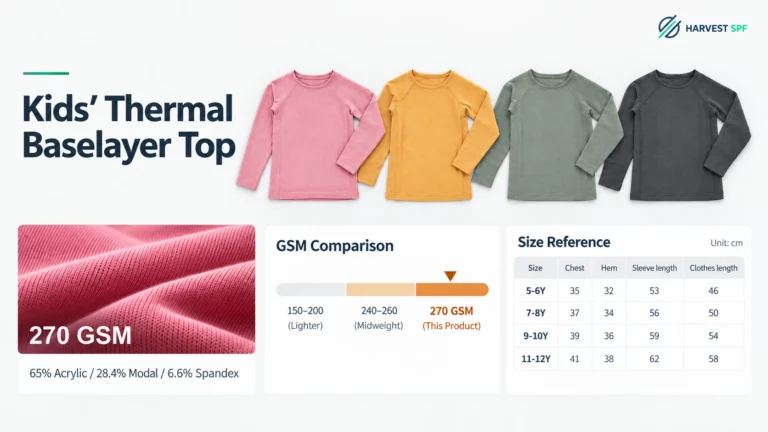
Harvest SPF’s merino baselayer information describes pure merino and blended constructions, fibers in the 17.5–20.5 micron range, and fabric weights from 130 to 450 GSM. Keep the actual sample specifications attached to every observation: a lightweight blend and a heavyweight pure-wool style are different test articles.
Do not assume that different lots, sample revisions, or care histories are equivalent.
Full-Day Merino Base Layer Testing Framework
Use the following sequence to keep the trial consistent:
- Define the product and trial conditions.Confirm the sample specifications, intended activity, tester panel, comparison garment, and use conditions.
- Record performance at fixed checkpoints.Capture conditions, comfort scores, garment observations, and layer adjustments at agreed points throughout the day.
- Evaluate end-of-day and after-wash recovery.Record odor, surface appearance, shape, dimensions, and response to the agreed care procedure.
- Compare the evidence and investigate possible causes.Separate observable findings from personal preferences and identify concerns requiring further validation.
- Approve, revise, retest, or reject the sample before bulk production.Base the decision on agreed acceptance criteria and sufficient evidence.
A full-day wear trial should support a repeatable product-development decision, not only a collection of comfort opinions.
2. Use fixed checkpoints instead of one end-of-day opinion
Define the 1–5 Wear-Test Scale
Suggested internal scale (not an industry standard): 1 = unacceptable for intended use; 2 = significant issue; 3 = usable but revision needed; 4 = meets intended use with minor observations; 5 = no meaningful issue observed. At each checkpoint log time, exertion, weather, layers, thermal comfort, moisture sensation, mobility, skin comfort, and any layer adjustment. Record the reason for low scores.
Create a short log at consistent points: before departure, after the first hour, during the hardest climb, at the first long rest, during a cooler descent, and at the finish. Capture conditions and a 1–5 score for warmth, clamminess, breathability, movement, skin comfort, and usefulness. Add one line for every score below 4.
Timing matters. A top can feel ideal at a steady pace, too warm on a climb, and cold when the wearer stops. Record when a zipper is opened, a layer removed, sleeves pushed up, or a shell added. These actions reveal whether temperature control works across conditions.
3. Measure moisture movement and drying time
Comfort Recovery Is Not a Laboratory Drying Result
Record the time until the wearer feels comfortable again, but label this as subjective comfort recovery—not measured fabric drying time. For backpack use, document moisture at shoulder straps, upper back, lower back, and hip belt. If comparing drying performance quantitatively, use a defined and consistent test method.
Moisture Absorption, Wicking, and Drying Are Different
Moisture absorption describes uptake by fibers, including vapor; wicking describes movement of liquid through or along textile structures; drying describes moisture leaving the textile under defined conditions. A merino fabric may feel comfortable during moisture uptake without having the shortest drying time. Evaluate perceived skin dryness, moisture distribution, and drying separately.
“Feels dry” is too vague for sourcing. Record where moisture appears first—upper back, chest, underarms, lower back, waistband, or cuffs. Note dampness against the skin, surface spread, and whether wet patches remain after the pace drops. During a meal or transit stop, record how long the garment takes to feel comfortable again.
Record what happens when a shell is added or insulation removed. Moisture can feel different as airflow changes. If your team has a controlled method, use it consistently; otherwise label the log observational. The range lists quick-drying, moisture-wicking, and breathable functions, so translate them into checkpoints.
4. Track thermal regulation across changing effort
Thermal Transitions and Fabric Weight
Record cold start, high exertion, ventilation, rest, descent, and end-of-day response separately. GSM is a fabric-weight specification, not a universal temperature rating. Fiber blend, knit, loft, thickness, fit, moisture, wind protection, and layering also affect perceived warmth. ISO 11092 may be considered for laboratory thermal and water-vapor resistance under specified conditions; it does not establish a garment temperature rating.
A full-day itinerary contains several thermal transitions. Note the first sensation at departure, the point of overheating, the response after ventilation, and the time needed to feel comfortable after a rest. Record whether the garment remains useful when weather changes or a wind shell is worn over it.
Do not reduce the result to “warm” or “cool.” Describe whether warmth is even across the torso, whether extra layers restrict the arms, and whether dampness creates a cold spot. For a multi-season style, repeat the log in warmer and colder conditions to identify the right weight or blend.
5. Record fit, mobility, and pressure points
Wool Micron and Finished-Garment Comfort
Finer wool fibers may support softness, but a micron value alone cannot guarantee itch-free wear. Fiber diameter distribution, yarn structure, knitting, finishing, seams, and individual sensitivity all matter. Check pressure and friction under shoulder straps, hip belts, and back panels, and compare fit at the start, after climbing and bending, and at the end of the day.
Full-day use exposes fit problems that short wear does not. Check neckline, shoulders, underarms, cuffs, waistband, and lower back at each checkpoint. Record ride-up, bunching, sleeve migration, tightness under a pack, and pressure from zippers or labels. Include movements relevant to the market: reaching, climbing, bending, cycling, skiing, or lifting a pack.
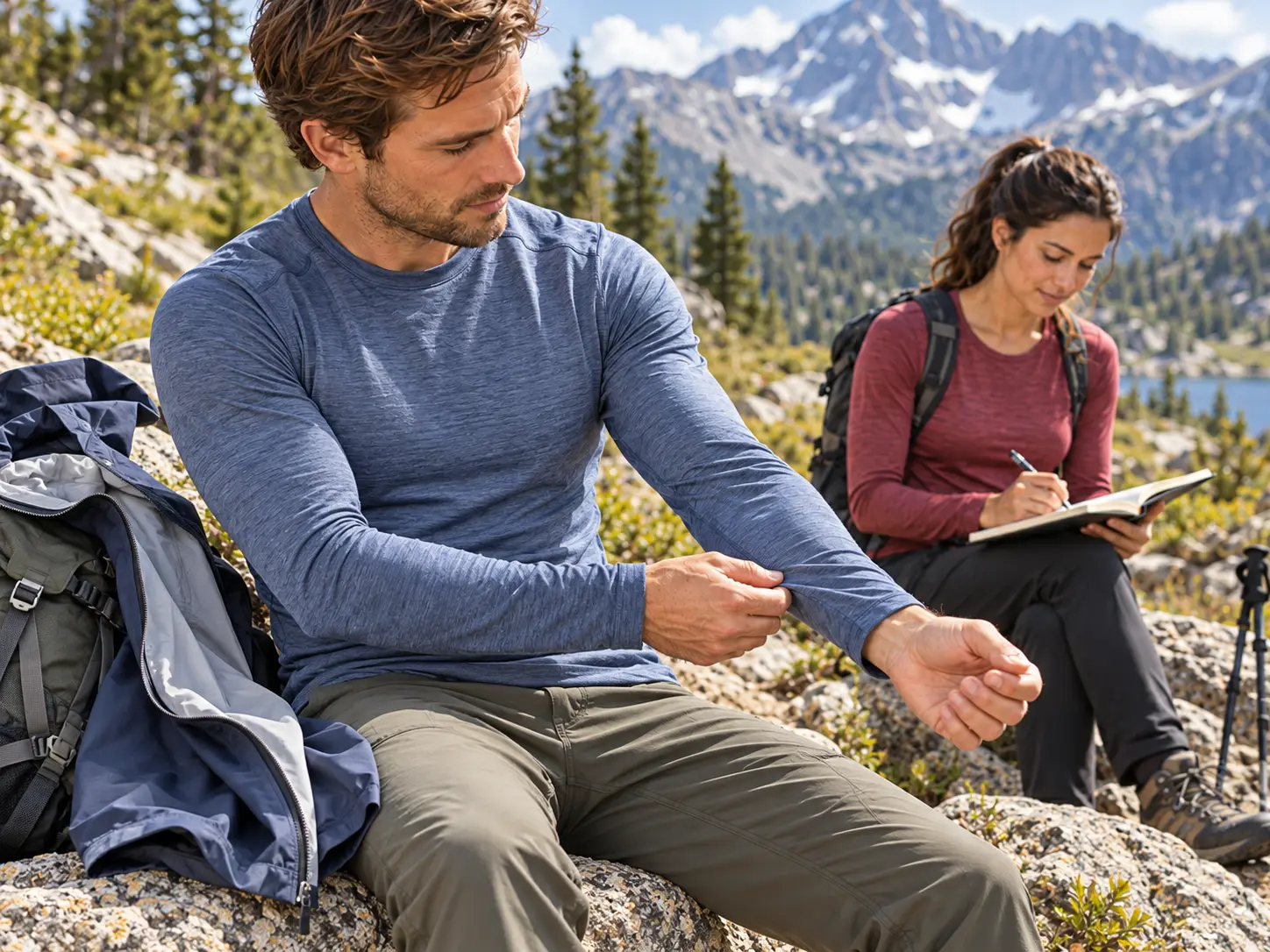
Give skin comfort its own line. Note itch, scratchiness, heat rash, chafing, and irritation after several hours. For seamless styles, observe whether reduced seam bulk improves comfort in the target activity. The seamless range is intended for activities requiring a full range of motion; verify that benefit for the specific pattern and size set.
6. Inspect odor, appearance, and recovery after use
Odor Observation Is Not Antibacterial Certification
A low odor score after one day does not establish antibacterial activity or a marketing claim. Separate wearer-reported odor, third-party odor observations, and any laboratory results. Record pre-wash versus post-wash dimensions, surface appearance, pilling, seam condition, shape recovery, color, and hand feel; use agreed wash cycles and acceptance criteria for formal validation.
At the finish, record odor separately at the collar, underarms, chest, and back. Use the same neutral scale and identify whether the rating comes from the wearer, another evaluator, or both. This is a wear-test observation, not a laboratory antimicrobial result.
Before washing, look for pilling, pulled yarns, pack abrasion, seam distortion, color change, and loss of shape. Follow care instructions, then record wash temperature, drying method, drying time, and next-day hand feel. The buyer needs to know whether it is ready for another itinerary without unusual care.
7. Turn field notes into a decision sheet
Organize field notes into a consistent decision sheet so product and sourcing teams can review the evidence, identify issues requiring validation, and define the next action.
Field-to-Laboratory Validation Matrix
Laboratory results characterize specified properties; field trials assess the integrated clothing-system experience. They are complementary, not interchangeable.
Use the following matrix to identify possible controlled evaluations for concerns observed during the wear trial. Select the method and acceptance criteria according to the intended use and buyer requirements.
| Field concern | Possible controlled evaluation |
| Moisture handling | Wicking/moisture-management test |
| Drying | Defined drying test |
| Pilling or pack abrasion | Pilling/abrasion test |
| Shrinkage | Dimensional-change testing after care |
| Seam problem | Seam/construction evaluation |
| Thermal concern | Thermal-resistance test |
| Odor | Buyer-defined odor evaluation |
Field Observation, Possible Cause, Validation, and Action
Use field observations to guide further investigation. The possible causes below are starting points, not definitive diagnoses. Validate each issue before deciding on a material, fit, or construction change.
| Field observation | Possible cause | Suggested validation | Possible action |
| Underarm dampness | Knit, ventilation, or layering | Compare moisture behavior under controlled conditions | Review knit structure, ventilation, or layering guidance |
| Waist ride-up | Pattern or garment length | Repeat movement and pack-use fit checks | Revise garment length or fit |
| Itch after several hours | Fiber, yarn, or finish | Compare material and finishing options | Review the material or finishing route |
| Pack abrasion | Yarn, surface, or fabric structure | Conduct an appropriate durability or abrasion test | Review the yarn or surface construction if confirmed |
| Slow comfort recovery | Moisture behavior and layering | Run a controlled comparison | Review fabric choice or layering guidance |
For each issue, record the supporting evidence, confidence level, responsible owner, and next action.
Use a consistent summary so product and sourcing teams can read the same evidence:
| Field | What to record | Decision signal |
| Conditions | Temperature, wind, rain, pace, pack, layers | Shows when results are valid |
| Moisture | Wet zones, cling, drying after stops | Guides fiber, weight, and knit changes |
| Thermal comfort | Warmth at effort and rest | Identifies seasonal fit |
| Mobility | Ride-up, stretch, pressure points | Reveals pattern or size issues |
| Skin comfort | Itch, chafe, irritation after hours | Supports wearability decisions |
| Recovery | Odor, pilling, wash and drying response | Indicates repeat-use practicality |
Add a confidence note such as “single tester,” “dry weather only,” or “repeat confirmed.” This prevents a limited experience from being mistaken for a universal result.
8. Convert the trial into supplier questions
Revision-to-Retest Rule
Any change in blend, GSM, yarn, knit construction, finish, pattern, seam placement, or intended fit that may affect a performance criterion should trigger documented review of the retest scope. Not every revision requires all tests; record which prior approvals remain valid and which need new evidence.
Once the log is complete, send the supplier a focused revision brief. Ask for fiber percentages, wool micron, gsm tolerance, yarn source, knit structure, size grading, seam details, colors, care label, and test methods for wicking, drying, odor, stretch, and dimensional stability. Confirm which certifications apply to the exact yarn and finished style.
For a private-label range, review Harvest SPF’s merino wool baselayer specification page for pure and blended routes, weights, sizing, and OEM/ODM availability. Use the Outdoor & Thermal product range to compare categories, and review the OEM/ODM development process when a revised pattern, blend, weight, or label package is needed.
9. Set pass/fail rules before bulk approval
Pre-Bulk Decision Gate
| Decision | Meaning |
| APPROVE | The sample meets the agreed criteria and is supported by sufficient evidence. |
| REVISE | Correctable material, pattern, fit, or construction issues have been identified. |
| RETEST | The available evidence is limited, inconsistent, or not representative. |
| REJECT | Performance is unacceptable for the intended use. |
Set buyer-specific thresholds and approval authority before testing. A single positive day is not automatically sufficient for bulk release.
Agree on decision rules before reviewing results. A pass may require no unacceptable chafing, no severe ride-up under the target pack, acceptable moisture recovery after a rest, and stable appearance after care. A revision may be triggered by a recurring hot underarm zone, heat-trapping collar, or weight that works only in a narrow temperature band.
Separate must-haves from preferences. Must-haves protect the use case; preferences can be optimized later through color, trim, or packaging. If a trial fails, specify whether the correction is a new size set, gsm, blend, pattern, or finishing route. That makes the next sample measurable.
Conclusion
A full-day merino base layer trial is most valuable when every comfort impression is tied to a condition, time point, and product variable. Record moisture location, thermal transitions, fit under movement and pack pressure, skin comfort, odor, appearance, and care recovery. This evidence supports an approve, revise, or compare decision and gives the supplier a clear next-sample brief.
Work With Harvest SPF on the Next Sample
How Harvest SPF Supports Merino Wear-Test Development
Harvest SPF can discuss merino fiber and blend options, fabric GSM and knit construction, activity-specific pattern and fit revisions, sampling, buyer-required test coordination, and frozen bulk specifications. The scope of any testing or development support should be confirmed for the individual project.
Get a Merino Base Layer Wear Trial & Specification Review
Share the sample/style reference, target activity and climate, composition and wool micron if specified, GSM, size range, wear-trial observations, key issues, test requirements, estimated quantity, target FOB, and delivery schedule. Ask Harvest SPF to review material options, fit corrections, targeted validation, next-sample development, and MOQ/bulk feasibility.
Review My Merino Base Layer Trial.
FAQs
Is one full-day trial enough for bulk approval?
No; it is useful screening evidence, but repeat wear trials, representative sizes and laboratory validation may be needed.
Does lower wool micron always mean greater comfort?
No; yarn, knit, finishing, and individual sensitivity also matter.
How should pure merino and blends be compared?
Use comparable garments, conditions, scoring and documented trade-offs.
Can merino feel dry without drying faster?
Yes; skin sensation, moisture uptake and measured drying are different.
What changes require another trial?
Changes affecting fiber, knit, finish, pattern or fit should prompt a targeted retest review.
How long should a merino base layer field trial last?
Use an itinerary that includes exertion, rest, changing layers, and end-of-day recovery. A short fitting cannot reveal moisture buildup, pressure points, or care practicality.
Should buyers test pure merino or blended fabrics?
Test the construction that matches the brief. If durability, stretch, drying, or price matters, compare a pure-wool option with a documented blend using the same itinerary and scoring method.
What should buyers do if testers disagree?
Keep both records. Separate observations such as wet zones or pilling from preference comments such as hand feel. More testers can show whether a problem is universal or individual.
Can a field trial replace laboratory testing?
No. Field trials explain real clothing-system behavior. Controlled tests are still needed for formal performance, safety, or certification requirements.
What information should accompany an RFQ?
Include the sample reference, fiber target, gsm range, micron preference, size breakdown, colors, activity, climate, expected quantity, labeling needs, and test or certification requirements.
If you are preparing a merino base layer line, send Harvest SPF the field-trial sheet and target itinerary so the next sample can be assessed against repeatable criteria.