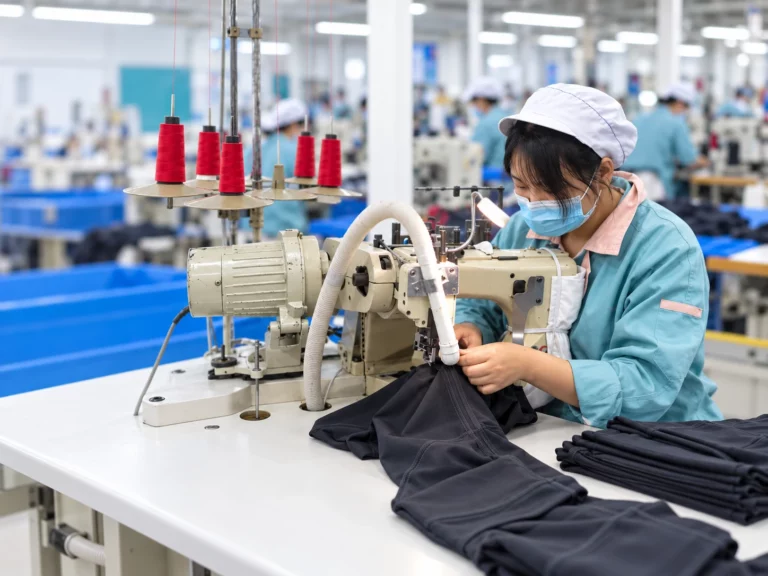

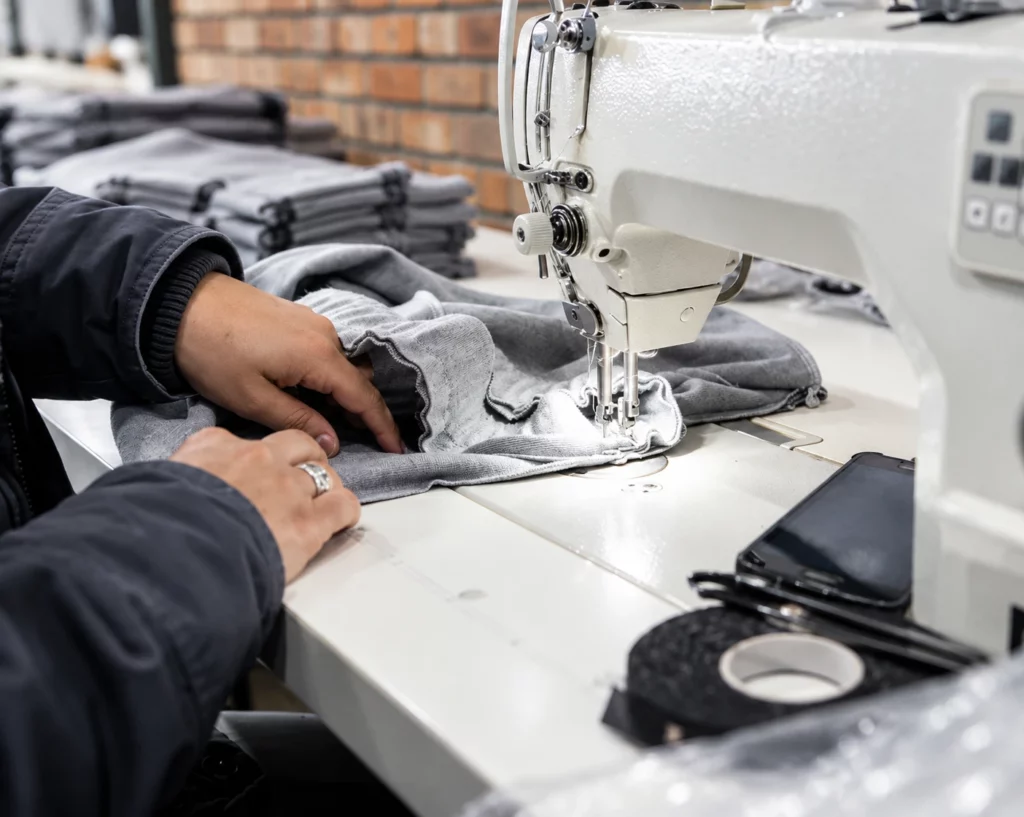
A late-winter reorder is fastest when it reproduces an already approved garment. Once a brand changes the fabric, fit, construction, color process, or performance requirements, the order may stop being a true repeat and return to product development.
The practical question is therefore not whether an OEM manufacturer is willing to make a change. It is whether that change affects an approved production variable. Low-risk administrative updates may be handled through revised order documents. Product changes usually require confirmation samples, tests, new material bookings, or complete redevelopment.
For seasonal thermal underwear, base layers, activewear, and other functional garments, buyers should classify every requested change before promising a delivery date.
Is It Still a Reorder?
A reorder is defined by technical continuity, not simply by repeating the same style number or purchase-order history.
- Same approved product + same approved production variables = Exact Repeat
- One controlled variable changes = Controlled Revision
- Fit, fabric, construction, performance, or production-route changes = Partial or Full Redevelopment
Three Reorder Paths
| Reorder Path | Typical Situation | Required Action |
| Exact Repeat | Approved variables unchanged | Reconfirm material, capacity, QC, and delivery |
| Controlled Revision | One limited variable changes | Validate the affected element only |
| Redevelopment | Product fit, performance, or manufacturing changes | Reopen the affected development workflow |
Confirm the Approved Baseline Before Reviewing Changes
A genuine garment reorder normally retains the approved:
- Tech pack and revision number
- Pattern, grading rules, and measurement tolerances
- Fabric construction, composition, weight, and finish
- Color standard
- Trims, labels, artwork, and packaging
- Workmanship and testing requirements
The original purchase order is not enough. The factory should work from the controlled production package and approved reference sample used for the previous bulk run.
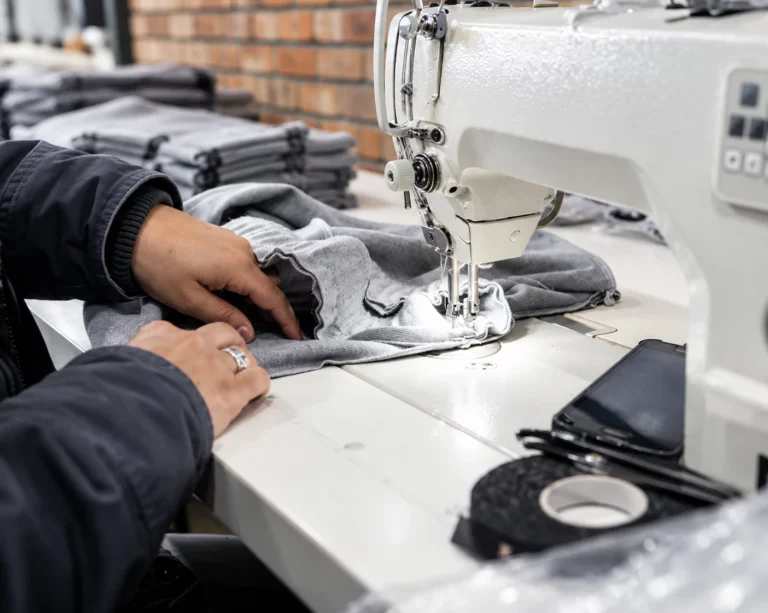
Harvest SPF’s ODM/OEM customization process includes design and tech-pack preparation, fabric selection or development, prototype sampling, client approval, mass production, and inspection. A reorder can bypass some development activity only when the approved inputs remain valid and available.
The time elapsed since the previous run also matters. Fabric or trim availability may have changed, and separately produced dye lots may not match perfectly. The manufacturer must reconfirm the supply route even when the buyer requests an identical garment.
Rebuild the Approved Baseline Before Reviewing Any Change
- Latest approved tech pack and active revision
- Pattern, grading rules, and measurement tolerances
- Golden or approved reference sample
- Approved fabric, color standard, trims, labels, artwork, and packaging
- Applicable test requirements and any approved bulk deviations or concessions
Compare the previous approved baseline against the requested reorder before classifying any change.
An Exact Product Repeat Still Requires Supply Reconfirmation
Exact Repeat does not mean automatic production release. Reconfirm whether the approved fabric, yarn or fabric-mill route, trims, packaging, factory capacity, and other controlled inputs remain available. A new dye lot may also require color confirmation even when the product specification is unchanged.
Reorder Change Classification Matrix
| Requested Change | Typical Classification | Typical Review |
| Quantity / shipping address / PO reference | Exact repeat or low-impact change | Supply, packing, capacity, and schedule confirmation |
| New logo / label / packaging artwork | Controlled revision | Proof, strike-off, or packing approval as applicable |
| New color on approved fabric | Controlled revision | Color approval and relevant material/testing review |
| Minor measurement adjustment | Controlled revision | Technical/fit review; grading review if affected |
| Fabric GSM / blend / knit / finish change | Redevelopment | Material + garment revalidation |
| Fit / silhouette / construction change | Redevelopment | Pattern, grading, fit, BOM, costing review |
| New performance claim | Redevelopment | Define method, criteria, and verification |
| Major production-route change | Redevelopment | New process qualification and controls |
Final classification depends on the specific product, material, production route, buyer requirements, and timing of the change.
Quantity changes require separate review even when no garment specification changes. A revised quantity or size ratio can affect material consumption, MOQ, cutting efficiency, capacity, cost, and delivery schedule; classify it as an exact repeat only after those impacts are confirmed.
Changes That Usually Do Not Restart Product Development
Some changes affect order administration rather than the garment itself. They may be accepted without a new prototype if they do not alter manufacturing, compliance, or quality-control requirements.
Low impact does not mean no impact: size allocation, packing ratios, and other seemingly administrative changes can still affect material consumption, MOQ, purchased packaging, cost, or schedule.
Typical examples include:
- Revised size quantities within the existing approved size range
- A different shipping address or nominated forwarder
- Changes to carton markings
- A revised packing ratio using approved packaging materials
- Updated purchase-order references
- Removal of an optional insert that does not affect the garment or retail pack
Even these requests require review. A new size allocation may affect cutting efficiency, material consumption, or the minimum quantity assigned to each size. A packaging adjustment may be impossible if printed bags, hangtags, or cartons have already been ordered.
Changes are also time-sensitive. Before materials are purchased, the factory may have several options. After cutting, printing, sewing, or packing begins, the same request can create waste, rework, additional cost, or an unacceptable delay.
The safest approach is to submit each change in writing and ask the manufacturer to confirm four points: technical feasibility, additional approval requirements, cost impact, and the revised production schedule.
Create a Reorder Change Delta Sheet
| Variable | Previous Approval | New Request | Validation Required |
| Fabric | Approved Fabric A | Same | No material change |
| Color | Black | Navy | Lab dip / color approval |
| Measurement | Approved spec | Requested adjustment | Fit / grading review |
| Logo | Approved artwork | Revised artwork | Strike-off / application approval |
| Packaging | Approved pack | Revised pack | Packing approval |
Use the delta sheet to isolate each requested change instead of relying on scattered email or message instructions.
Change Timing Matrix
| Change Timing | Typical Impact |
| Before material booking | Lowest disruption; alternatives may still be available |
| After material booking | MOQ, cancellation, or excess-material impact |
| After dyeing / printing | Replacement material or rework risk |
| After cutting | Fabric loss or recutting |
| After sewing | Rework or remake |
| After packing | Repacking or relabeling |
| After shipment booking | Logistics and delivery impact |
The technical size of a change and the timing of the change are two different risk dimensions.
Every Reorder Change Should Be Reviewed for Four Impacts
- Technical: Can the requested change be made?
- Approval: What must be sampled, tested, or reapproved?
- Commercial: What changes in MOQ, material usage, cost, or waste?
- Schedule: What happens to ex-factory and required warehouse timing?
Changes That Need Limited Validation
A reorder does not always require complete redevelopment when one controlled variable changes. However, the affected element must be revalidated before bulk production.
Logo, label, or packaging artwork
Replacing a logo file, changing a care label, or updating retail packaging may leave the garment pattern untouched. The factory may still require a strike-off, print sample, embroidery sample, label proof, or packaging approval.
Artwork dimensions, placement coordinates, colors, application method, and file version should be documented. A larger heat-transfer graphic, for example, can behave differently during application and wear even if the garment body is unchanged.
New color on an approved fabric
Adding a color is not merely an administrative choice. The manufacturer may need a lab dip, strike-off, or color standard, followed by approval under agreed lighting conditions. The selected shade may also have its own dye-lot minimum.
Buyers should confirm whether the original fabric remains available, whether the new color requires a separate production batch, and whether colorfastness or migration testing is relevant to the application.
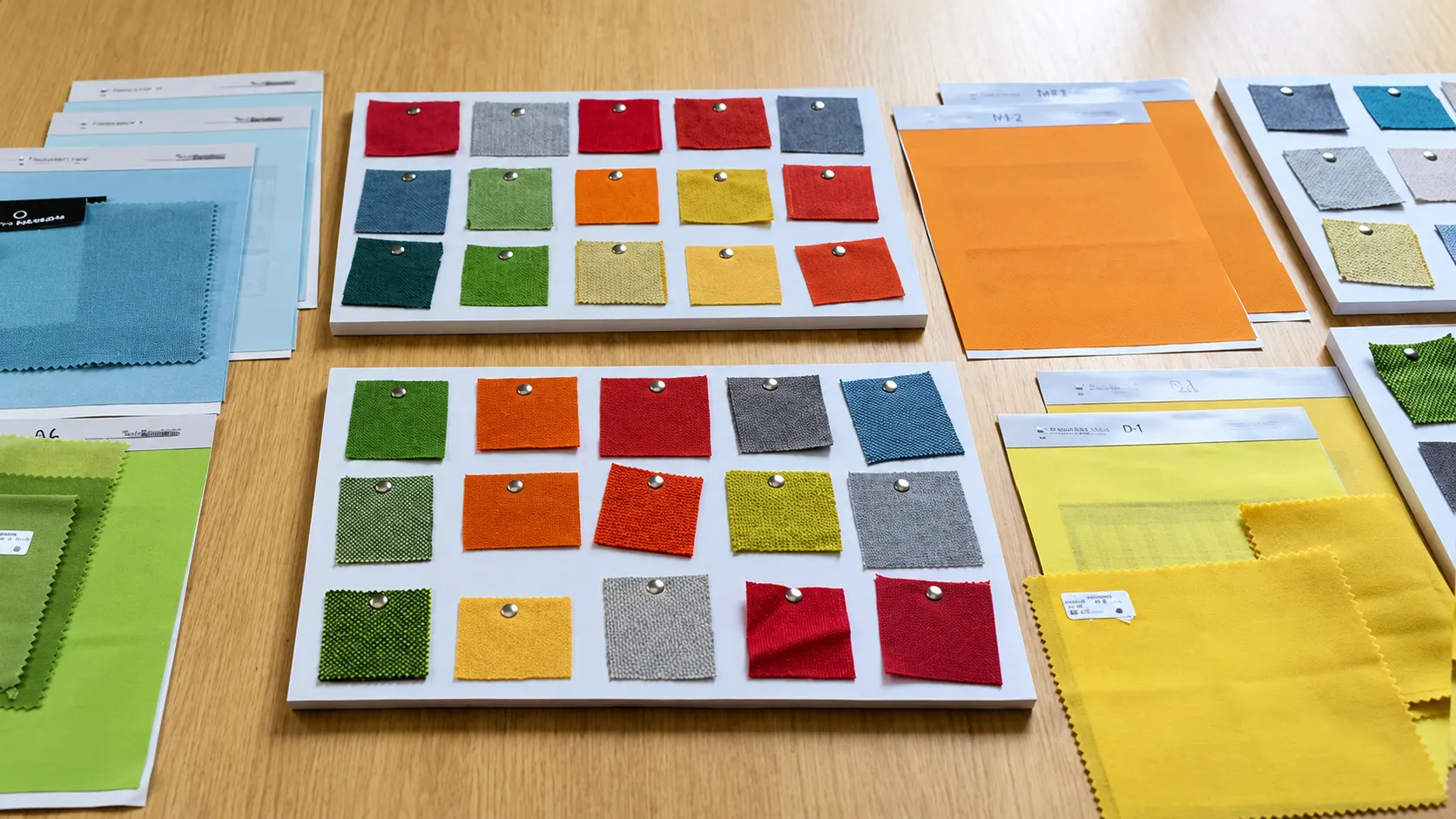
A new color on an approved fabric is not automatically an exact repeat. Shade depth, dyeing route, finishing interaction, dye-lot minimums, and the end use can change the validation scope. Dark, fluorescent, contrast, or decoration-sensitive colors may require additional review depending on the product.
Adjustments within an approved measurement tolerance
A small measurement correction may be possible through controlled pattern or process adjustments. It is not automatically risk-free. The technical team must determine whether the change affects balance, stretch, seam position, material consumption, or grading across other sizes.
A fit sample or size-set sample may be sufficient when the construction and fabric remain unchanged. Approval should be recorded against a new tech-pack revision.
Changes That Usually Restart Development
A request should be treated as new development when it changes how the garment fits, performs, or is manufactured.
Fabric composition, structure, or weight
Changing from one fiber blend to another, modifying fabric weight, adding brushing, or selecting a different knit structure can affect stretch, recovery, shrinkage, hand feel, opacity, warmth, and sewing behavior.
Even when the replacement looks similar, the old pattern and process settings may no longer produce the approved result. Fabric confirmation, garment sampling, fitting, testing, costing, and material booking may all need to restart.
Harvest SPF’s winter thermal underwear OEM sourcing calendar explains why material readiness, sample approval, production capacity, inspection, and shipping must be planned as separate milestones.
Material Substitution Gate
Material substitution is not an administrative change. Compare the proposed replacement against the approved material for composition, yarn, GSM, knit construction, stretch/recovery, finish, shrinkage, hand feel, color, sewing behavior, and relevant functional performance.
The objective should be an approved replacement against defined technical and performance criteria, not an unsupported claim that independently produced fabrics are identical.
Silhouette, construction, or fit
Changing a neckline, rise, sleeve shape, panel line, seam type, waistband construction, pocket, or overall fit modifies the technical product. The pattern, grading, bill of materials, operation sequence, consumption, and quotation may need revision.
A change to one size can also affect the complete grading rule. Buyers should not assume that altering the medium sample automatically defines accurate measurements for all other sizes.
A Base-Size Correction Can Trigger a Grading Review
Determine whether a measurement change is a local correction or a grading-rule change. If grading is affected, selected-size or size-set verification may be required rather than assuming that an approved base-size correction automatically defines every other size.
New performance requirements
Adding thermal, moisture-management, compression, antimicrobial, water-repellent, or other functional expectations requires more than revised marketing language. The materials, construction, finishing route, test methods, and acceptance limits must be defined and verified for the intended application.
An OEM manufacturer should not carry an old approval into a new performance claim without evidence that the revised product meets the agreed requirement.
New Performance Claim = New Verification Requirement
Claim → Material / Construction Requirement → Test Method → Acceptance Criteria → Approved Sample → Bulk Control
Restart Only the Development Work Affected by the Change
Redevelopment should be change-driven rather than automatically reopening every previously approved element. A new fabric may require material, fit, and performance revalidation without changing approved artwork; a logo revision may require application approval without reopening fabric development.
Validation Scope Matrix
| Change | Material | Fit / Grading | Artwork | Performance | Cost / PP |
| New color | Review | — | — | As applicable | Review |
| New fabric | Revalidate | Review | — | Revalidate | Re-cost / PP |
| Logo change | — | — | Revalidate | As applicable | Review / PP |
| Fit change | — | Revalidate | — | As applicable | Re-cost / PP |
| New performance requirement | Review | Possible | — | Revalidate | Re-cost / PP |
A new production method
Moving from cut-and-sew construction to seamless knitting, or changing a major decoration technique, affects machinery, programming, sampling, minimum quantities, and quality controls. That is a new development route even when the visual concept remains similar.
Late-Winter Reorders Have a Different Commercial Logic
Late-winter decisions often balance margin, speed, and the remaining selling window. A technically feasible reorder may still be commercially unattractive if revised development and logistics consume too much of the remaining winter season and increase markdown or excess-inventory exposure.
Is the Reorder Still Commercially Worth Making?
- Remaining selling window and expected sell-through
- Reorder and validation cost
- Available freight mode and logistics cost
- Margin and markdown exposure
- Risk of end-of-season excess inventory
Why Late-Winter Timing Makes Small Changes More Consequential
Late-winter reorders usually have less schedule flexibility. Materials may need to compete with other seasonal programs, while the remaining sales window can be shorter than the production and transportation cycle.
Buyers should begin with the required warehouse date and work backward. The multi-SKU thermal underwear MOQ planning guide is useful when a reorder is divided among multiple styles, colors, and sizes, because garment MOQ may not be the controlling constraint. Fabric, dye-lot, yarn, trim, packaging, or size-level minimums may determine the viable order.
Use a three-path decision:
- Exact repeat:Confirm approved specifications, material availability, quantities, capacity, quality controls, and delivery.
- Controlled revision:Identify the changed variable, complete only the required validation, and issue revised documents before bulk release.
- New development:Reopen costing, sampling, testing, material booking, and schedule planning.
Do not release production while a requested change remains unresolved. The apparent time saved can be lost through rejected bulk goods, mismatched inventory, or repeated corrective work.
Latest Practical Reorder Release Date
Required Warehouse Date − Receiving Buffer − Customs − Freight − Inspection − Bulk Production − PP / Validation − Material Booking = Latest Practical Reorder Release Date.
For a controlled revision, add the required lab dip, sample, test, and approval time. For redevelopment, reopen the affected development milestones. This is a project-planning framework rather than a fixed industry lead-time formula.
Expediting Cannot Replace Technical Approval
Expediting can compress available operational or transportation lead time, but it does not replace material approval, fit approval, required testing, or pre-production validation for a changed product.
Send a Reorder Change Package, Not a List of Messages
A manufacturer can evaluate the reorder more efficiently when the buyer submits one controlled package containing:
- Previous purchase-order and style references
- Latest approved tech pack and sample reference
- Requested quantity by style, color, and size
- Marked comparison of every proposed change
- Required warehouse date and shipping destination
- Current artwork, label, and packaging files
- Applicable test and inspection requirements
- Commercial priority if time, cost, and exact replication conflict
Review the manufacturer’s production and service information when building the schedule, but request order-specific confirmation because timing depends on material status, quantity, customization, production season, and configuration.
Reorder Change Package Template
| Item | Previous Approval | Requested Revision | Buyer Priority | Supplier Response |
| Fabric | — | — | Must match / flexible | Confirmed / validation required |
| Color | — | — | Required / flexible | Lab dip / confirmed |
| Fit | — | — | Required / flexible | Sample needed / confirmed |
| Logo / Packaging | — | — | Required / flexible | Proof / approval needed |
| Quantity / MOQ | — | — | Required | Confirmed / conditional |
| Warehouse Date | — | — | Critical | Confirmed / revised |
Use supplier response statuses such as Confirmed, Conditional, Validation Required, or Not Feasible so unresolved points remain visible before production release.
Revision Control Before Bulk Release
A late-winter reorder should have one active specification revision. When a new tech pack, BOM, artwork, or packing instruction is issued, obsolete versions should be withdrawn from production use across the sample room, cutting, sewing, decoration, QC, and packing functions.
Written Reorder Release
Do not release bulk production from informal messages alone. Final release should be based on the approved change delta, updated controlled documents, required validation evidence, confirmed MOQ/cost, and confirmed delivery schedule.
How Harvest SPF Supports Late-Winter Reorder Reviews
- Baseline Review: previous tech pack, approved sample, fabric, BOM, and test requirements.
- Change Classification: Exact Repeat, Controlled Revision, or Redevelopment.
- Material Availability and Fabric Matching / Redevelopment.
- Targeted Sampling, Testing, MOQ, and Cost Impact Review.
- Production Capacity and Critical-Path Scheduling.
- Specification Revision Control through bulk release.
Conclusion
An OEM manufacturer can usually process administrative updates and some controlled revisions without restarting the entire garment-development cycle. Changes to fabric, fit, construction, grading, production method, or performance requirements normally require partial or full redevelopment.
For a late-winter reorder, freeze the approved variables first, isolate every requested change, and obtain written confirmation of sampling, cost, MOQ, and delivery consequences before releasing production. For an order-specific assessment, request a reorder feasibility review from Harvest SPF before confirming the delivery schedule.
FAQs
Can a brand change color without making a new garment sample?
Sometimes. The factory will normally need to approve the color on the selected fabric, and a garment or production sample may still be required depending on the material, construction, and application.
Does changing the size ratio restart development?
Usually not when all sizes and grading rules are already approved. The factory must still confirm material usage, cutting efficiency, and any size-level minimums.
Is a different fabric with the same composition an exact replacement?
No. Fabrics with the same labeled composition can differ in weight, structure, stretch, recovery, finish, shrinkage, hand feel, and sewing performance. The substitute should be evaluated and approved.
Can production start before every packaging detail is finalized?
Possibly, if garment specifications are locked and the manufacturer confirms that packaging decisions will not delay procurement or packing. Custom packaging lead times and minimums must still be checked.
Can a factory skip the pre-production sample for an exact repeat order?
Possibly, depending on the buyer’s release procedure and whether all controlled inputs remain unchanged and available. The buyer and manufacturer should define the required release evidence rather than assume that a repeat style automatically removes pre-production controls.
Does using the same fabric composition mean no testing is needed?
No. The same labeled composition does not establish equivalence in construction, GSM, stretch, recovery, finish, shrinkage, or functional performance. The validation scope should follow the actual material change and intended use.
What should a buyer send for a fast reorder review?
Send the previous order reference, latest approved tech pack, quantity breakdown, required date, and a clearly marked change list. The manufacturer can then classify the program as an exact repeat, controlled revision, or new development.
Get a Late-Winter Reorder Feasibility Review
Send the previous PO, latest tech pack, approved sample or reference, fabric specification, requested changes, quantity by size and color, destination, required warehouse date, and applicable testing requirements. Harvest SPF can classify the reorder, identify required validation, review material and MOQ impact, and assess the critical path before production release.