

Aerogel insulated clothing has moved from a materials-science concept into a practical sourcing category for outdoor, workwear, cold-chain, travel, and technical apparel programs. The procurement challenge is not simply finding an aerogel sheet; it is selecting a manufacturer able to convert a fragile, high-insulation material into a flexible, durable, testable garment system.
Why Aerogel Insulation Is Different in Apparel
The Aerogel Insulation Mechanism
Aerogel is a highly porous solid composed mostly of air. Its nanoscale pore structure limits heat transfer, providing strong thermal resistance with relatively low mass and thickness. Pure aerogel is rarely used directly in apparel because of its brittleness, particle shedding, moisture sensitivity, and handling limitations. For apparel applications, aerogel is typically engineered into flexible composites through nonwoven reinforcement, encapsulation, lamination, or other structural treatments that improve flexibility, durability, and manufacturability.
The Role of Phase-Change Microcapsules
Some constructions combine a porous aerogel skeleton with phase-change microcapsules. Aerogel slows heat loss, while the phase-change component absorbs or releases latent heat around a designed transition range. This can moderate short-term temperature fluctuations, but it does not generate heat. Procurement specifications therefore need the transition temperature, latent-heat capacity, add-on level, leakage resistance, and wash durability rather than a general “temperature control” statement.
PCM integration is optional and should be selected according to the thermal-management objective of the garment rather than treated as a standard component of aerogel insulation.
Common Applications for Aerogel Insulation
Technical Outerwear
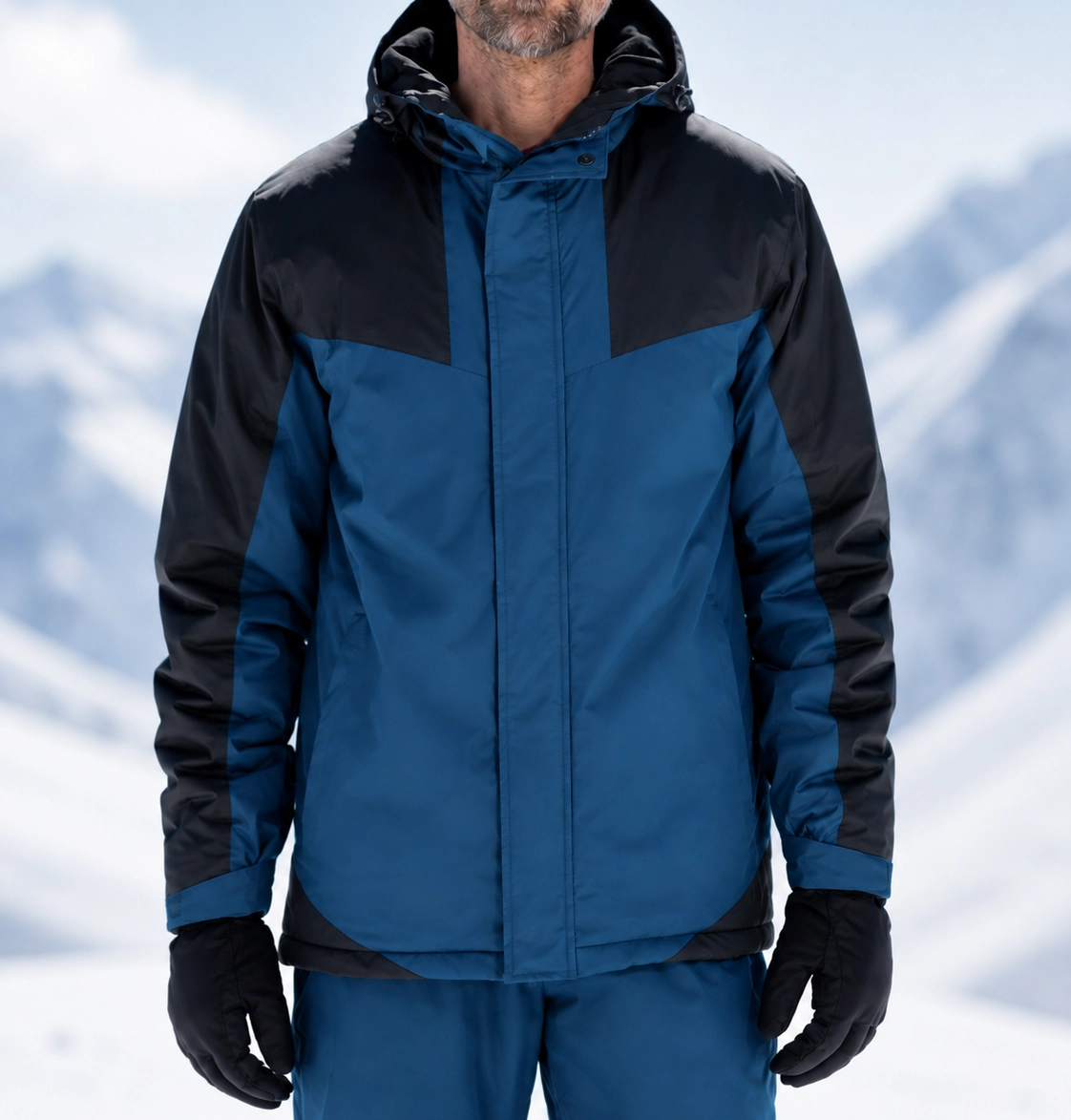
Ski jackets, mountaineering apparel, and lightweight cold-weather jackets can use aerogel composites where high insulation is required without excessive bulk.
Industrial & Cold-Environment Workwear
Aerogel insulation can support garments designed for workers exposed to prolonged low-temperature environments, especially where mobility and reduced garment bulk are priorities.
Gloves and Footwear
Targeted aerogel insulation can be useful in gloves, boot inserts, and footwear systems where conventional bulky fills may restrict movement or fit.
Hybrid Insulation Garments
Aerogel does not need to cover the entire garment. It can be strategically placed in high-heat-loss or compression-prone zones while conventional insulation is used elsewhere to balance warmth, mobility, breathability, and cost.
Define the Product Brief Before Supplier Selection
End-Use Environment and Garment Category
The technical brief should identify ambient temperature range, wind exposure, precipitation, activity level, wear duration, and service life. A stationary cold-weather uniform requires a different balance from a ski jacket, insulated trouser, glove, boot insert, sleeping bag, or tent liner. Garment category also determines panel geometry, articulation, seam density, compressive loading, and laundering method.
Performance Priorities and Trade-Offs
A procurement specification should rank thermal resistance, weight, thickness, air permeability, water-vapor resistance, wind resistance, water penetration resistance, flexibility, noise, packability, and durability. Maximum insulation is not always the correct target. A low-permeability laminate may retain heat but increase moisture accumulation during active use. Clear priorities prevent late-stage redesign.
Evaluate the Complete Insulation System
Layer Architecture and Cold-Bridge Control
A representative construction may include an outer shell, an aerogel thermal layer, a cushioning or protective pad, and an inner lining. Each layer changes final performance. Seam lines, quilting, zippers, pockets, cuffs, hems, and shoulder pressure points can create thermal bridges even when the central panel performs well. Thermal mapping of the finished garment is therefore more valuable than a single material data sheet.
Encapsulation, Flexibility, and Manufacturability
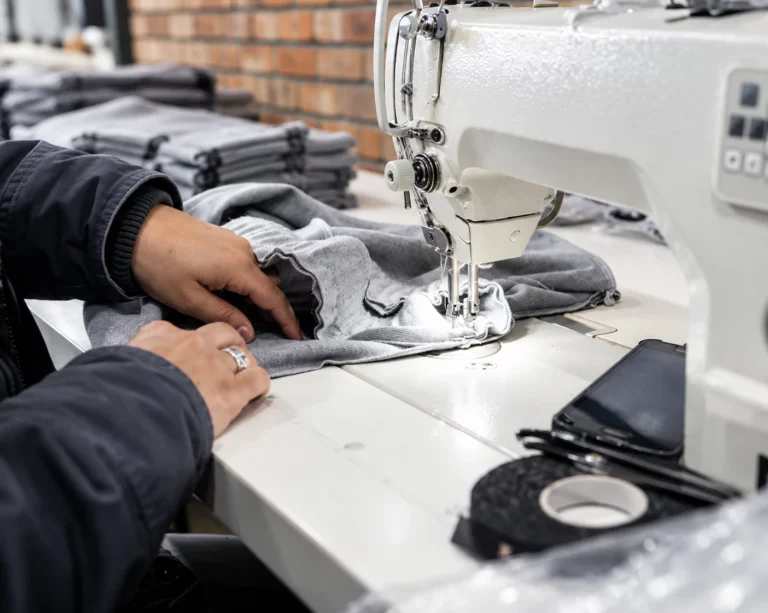
Encapsulation can reduce particle shedding and protect the aerogel layer, but excessive film coverage may reduce drape and breathability. Development teams should review bending stiffness, repeated flexing, compression recovery, edge stability, cutting dust, needle damage, and compatibility with bonding or quilting equipment. A technically strong insert that cannot be cut accurately or sewn consistently creates quality and yield risk.

Aerogel vs. Traditional Apparel Insulation
The advantage of aerogel is not simply “more warmth.” Its commercial value is often the ability to achieve targeted insulation in areas where thickness and bulk are constrained.
| Insulation | Key Advantage | Limitation | Suitable Applications |
| Aerogel composite | High insulation potential at low thickness | Cost and flexibility require careful engineering | Technical outerwear, gloves, workwear |
| Down | Excellent warmth-to-weight ratio | Moisture sensitivity and fill migration require careful construction | Outdoor jackets and cold-weather apparel |
| Synthetic fill | Washable, widely available, and cost-effective | May require greater bulk to reach a target insulation level | General insulated apparel |
| Wool | Moisture buffering and natural comfort | Typically heavier for high insulation targets | Base layers and hybrid insulation systems |
Build a Procurement-Grade Test Plan
Thermal and Moisture Testing
Thermal claims should be tied to recognized methods and stated conditions. ISO 11092:2026 measures thermal resistance and water-vapor resistance under steady-state conditions using a sweating guarded hotplate and applies to fabrics, films, foams, and multilayer assemblies. Reports should identify specimen thickness, conditioning, orientation, pressure, and layer sequence. Comparative testing against a control construction provides more commercial value than an isolated number.
For finished garments, thermal insulation may also be evaluated using thermal manikin methods where appropriate, particularly when buyers require garment-level CLO or whole-garment insulation data.
Weather, Durability, and Laundering
For outerwear, ISO 811 assesses resistance to water penetration, while ISO 9237 measures air permeability. ISO 6330 provides standardized washing and drying procedures, and ISO 12947-2 supports abrasion evaluation. Aerogel programs also benefit from repeated flex, compression, seam strength, dimensional stability, and post-laundering thermal tests. Before-and-after results show whether performance survives realistic service cycles.
OEM or ODM: Selecting the Development Model
OEM for Mature Technical Packages
OEM development fits programs with an approved design, complete tech pack, graded patterns, bill of materials, artwork, measurement tolerances, test requirements, packaging specifications, and forecast volume. Aerogel-specific documents should define insert location, panel thickness, edge treatment, attachment method, prohibited stitch zones, and acceptance criteria for dust, delamination, and visible distortion.
ODM for Material-Led Product Development
ODM is more suitable when a project begins with a market objective rather than a finished specification. Development may include concept review, construction recommendation, material development, costing, prototypes, fitting, lab verification, production approval, inspection, and shipping. The manufacturer’s published process follows a 12-stage workflow. General garment programs may begin at relatively low MOQs, but aerogel projects should be quoted individually because minimum quantities depend on composite availability, lamination requirements, material width, color plan, size ratio, garment construction, and testing scope.
Supplier Due Diligence for B2B Procurement
R&D Evidence and Material Traceability
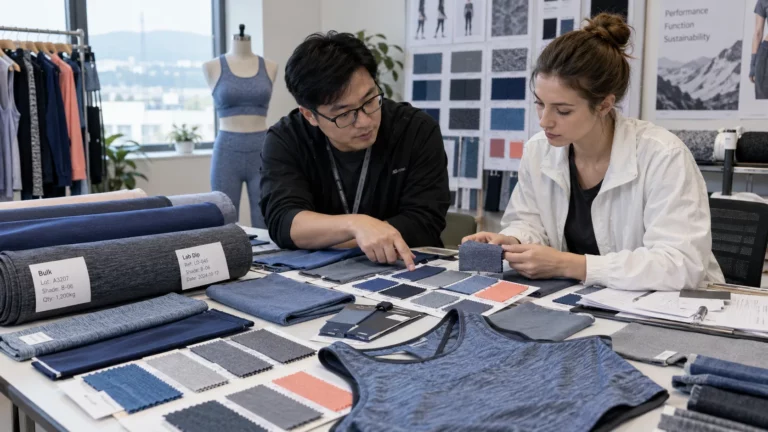
A credible manufacturer should provide material composition, layer construction, lot identification, safety documentation, test reports, and change-control procedures. R&D credentials can support technical capability, but production evidence remains essential. Pilot samples should match proposed bulk material, and substitutions in aerogel grade, carrier fabric, adhesive, membrane, or phase-change system should require written approval.
Quality Control and Production Transparency
The quality plan should cover incoming inspection, pre-production meetings, first-piece approval, in-line checks, final inspection, and third-party inspection access. A sealed golden sample and approved report should become the bulk reference. Critical checkpoints include panel placement, insulation continuity, seam allowance, adhesive cure, garment weight, measurements, appearance, labeling, packing, and carton traceability.
Why Work With Harvest SPF for Aerogel Insulated Apparel?
Material-to-Garment Development
Harvest SPF supports aerogel apparel projects from insulation material evaluation through garment engineering, prototyping, testing, and bulk manufacturing.
Functional Textile R&D
Our development team evaluates insulation thickness, flexibility, encapsulation, garment placement, breathability, and thermal performance as an integrated system rather than treating aerogel as a standalone material.
OEM + ODM Capability
Brands may provide an existing tech pack for OEM manufacturing or work with Harvest SPF to develop garment structure, insulation zones, material combinations, prototypes, and a testing plan through an ODM program.
Costing and Commercial Risk Control
Main Cost Drivers
Cost is influenced by insulation area, thickness, composite construction, encapsulation, shell and lining, quilting or bonding, pattern yield, testing, sample rounds, order volume, packaging, and freight. A costed bill of materials and marker-efficiency review help distinguish material cost from conversion cost.
Zoned Insulation for Cost Optimization
Aerogel does not necessarily need to cover the entire garment. Strategic placement in high-heat-loss or compression-prone areas can reduce material consumption while maintaining the intended thermal performance. This approach can help brands balance insulation targets, garment mobility, and commercial cost.
Quote Comparison and Contract Controls
Comparable quotations should use the same specification, size ratio, quantity, testing obligations, packaging, trade term, and destination. Procurement teams should confirm sample charges, deposit structure, inspection rights, defect remedies, replacement policy, intellectual-property handling, and responsibility for failed compliance tests. The lowest unit price has limited value when performance or bulk consistency remains undefined.
FAQ
Is Aerogel Clothing Always Warmer at a Lower Thickness?
Not automatically. Finished performance depends on aerogel content, carrier structure, compression, seams, shell permeability, moisture, and garment fit. Comparative multilayer and finished-garment testing is required.
Can Aerogel Insulated Garments Be Washed?
Washability depends on encapsulation, bonding, panel construction, and care method. A valid program should specify washing conditions, cycle count, dimensional change, delamination limits, particle release, and thermal retention after laundering.
Are Phase-Change Microcapsules Required?
No. Phase-change material is optional. It can moderate temporary heat gains or losses around its transition range, but aerogel remains the primary passive insulation element.
What Information Belongs in an Aerogel Apparel RFQ?
A complete RFQ includes garment category, end-use environment, target temperature range, construction drawing, insulation zones, thickness or weight limits, performance standards, size range, forecast volume, delivery target, compliance market, labeling, packaging, and inspection requirements.
What MOQ Should Be Expected?
General garment programs may begin at relatively low MOQs, but aerogel projects should be quoted individually. Final MOQ depends on aerogel composite availability, lamination or processing minimums, material width, color plan, size ratio, garment construction, and testing requirements.
Conclusion
Successful aerogel apparel sourcing treats insulation as a system rather than a marketing ingredient. Strong programs begin with a measurable end-use brief, validate multilayer performance, control encapsulation and seam design, test durability after washing and flexing, and connect the approved prototype to a traceable bulk quality plan.
Develop an Aerogel Insulated Product With Harvest SPF
Planning an aerogel jacket, glove, workwear program, or other cold-weather product? Share your product concept or tech pack, target operating temperature, garment application, required insulation thickness or weight, target testing standards, and estimated order quantity.
Harvest SPF’s development team can evaluate the insulation architecture, material combination, testing requirements, and OEM/ODM feasibility before sampling begins.
Contact Harvest SPF today to start your next cold-weather insulation project.